
Richard Sutton launches Oak Lab to transform continuous learning in AI
Turing Award winner Richard Sutton unveils Oak Lab in Toronto, aiming to create AI that learns continuously and adapts in real time.

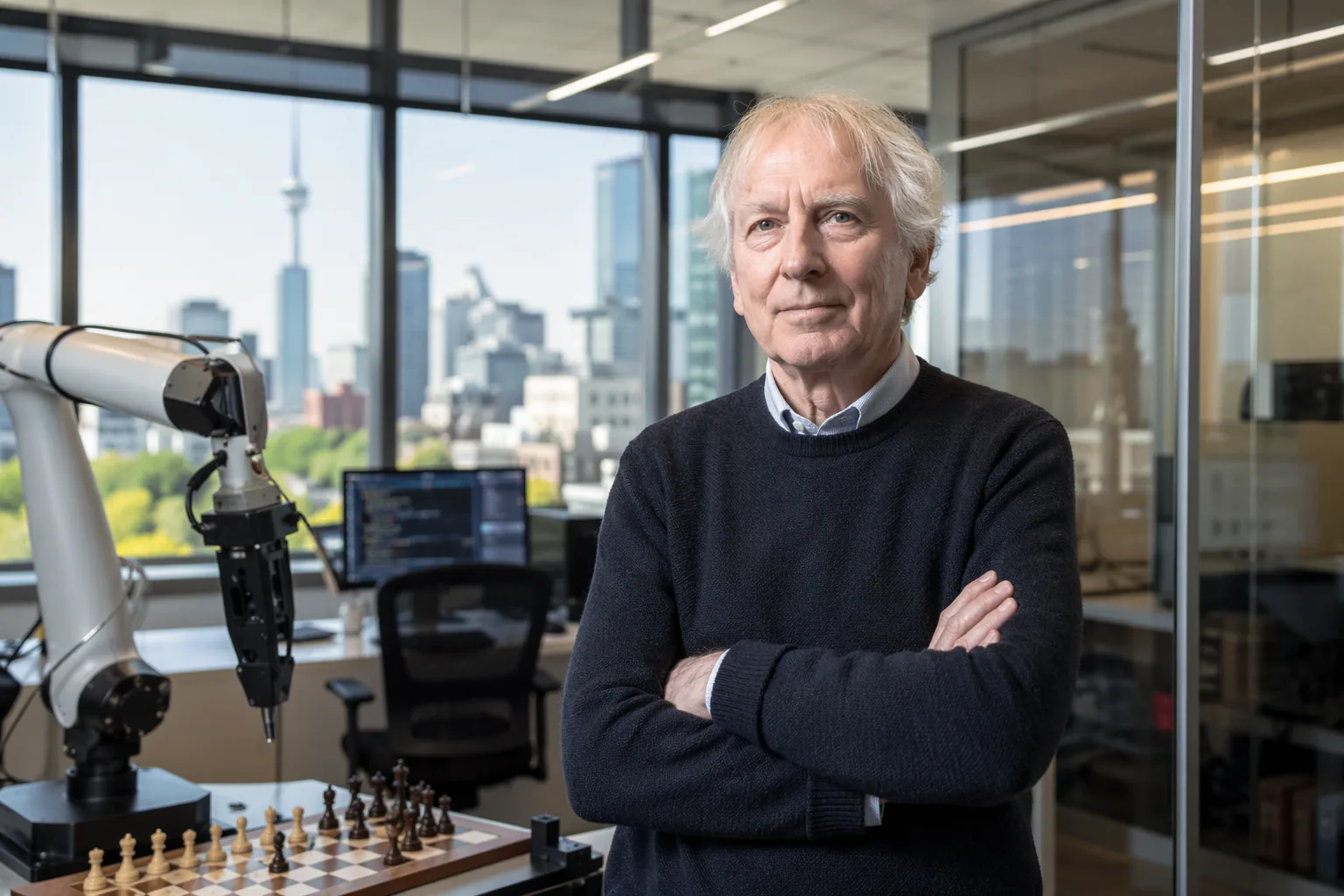
Richard Sutton, a Turing Award-winning luminary in artificial intelligence, has unveiled a new research venture, Oak Lab, in Toronto, Canada. Co-founded with his former student Khurram Javed, the lab aims to develop AI systems capable of learning continuously from their environment, marking a significant departure from current AI models reliant on static datasets.
A Bold Bet on Reinforcement Learning
Sutton’s initiative is rooted in his belief that reinforcement learning, where AI systems adapt based on feedback from their actions, will drive the next wave of innovation in artificial intelligence. He has been critical of the inefficiencies in deep learning methods and large language models (LLMs), which dominate the field today. Sutton contends that these systems, while powerful, are limited by their dependence on pre-existing data and lack the ability to evolve dynamically.
Oak Lab’s research will focus on creating algorithms that learn in real time without storing or replaying data, a move aimed at reducing computational demands while enhancing adaptability. The lab also plans to develop internal ‘world’ models that enable AI agents to independently handle variation, evaluation, and selection.
Ambitious Goals for Energy-Efficient AI
The lab’s long-term vision includes building an AI agent, named Oak, with a trillion parameters that learns and plans in real time using just 20 watts of energy, comparable to the power consumption of a standard light bulb. This agent will continuously evolve through experience, embodying Sutton’s vision of AI systems that are both efficient and capable of genuine discovery.
Departure from Keen Technologies
Sutton’s move to establish Oak Lab follows his recent departure from Keen Technologies, a Dallas-based startup focused on artificial general intelligence (AGI). Founded by gaming legend John Carmack, Keen Technologies counts Shopify CEO Tobi Lütke among its high-profile backers. Sutton and Javed left the company in pursuit of what Sutton describes as “a slightly different path,” one that challenges the foundational assumptions of deep learning.
Growing Criticism of Current AI Models
Sutton’s critique aligns with a broader wave of skepticism among AI researchers, including Yann LeCun, who argue that scaling laws, the principle that larger models yield better results, are no longer effective. Sutton has previously stated that generative AI models, such as ChatGPT, merely imitate their training data and lack the capacity for real discovery or self-evaluation.
Why It Matters
Sutton’s work has already shaped the AI landscape, with reinforcement learning playing a pivotal role in training LLMs like ChatGPT and Claude. His new venture signals a potential paradigm shift, challenging the dominance of static, data-driven models and advocating for systems that learn dynamically and efficiently. If successful, Oak Lab’s research could redefine the future of AI, making it more adaptable, energy-efficient, and capable of genuine innovation.
Source: Indian Express
Frequently asked questions
What is Oak Lab and who founded it?
Oak Lab is a new AI research venture launched by Richard Sutton, a Turing Award-winning AI researcher, co-founded with his former student Khurram Javed in Toronto, Canada. The lab focuses on developing AI systems capable of learning continuously from their environment.
What is Oak Lab's main research focus?
Oak Lab aims to create AI algorithms that learn in real time without storing or replaying data, reducing computational demands while enhancing adaptability. The research emphasizes reinforcement learning and the development of internal 'world' models that enable AI agents to independently handle variation, evaluation, and selection.
What are Oak Lab's long-term goals?
The lab plans to build an AI agent named Oak with a trillion parameters that learns and plans in real time using just 20 watts of energy, comparable to a standard light bulb's power consumption. The agent will continuously evolve through experience.
Why did Richard Sutton leave Keen Technologies?
Sutton departed Keen Technologies, the Dallas-based startup founded by John Carmack, to pursue what he describes as 'a slightly different path' that challenges the foundational assumptions of deep learning and current AI models.
What are Sutton's criticisms of current AI models?
Sutton contends that large language models and deep learning systems are limited by their dependence on pre-existing data and lack the ability to evolve dynamically. He argues that generative AI models like ChatGPT merely imitate their training data and lack genuine discovery or self-evaluation capacity.
You may also like
 Technology
Google launches Gemini 3.8 Flash with enhanced reasoning and coding capabilities
 Technology
Mystery AI model Ox Alpha sparks developer interest despite anonymity concerns
 International
Top Democrat Jim Himes Calls Chip Curbs Key US Leverage Against China in AI Race
 Opinion
Big Indian AI SuperChip Dream: Bharatiya Chips Powering the Electronic Revolution
Most read
- 1
Air China Adds Extra Flight for Passengers Stranded in Fuel-Starved Cuba
- 2
Western disturbance to bring rain, hail and strong winds across north India
- 3
Yogi Adityanath Directs No Occupied Houses Be Demolished for Achhalda Bridge
- 4
Gwalior Temple Truck Crash Kills 12, Injures 28-29 Devotees During Navratri
- 5
Schools Shut in Five Tamil Nadu Districts, Including Chennai, Amid Heavy Rain
Comments
No comments yet. Be the first to comment.