
RBI's swap facility leaves banks exposed to currency risk on interest payments
RBI's swap facility protects FCNR(B) deposit principals but leaves banks exposed to currency risk on interest payments to depositors in dollars.


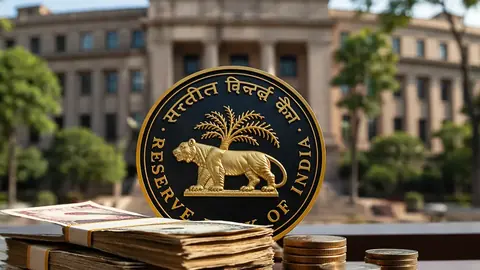
The Reserve Bank of India's swap facility shields banks from foreign-exchange risk only on the principal of FCNR(B) deposits, leaving lenders exposed to currency movements when they must pay interest to depositors in dollars, a structure that creates divergent hedging strategies across the banking system.
Background: How the scheme attracted $127 billion
The RBI introduced a special swap facility in June to encourage non-resident Indians to put money into FCNR(B) deposits, as the rupee faced pressure from high oil prices and India sought to strengthen its foreign-exchange reserves. Indian banks mobilised more than $127 billion through these deposits, far exceeding the RBI's initial target of about $50 billion. The central bank subsequently closed the window for fresh FCNR(B) deposits on August 31, 2026. The scheme has given banks a relatively cheap source of foreign-currency funding and added substantially to India's foreign-exchange reserves. The deposits typically have three-to-five-year maturities, raising the question of who bears the currency risk when the principal and interest have to be paid.
The RBI's role: Hedging the principal
The RBI's special swap facility shields banks from foreign-exchange risk on the principal amount of the FCNR(B) deposits. Reuters reported that the interest payments, however, have to be managed by the banks independently. Under the arrangement, the RBI bears the cost of hedging the foreign-currency exposure, according to a BofA Securities Research report. BofA estimated that this hedging cost could be up to 3%, while SBI Research used an average hedging cost of around 3% a year in its calculations. The RBI's cost comes from protecting the dollar value of the principal against movements in the rupee-dollar exchange rate.
How the central bank manages its exposure
The RBI has received foreign currency through the deposits, adding to the country's reserves. SBI Research said the RBI had recouped $31.2 billion of its foreign-currency assets by August 7, 2026, equivalent to 55% of the amount mobilised at that point. The research house also said the RBI may use part of the amount to invest in U.S. securities because of higher yields.
BofA estimated that the RBI could earn around 4.5-5% on the foreign reserves generated through the deposits. It said this could potentially more than offset a hedging cost of up to 3%, assuming the foreign-currency holdings are hedged for five years. SBI Research assumed FCNR(B) mobilisation of $65-70 billion and a 3% annual hedging cost, and calculated an annual notional cost of about $2.1 billion. If that cost remained at 3% for five years, the cumulative cost would be about $10.5 billion. It argued that this cost is relatively small compared with India's foreign-exchange reserves. Against current reserves of around $700 billion, it calculated the five-year cost at 1.45% of the reserve stock.
Banks bear interest-payment risk
The RBI's swap does not cover the interest that banks have to pay depositors in dollars. That means banks have to arrange the dollars needed for these interest payments and manage the foreign-exchange exposure themselves. Reuters reported that foreign banks are largely hedging this exposure, while most state-run banks and several private-sector Indian lenders have left it unhedged.
Why hedging remains unattractive for some lenders
The main reason cited by bankers is the cost of hedging. Reuters reported that hedging the foreign-exchange risk on interest payments for three-to-five-year deposits costs banks about 3% a year. The interest on these deposits is paid when the deposits mature. Some banks have therefore chosen not to pay that cost and instead plan to buy dollars when they actually need to make the interest payments. One banker at a mid-sized state-run lender told Reuters that the bank expected to handle the payments through spot dollar purchases when required, rather than locking in protection in advance.
The rupee-depreciation scenario
Consider a bank that has to pay $1 million in interest. If the dollar costs ₹95, the payment would require ₹9.5 crore. If the rupee weakens and the dollar rises to ₹100 at the point of maturity, the same $1 million payment would require ₹10 crore. A bank that has hedged its exposure would have protection against such a currency movement. A bank that has left the exposure unhedged would have to bear the higher rupee cost.
Systemic implications of unhedged exposure
This could become a broader concern because much of the future interest-payment exposure has been left unhedged. If the rupee weakens significantly, banks could need to buy dollars at the same time to meet their interest obligations. That could increase demand for dollars and add to pressure on the rupee. That means the FCNR(B) scheme has not eliminated currency exposure altogether. The RBI has taken on the exposure associated with the principal through its swap, while banks continue to face currency risk on the interest payments in the future.
The structure creates a split-risk framework: the central bank uses its balance sheet and potential investment returns to manage principal hedging costs that could reach 1.45% of India's reserve stock over five years, while commercial banks must individually decide whether to pay upfront hedging costs or accept spot-market exposure when maturities arrive.
Source: The Hindu
Frequently asked questions
What does the RBI's swap facility protect banks from?
The RBI's swap facility shields banks from foreign-exchange risk only on the principal amount of FCNR(B) deposits. It does not cover interest payments, which banks must manage independently.
How much did the RBI's FCNR(B) deposit scheme raise?
Indian banks mobilised more than $127 billion through FCNR(B) deposits under the RBI's special swap facility introduced in June, far exceeding the central bank's initial target of about $50 billion.
What is the estimated cost of the RBI's hedging for the principal?
BofA Securities Research estimated the hedging cost could be up to 3% per year, while SBI Research used an average hedging cost of around 3% annually in its calculations.
Can the RBI's earnings offset its hedging costs?
Yes, BofA estimated the RBI could earn around 4.5-5% on foreign reserves generated through the deposits, which could potentially offset hedging costs of up to 3% if foreign-currency holdings are hedged for five years.
You may also like



Most read
- 1
Tesla audits Chinese suppliers to scale up Optimus robot production
- 2
Former minister Lakhan Singh Rajput to inaugurate temple bhandara at Shri Chakreshwar Mahadev
- 3
Firozabad BSA finds four government schools locked during inspection
- 4
Tamil Nadu dengue cases fall for third consecutive year to 17,049
- 5
Social workers stage silent protest at Fufund railway station for train halts
Comments
No comments yet. Be the first to comment.