
Pakistan eye T20I series seal against Sri Lanka after Farhan’s 89
Pakistan lead Sri Lanka 1-0 as they chase a series-clinching win in the second T20I at Rawalpindi after Sahibzada Farhan's 89.

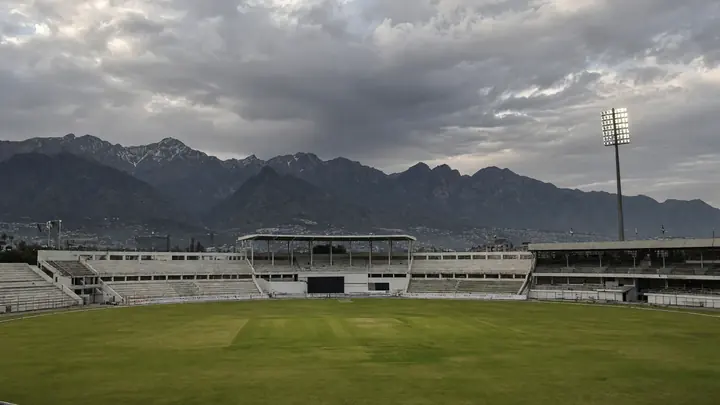
Pakistan will have the chance to seal the three-match T20I series when they face Sri Lanka in the second match at Rawalpindi on Sunday. The hosts lead 1-0 after Sahibzada Farhan’s 89 helped them chase Sri Lanka’s 182-8 with seven balls to spare in the opening game.
Sri Lanka, meanwhile, are trying to show that their heavy defeat was a temporary setback rather than an accurate reflection of their current T20I form. The visitors could strengthen their batting by bringing in Sineth Jayawardena, while Pakistan may retain the side that produced a dominant performance in the first match.
Pakistan start as favourites
Pakistan’s victory in the first T20I changed the shape of the series immediately. They did not merely edge a close contest: they reached a target of 183 in 18.5 overs after Sri Lanka had posted 182-8.
The result continued a strong recent record for Pakistan in the format, with their last five completed matches listed as WLWWL, most recent first. Sri Lanka’s corresponding sequence was LWLLL.
The first game also offered a sharp contrast with Pakistan’s struggles against Sri Lanka in 2019. On that occasion, Pakistan had failed while chasing three Sri Lankan totals in succession, including two totals lower than the 182 they overhauled in Rawalpindi and another total of exactly 182.
Sri Lanka appeared to have that earlier series in mind when Kusal Mendis chose to bat first after winning the toss in Rawalpindi. The decision was an attempt to recreate the formula that had worked seven years earlier, but Pakistan’s batting attack removed the advantage Sri Lanka had hoped to gain.
Pakistan’s chase was driven by an aggressive start and sustained pressure through the middle overs. Farhan and Fakhar Zaman added 54 for the opening wicket, and Pakistan had reached 70-1 by the end of the powerplay.
The hosts then received a decisive second-wicket stand from Farhan and Maaz Sadaqat. Their partnership produced 92 runs and placed Pakistan firmly in control before Sri Lanka briefly threatened a recovery.
Farhan’s first major statement as captain
Farhan’s innings carried particular significance because it came in his first match as Pakistan’s full-time T20I captain. France 24 described him as Pakistan’s newest skipper and reported that he had been appointed captain last month.
He scored 89 from 53 balls, with 10 fours and four sixes, according to the AFP report carried by France 24. Dawn reported the same score from 53 balls, while its ball-by-ball account described the innings as 89 from 53 balls and recorded Pakistan’s successful chase in 18.5 overs.
Farhan reached his half-century from 33 balls. He initially worked with Fakhar to establish the chase before taking greater control once Maaz arrived at the crease.
The captain repeatedly attacked the spin options. He launched Maheesh Theekshana for six after sweeping him over long-on and later added two more boundaries in the same over.
Farhan also attacked Nuwan Thushara in the 18th over. He struck a boundary through square leg and then lifted a low full toss over extra cover for six.
His innings ended when he was caught by Sahan Arachchige in the deep off the next delivery. Pakistan needed only four runs at that point, leaving Khawaja Nafay to complete the chase without late drama.
Nafay finished unbeaten on 12 from seven balls, including a six over long-on. Mohammad Imran remained not out on nought as Pakistan reached 187-6.
Sadaqat keeps the chase moving
Maaz Sadaqat supplied the other major innings of Pakistan’s successful chase. He struck a maiden T20I half-century from just 21 deliveries, hitting four fours and three sixes.
His innings began with an attack on loose deliveries from Sri Lanka’s bowlers. He swept Theekshana past fine leg for four and continued to keep the scoring rate high while Farhan built his own innings at the other end.
Sadaqat then hit Dunith Wellalage over long-on for six. His rapid scoring meant that Pakistan crossed 100 in the 10th over and moved rapidly towards the target.
The partnership ended when Theekshana trapped Sadaqat leg-before. Sadaqat’s dismissal came after a 29-ball 50 and left Pakistan at 146-2.
Sri Lanka briefly regained control after that wicket. Hasan Nawaz was caught behind off Dushmantha Chameera for one, and Theekshana bowled Saim Ayub for eight in successive overs.
Those dismissals reduced Pakistan to 156-4, but Farhan remained at the crease and continued to carry the chase. The hosts lost Shadab Khan for a duck after Farhan’s dismissal, but Nafay finished the job.
The sequence underlined the difference between Sri Lanka’s brief periods of pressure and Pakistan’s ability to keep scoring after setbacks. It also explained why the visitors were left to rue their failure to contain the scoring during the middle overs.
Udara gives Sri Lanka a platform
Sri Lanka’s total was built almost entirely around Lahiru Udara’s innings. The opener scored 91 from 55 balls, including 11 fours and a six.
Udara’s effort rescued an innings that had lost two wickets early. Pakistan captain Kusal Mendis was dismissed for one by Naseem Shah in the opening over, while debutant Mohammad Imran removed Kamil Mishara for six.
Sri Lanka were then in a difficult position before Udara and Kamindu Mendis began the recovery. The pair added 60 runs for the third wicket, with Kamindu contributing 23 from 18 balls and striking four boundaries.
Kamindu was caught by Fakhar Zaman at long-off after Saim Ayub took the wicket. Two balls later, Sahan Arachchige was dismissed for one after Shadab Khan took a fine catch at point off Imran.
Despite those setbacks, Udara continued to score freely. He reached his maiden T20I half-century from 32 balls and remained the central figure in Sri Lanka’s attempt to post a competitive total.
Dasun Shanaka provided support during the later stages of the innings. He scored 18 from 15 balls, including two sixes, before Fakhar caught him off Shadab with Sri Lanka at 140-5.
Udara survived a missed chance on 77 when Abrar Ahmed misjudged a high catch. His innings ended nine runs short of a century when Naseem had him caught by Hasan Nawaz at long-on with the final ball of the 19th over.
France 24 described Udara’s 91 as the highest T20 score by a Sri Lankan against Pakistan. The report said the innings improved on Kusal Perera’s 84 in Dubai in 2013.
Sri Lanka finished on 182-8 after taking 66 runs from the last six overs. Razaullah claimed his maiden T20I wicket in the final over by dismissing Theekshana for one, while Dushmantha Chameera struck a boundary off a free hit.
Pakistan’s seamers make the difference
Pakistan’s bowling attack made early inroads before Sri Lanka’s middle and lower order attempted to rebuild. Naseem Shah finished with 3-36 from four overs, while Imran took 2-21 on debut.
Naseem’s performance came after a long gap from T20I cricket. Before the first match, his most recent T20I had been seven months earlier, also against Sri Lanka.
In that previous match, as Pakistan exited the T20 World Cup, Naseem conceded 36 runs in four overs. He conceded the same number in Rawalpindi but added two wickets to his figures.
The preview described his spell as a patchwork performance that offered more information about where his T20 game currently stands. It also placed the performance in the context of a difficult year for the fast bowler as he worked his way back after falling foul of the PCB at the PSL and then being sidelined by injury.
Naseem had earlier returned through respectable performances at a domestic 50-over tournament and in the CPL. The preview said there might be the foundation of a good run taking shape, but stressed that it was too early to reach a firm conclusion.
Imran also had an immediate impact on debut. He removed Kamil Mishara and Sahan Arachchige, and ended with figures of 2-21.
Razaullah added his first T20I wicket in the closing over. Together, Pakistan’s bowlers limited Sri Lanka to 182-8 despite Udara’s substantial contribution.
Sri Lanka’s selection dilemma
Sri Lanka’s main selection question concerns the balance between bowling and batting. The preview suggested that Wellalage’s position at No. 7 might be too high if Sri Lanka want greater batting depth.
One possible change is the inclusion of Sineth Jayawardena in place of Nuwan Thushara. Thushara conceded 32 runs in three overs in the first T20I.
The proposed change would give Sri Lanka another batting option, although the reported team combination still lists Wellalage at No. 8. The listed side includes Lahiru Udara, Kusal Mendis, Sineth Jayawardena, Kamindu Mendis, Kamil Mishara, Sahan Arachchige, Dasun Shanaka, Dunith Wellalage, Dushmantha Chameera, Maheesh Theekshana and Eshan Malinga.
Udara’s innings showed what Sri Lanka can gain from a stronger contribution at the top of the order. It also exposed the pressure placed on the rest of the batting line-up when early wickets fall and the middle order cannot maintain the scoring rate.
The preview noted that Udara had not played much international cricket but had shown unmistakable talent in the format and composure under pressure. It called him Sri Lanka’s lone fighting hand across much of the innings, a description that also highlighted the weakness of the batting order around him.
Sri Lanka’s challenge is therefore not limited to replacing one player. The visitors need more support for Udara and a stronger contribution from the players who follow him if they are to prevent Pakistan from controlling the middle overs again.
Theekshana’s role under scrutiny
Theekshana conceded 36 runs from his four overs in the first T20I. The preview said Sri Lanka may expect more from him because he has become the team’s lead spinner in Wanindu Hasaranga’s injury-enforced absence.
The concern was not only the number of runs conceded. The preview focused on a change in Theekshana’s bowling action, describing it as a poorly concealed imitation of Sikandar Raza’s rather than his more familiar conventional action.
According to the preview, the remodelled action appeared to reduce Theekshana’s ability to slow the ball when required. Sahibzada Farhan often picked off the quicker pace with relative ease during Pakistan’s chase.
Whether Theekshana continues with the remodelled action is one of the points of intrigue in the series. His response in the second match could be important for Sri Lanka because Pakistan’s batting order showed that it was willing to attack spin during the middle overs.
Pakistan may keep the same XI
Farhan said he was thoroughly pleased with Pakistan’s performance in the first T20I. The preview therefore regarded an unchanged Pakistan side for the second match as a strong possibility.
The listed Pakistan XI is Sahibzada Farhan, Fakhar Zaman, Maaz Sadaqat, Hasan Nawaz, Saim Ayub, Khawaja Nafay, Shadab Khan, Mohammad Imran, Razaullah, Naseem Shah and Abrar Ahmed.
Pakistan used three frontline seamers in the first T20I. The decision was linked to the Rawalpindi surface, which was considered less favourable to fingerspin than many T20 pitches in the subcontinent.
The surface had extra grass and offered something to the quicker bowlers. A fresh strip was expected for Sunday, but the preview said its general character was also expected to remain.
Pakistan’s batting order also appeared to have been adjusted. The side had at least five potential opening batters, but Fakhar Zaman was pushed to the top while Saim Ayub was sent to No. 5.
That change produced an immediate return in the first game. Fakhar’s 21 from 13 balls helped provide the early momentum, while Saim occupied a lower position in an innings in which Pakistan had enough depth to absorb his dismissal for eight.
Records add context to the second match
Sri Lanka have another statistical incentive beyond keeping the series alive. No side has beaten Pakistan five times in T20Is in Pakistan, while Sri Lanka have already done so four times.
A victory in the second match would make Sri Lanka the first team to beat Pakistan five times in T20Is in Pakistan. That possibility gives the visitors a record to pursue even as they attempt to recover from the opening defeat.
Pakistan also conceded a record number of extras in the first T20I. Their 29 extras were the most they had ever given away in a T20I, surpassing their previous highest of 20 against Sri Lanka in the group-stage match at the World T20 in 2009.
Sri Lanka’s captain remains close to a personal landmark. Kusal Mendis is 90 runs away from overtaking Pathum Nissanka, who misses the series with injury, as Sri Lanka’s leading T20I run-scorer.
The second match therefore carries several separate strands. Pakistan can close the series, Sri Lanka can force a decider, the visitors can pursue a record fifth T20I win over Pakistan in Pakistan, and Mendis can move closer to the top of Sri Lanka’s run-scoring list.
Sri Lanka need a fuller performance
Sri Lanka’s first-match defeat cannot be explained by Udara’s failure. His 91 gave the team a strong individual performance, but Pakistan’s top order scored too quickly for the total of 182-8 to remain sufficient.
The visitors also had periods in which they created pressure. The wickets of Sadaqat, Hasan Nawaz and Saim Ayub reduced Pakistan to 156-4, but Farhan’s presence prevented Sri Lanka from turning that pressure into a decisive collapse.
For Sri Lanka, the second match is an opportunity to produce a more complete innings with greater support around Udara. Their bowlers will also need to control the scoring in the middle overs, an area identified after Pakistan’s chase.
The visitors arrive after three crushing defeats in England, according to the preview. That recent run is why the first match has been viewed as part of a wider concern about Sri Lanka’s T20I state rather than an isolated result.
Sri Lanka will now try to demonstrate that their latest defeat belongs to a temporary rut. The evidence available from the opening match gives them both reasons for concern and possible routes to improvement: Udara’s form offers a foundation, while the batting balance, Theekshana’s approach and the middle-over bowling remain areas under examination.
Pakistan have fewer immediate questions after a four-wicket win, but their record 29 extras provides one clear area for correction. Their batting order, meanwhile, has already shown that it can recover from wickets when the top order establishes the required momentum.
The second T20I will decide whether Pakistan convert their early advantage into a series victory or Sri Lanka extend the contest to the final match. For now, Pakistan remain the favourites after a performance in which Farhan’s captaincy, Sadaqat’s rapid half-century and the seam attack combined to put them in control.
Frequently asked questions
When will Pakistan face Sri Lanka in the second T20I?
Pakistan will face Sri Lanka in the second match at Rawalpindi on Sunday.
What is the current score in the T20I series?
Pakistan lead the three-match series 1-0.
How did Sahibzada Farhan contribute to Pakistan’s first-match win?
Farhan scored 89 from 53 balls, including 10 fours and four sixes.
How did Pakistan win the opening T20I?
Pakistan chased Sri Lanka’s 182-8 in 18.5 overs, winning with seven balls to spare.
You may also like



Most read
- 1
Air China Adds Extra Flight for Passengers Stranded in Fuel-Starved Cuba
- 2
Western disturbance to bring rain, hail and strong winds across north India
- 3
Yogi Adityanath Directs No Occupied Houses Be Demolished for Achhalda Bridge
- 4
Gwalior Temple Truck Crash Kills 12, Injures 28-29 Devotees During Navratri
- 5
Schools Shut in Five Tamil Nadu Districts, Including Chennai, Amid Heavy Rain
Comments
No comments yet. Be the first to comment.