
Navratri Series Spotlights Maa Vindhyavasini Dham in Mirzapur on Day Two
Shardiya Navratri is a nine-day period during which different forms of Goddess Durga are worshipped.

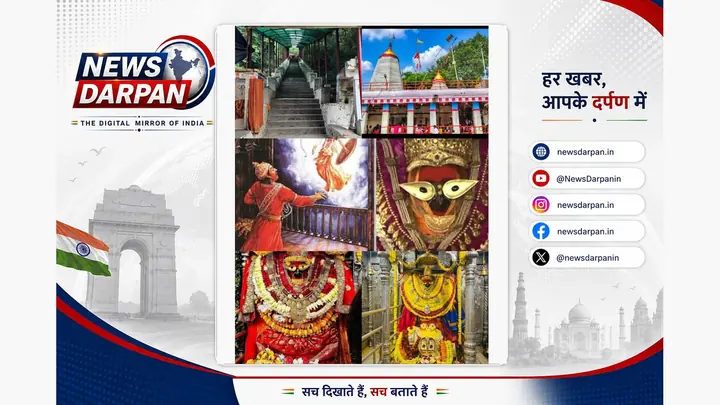
Shardiya Navratri is a nine-day period during which different forms of Goddess Durga are worshipped. On the second day of News Darpan’s “Nine Days, Nine Shaktipeeths” series, the focus is on Maa Vindhyavasini Devi Dham, located near the bank of the Ganga in Uttar Pradesh’s Mirzapur district. The series looks at the mythological story of the goddess’s appearance, the mystery associated with her divine form and the religious importance of Vindhyachal Dham.
“जय मां विंध्यवासिनी! 🌺🙏”
Vindhyachal Dham is regarded as a living place of worship dedicated to Maa Adishakti. Religious belief holds that the goddess hears the calls of devotees and protects those who seek refuge in her. A large number of devotees come to the shrine for darshan during both Shardiya Navratri and Chaitra Navratri.
Maa Vindhyavasini is worshipped as a divine form of Adishakti, Jagdamba and Goddess Durga. The name ‘Vindhyavasini’ means the goddess who resides on the Vindhya mountain. Her temple is located in Vindhyachal in Mirzapur district, Uttar Pradesh, and is counted among the major Devi pilgrimage sites in India.
At this shrine, the goddess is remembered as the force that sustains creation, protects devotees and removes difficulties. The religious tradition associated with Vindhyachal gives special importance to Maa Vindhyavasini as the presiding form of Adishakti in the Vindhya region.
The story of Maa Vindhyavasini’s appearance is linked to the birth of Lord Krishna. According to mythological belief, Kansa, the king of Mathura, was afraid of the eighth child of his sister Devaki and her husband Vasudeva. An aerial announcement had warned that Devaki’s eighth child would become the reason for Kansa’s end.
Because of this fear, Kansa imprisoned Devaki and Vasudeva. When the time came, Lord Shri Krishna was born at midnight on Bhadrapada Krishna Ashtami. According to the divine play of Lord Vishnu, Vasudeva took the newborn Shri Krishna to Gokul. He then returned to Mathura with the girl who had been born in the home of Nanda Baba and Mata Yashoda.
Kansa believed that Devaki’s eighth child had come into his hands. As soon as he lifted the girl to kill her, she slipped from his hands and rose into the sky. At that moment, the girl appeared in a divine form.
The goddess warned Kansa that his death had already been born and that he could not escape his destruction by trying to kill her. The girl was not an ordinary child. She is believed to have been the Yogmaya of Lord Vishnu and a form of Adishakti. This story is described in the Krishna-birth narrative of the Shrimad Bhagwat.
After revealing her divine form to Kansa, Yogmaya chose the Vindhya mountain as her abode to spread her power on Earth. This is the belief followed in the religious tradition of Vindhyachal. It is said that by making the Vindhya mountain her home, the goddess turned the region into a major centre of her worship. From that time, she came to be worshipped as Maa Vindhyavasini.
In the religious history of Vindhyachal, both the Krishna-birth story from the tenth canto of the Shrimad Bhagwat Mahapuran and the belief that the goddess took up residence in Vindhyachal hold special importance. The Mirzapur district administration also describes Vindhyavasini Dham as an ancient and important Devi pilgrimage site.
One of the most distinctive religious beliefs associated with Vindhyachal Dham is the triangle formed by three important temples. These three temples represent three different forms of the divine power and are connected through the Vindhyachal triangle circumambulation.
The main Vindhyavasini temple is associated with Maa Vindhyavasini as a form of Mahalakshmi. Here, the goddess is worshipped as Mahashakti and the presiding power of prosperity. Devotees pray to her for happiness, prosperity, the well-being of their families and strength in life.
Maa Kalikhoh is regarded as a form of Mahakali. The temple is situated inside a natural cave in the Vindhya mountain. According to mythological belief, the goddess took an intense and fierce form to destroy demons such as Raktabija. The place is therefore considered a symbol of that power and of the destruction of evil.
The temple of Maa Ashtabhuja is located at the height of the Vindhya mountain. According to belief, when Kansa came to kill Devaki’s eighth child, the girl slipped from his hands and appeared in the sky in a divine form. This divine form is linked to Maa Ashtabhuja.
The circumambulation of these three temples is known as the Vindhyachal triangle circumambulation. Devotees consider it a special opportunity to see and worship the different forms of Adishakti.
The traditional story of the Shaktipeeths is also connected with the religious importance of the place. According to this belief, Mata Sati gave up her body at the yajna of her father Daksha. Lord Shiva then began moving around while carrying her body. To maintain the balance of creation, Lord Vishnu divided Sati’s body with the Sudarshan Chakra.
It is believed that wherever parts of her body or ornaments fell, a Shaktipeeth was established. Along with this traditional Shaktipeeth story, the local religious tradition of Vindhyachal gives particular importance to the appearance of the goddess in her Yogmaya form and her decision to reside on the Vindhya mountain.
For this reason, Maa Vindhyavasini is not worshipped only as the goddess of one temple. She is revered as the presiding Adishakti of the entire Vindhya region.
During Navratri, the atmosphere at Vindhyachal Dham becomes filled with devotion. The area echoes with darshan, worship, aarti, bhajans and chants in praise of the goddess. Devotees offer chunari, coconut, flowers and prasad at the feet of Maa Vindhyavasini.
Devotees pray to the goddess for the fulfilment of their wishes, the well-being of their families and the strength to overcome difficulties in life. The spiritual message associated with Maa Vindhyavasini’s worship is that a person should not give up courage, faith or the path of dharma even in difficult circumstances.
During Navratri, devotees mainly seek blessings for happiness, peace and prosperity in the family. They pray for the courage to face difficulties, a bright future for their children, positivity and self-confidence in their minds, and the protection and welfare of society and the family.
These are the religious beliefs and prayers of devotees.
On the second day of the nine-day worship of the goddess, devotees can follow a simple method while offering prayers to Maa Vindhyavasini. They may offer red flowers, kumkum, a chunari and fruits or sweets according to their faith.
The worship also includes chanting the goddess’s name with a calm mind and praying for happiness and peace in the family and the welfare of everyone. The simple mantra of Maa Vindhyavasini is:
“ॐ ऐं ह्रीं क्लीं विंध्यवासिन्यै नमः।”
Devotees may chant the mantra according to their faith and convenience. In this worship, भाव, श्रद्धा and purity of the mind are given special importance.
At the end of the worship, devotees remember the goddess while showing a lamp and raise the following chant:
“जय मां विंध्यवासिनी, जगदम्बे भवानी। भक्तों की रक्षा करने वाली, हे मां कल्याणी। जय माता दी! जय मां विंध्यवासिनी!”
The story of Maa Vindhyavasini’s Yogmaya form is seen as a reminder that arrogance and injustice, no matter how powerful they may appear, are certain to end. The goddess’s divine form is regarded as a symbol of courage overcoming fear, dharma overcoming injustice and faith overcoming despair.
The religious tradition of Vindhyachal also emphasises the belief that the goddess remains close to her devotees and chose the Vindhya mountain as her home. This strengthens the faith that devotion can give a person support even in difficult circumstances.
On Navratri, devotees offer this prayer to Maa Vindhyavasini: “हे मां विंध्यवासिनी! हमारे परिवार पर अपनी कृपा बनाए रखना। सभी के जीवन में सुख, शांति, स्वास्थ्य और समृद्धि देना। दुखियों को संबल देना, निराश मन में आशा जगाना और हमें सदैव सत्य एवं धर्म के मार्ग पर चलने की शक्ति देना।”
“बोलिए, जय मां विंध्यवासिनी! 🌺🙏”
Frequently asked questions
What is the focus of Day Two of the “Nine Days, Nine Shaktipeeths” series?
Day Two focuses on Maa Vindhyavasini Devi Dham in Mirzapur, Uttar Pradesh.
Where is Maa Vindhyavasini Devi Dham located?
The temple is located in Vindhyachal, near the bank of the Ganga in Mirzapur district, Uttar Pradesh.
What does the name “Vindhyavasini” mean?
“Vindhyavasini” means the goddess who resides on the Vindhya mountain.
How is Maa Vindhyavasini linked to the birth of Lord Krishna?
According to belief, she was Yogmaya, who appeared in divine form when Kansa tried to kill the girl brought to him after Krishna’s birth.
You may also like
 National
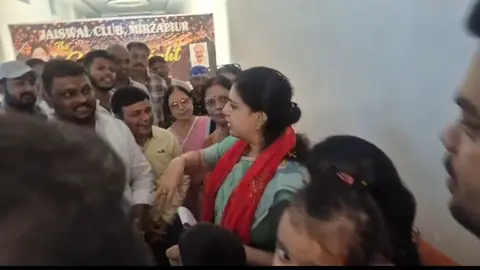
Former IAS Officer Divya Mittal Attends Mirzapur Club Event, Invited To Dandiya Programme
 Religious
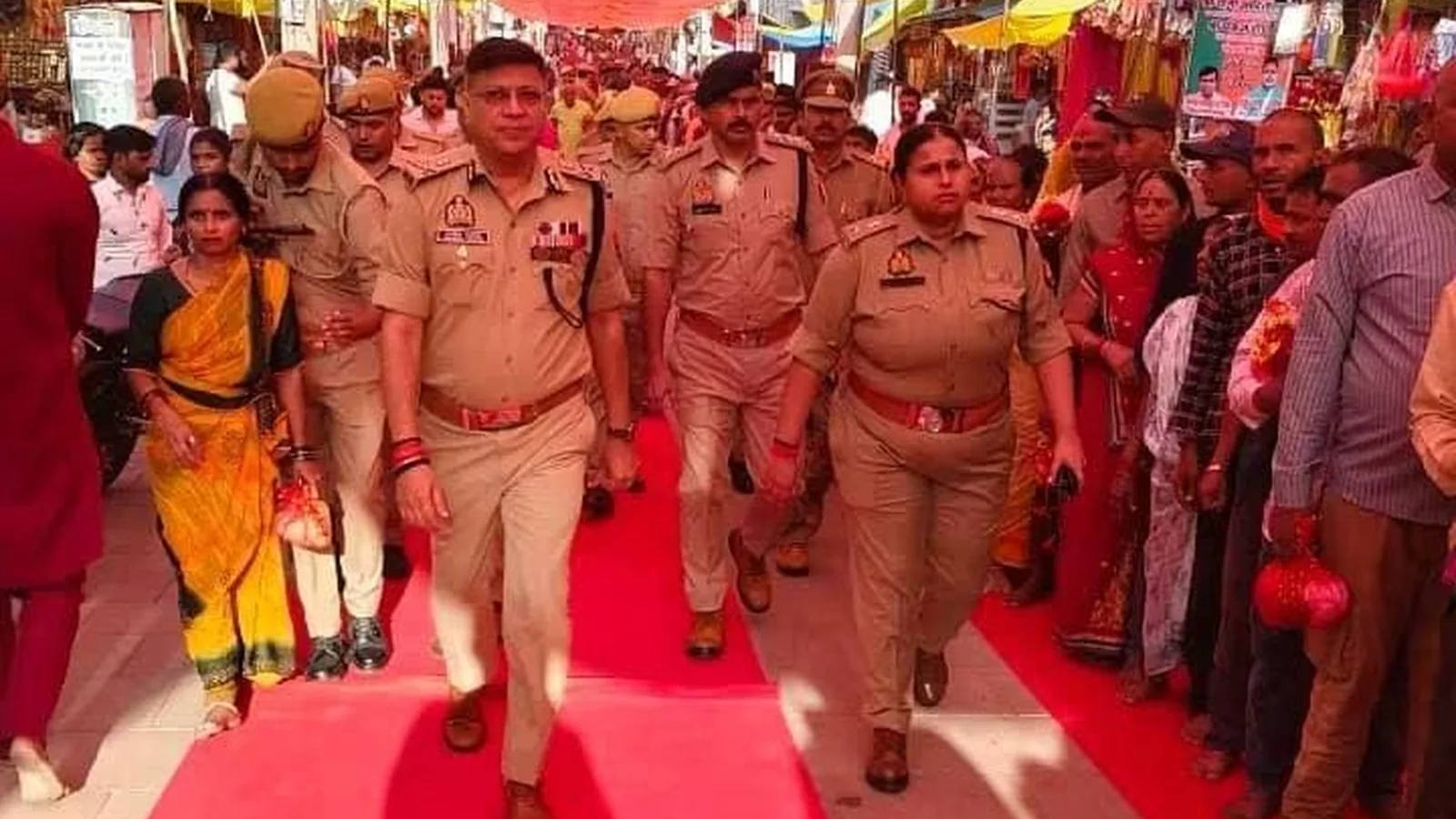
ADG Naveen Arora Inspects Vindhyachal Dham Fair Security
 National
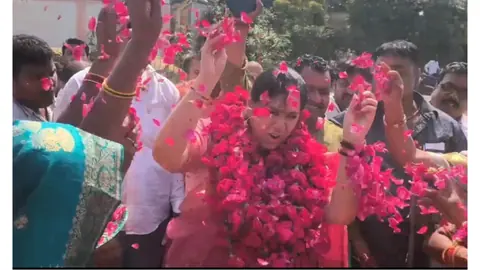
Former IAS Officer Divya Mittal Gets Grand Welcome From Vindhyachal Residents
 Religious
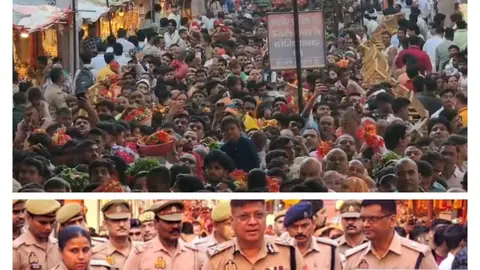
Large Devotee Crowd Gathers at Vindhyavasini Shrine as ADG Reviews Security
Most read
- 1
Air China Adds Extra Flight for Passengers Stranded in Fuel-Starved Cuba
- 2
Western disturbance to bring rain, hail and strong winds across north India
- 3
Yogi Adityanath Directs No Occupied Houses Be Demolished for Achhalda Bridge
- 4
Gwalior Temple Truck Crash Kills 12, Injures 28-29 Devotees During Navratri
- 5
Schools Shut in Five Tamil Nadu Districts, Including Chennai, Amid Heavy Rain
Comments
No comments yet. Be the first to comment.