
Misdiagnosis of treatable conditions as Alzheimer's delays proper care, neurologist warns
Experts emphasize precise diagnosis to distinguish Alzheimer's from treatable conditions and discuss brain stimulation as part of personalized dementia car

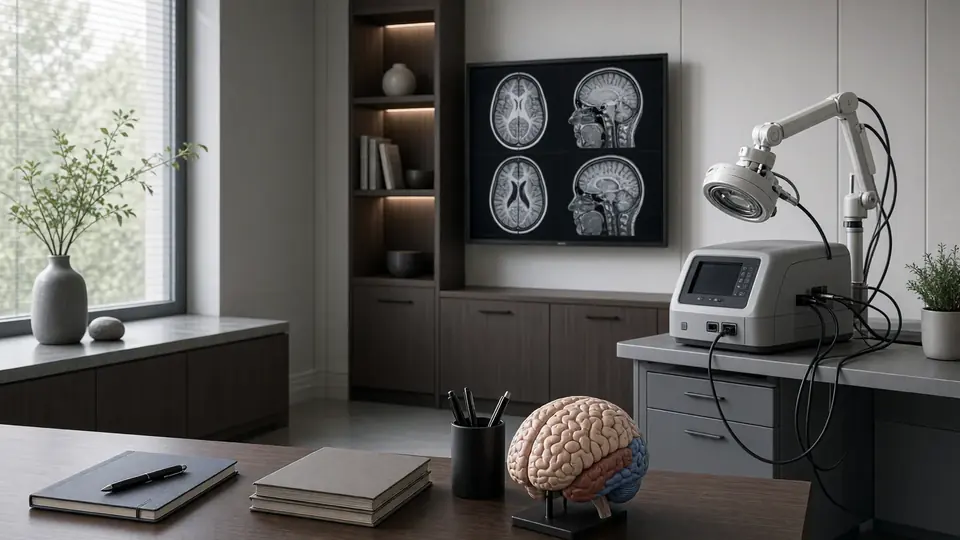
A detailed, case-specific assessment is essential to distinguish Alzheimer's disease from other treatable conditions that can mimic its symptoms, including autoimmune disorders and thyroid inflammation, a behavioural neurologist has emphasized.
Ennapadam S. Krishnamoorthy, founder and behavioural neurologist and neuropsychiatrist at Buddhi Clinic, made the observation while speaking at The Hindu Wellness Series webinar on Alzheimer's dementia and the promise of brain stimulation, held in association with Buddhi Clinic to mark World Alzheimer's Day. Dr. Krishnamoorthy said a detailed, case-based assessment was important to distinguish Alzheimer's disease from other conditions that can cause cognitive symptoms and may be treatable.
Tailoring interventions to individual patients
Dr. Krishnamoorthy also stressed the need to tailor care to the individual, noting that some medications may offer limited benefits or cause harm in certain patients. He said non-pharmacological interventions also had an important role in dementia care.
The emphasis on precision in diagnosis matters because misidentifying a treatable condition as Alzheimer's can delay appropriate treatment, while a specific diagnosis opens the door to targeted interventions that may reverse or manage cognitive symptoms more effectively than dementia-focused care.
Brain stimulation as part of broader care
Vivek Misra, senior consultant: Neuromodulation and Clinical Neurosciences at Buddhi Clinic, discussed the potential of non-invasive brain stimulation as part of dementia care. The technique uses external stimulation to modulate activity in specific areas of the brain. "It does not require sedation or seizure induction and can be done in an outpatient setting," Mr. Misra said.
He said brain stimulation should not be viewed as a standalone treatment, but as one component of a broader, precision-based approach to dementia care, with interventions tailored to the individual's clinical profile and needs.
The session was moderated by Athira Elssa Johnson, Senior Reporter, The Hindu.
Source: The Hindu
Frequently asked questions
Why is accurate diagnosis important in suspected Alzheimer's disease?
Accurate diagnosis is critical because many treatable conditions, including autoimmune disorders and thyroid inflammation, can mimic Alzheimer's symptoms. Misdiagnosing a treatable condition as Alzheimer's delays appropriate treatment, while a specific diagnosis enables targeted interventions that may reverse or manage cognitive symptoms more effectively.
What conditions can be mistaken for Alzheimer's disease?
Several treatable conditions can cause cognitive symptoms similar to Alzheimer's, including autoimmune disorders and thyroid inflammation. A detailed, case-specific assessment is essential to distinguish Alzheimer's from these other conditions.
What role do non-pharmacological interventions play in dementia care?
Non-pharmacological interventions have an important role in dementia care. Treatment should be tailored to the individual patient, as some medications may offer limited benefits or cause harm in certain patients.
What is brain stimulation and how is it used in dementia treatment?
Brain stimulation is a non-invasive technique that uses external stimulation to modulate activity in specific brain areas. It does not require sedation or seizure induction and can be performed in an outpatient setting. However, it should be viewed as one component of a broader, precision-based approach to dementia care, not as a standalone treatment.
You may also like




Most read
- 1
Tesla audits Chinese suppliers to scale up Optimus robot production
- 2
Former minister Lakhan Singh Rajput to inaugurate temple bhandara at Shri Chakreshwar Mahadev
- 3
Firozabad BSA finds four government schools locked during inspection
- 4
Tamil Nadu dengue cases fall for third consecutive year to 17,049
- 5
Social workers stage silent protest at Fufund railway station for train halts
Comments
No comments yet. Be the first to comment.