
Kerala's failed bid to block Tamil Nadu's Salem railway division in 2007
How Tamil Nadu successfully created Salem Railway Division from Palakkad in 2007 despite Kerala's opposition, train blockades, and Supreme Court petitions.

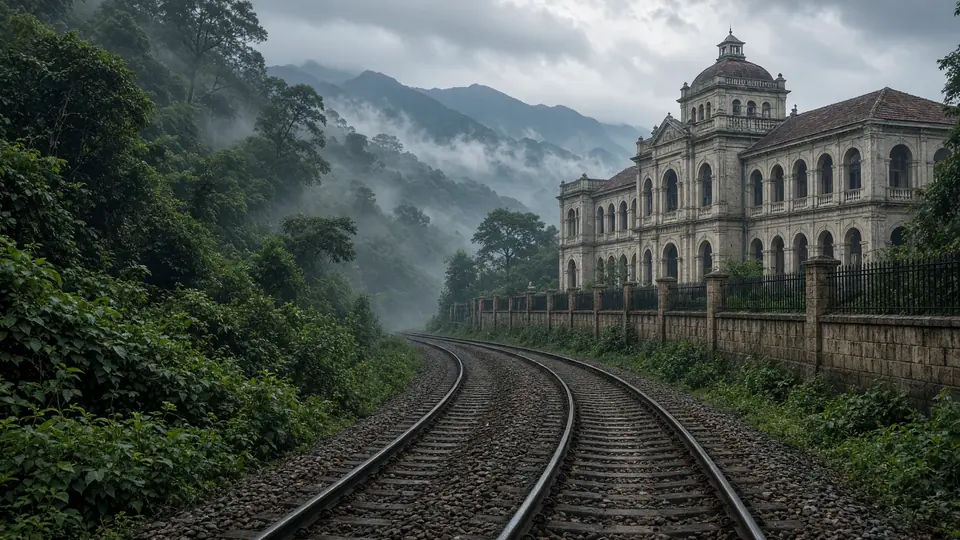
Kerala's current standoff with Karnataka over Mangaluru's proposed exit from Palakkad Railway Division mirrors a bitter 2005, 07 battle in which the state tried, and failed, to stop Tamil Nadu from carving out the Salem Railway Division from the same parent unit.
That earlier dispute escalated to train blockade threats, Supreme Court petitions, and parliamentary adjournments before Salem Division finally launched on November 1, 2007, taking 623 km of Palakkad's 862-km new footprint with it.
Tamil Nadu's six-decade push
The Railway Ministry gave in-principle approval in late 2005 to establish Salem Division, a project first mooted in the 1960s by then Deputy Railways Minister S. V. Ramaswamy. It gained momentum under R. Velu of the PMK, Union Minister of State for Railways in the UPA-I government, and was set to cover Salem, Erode, Namakkal, Coimbatore, and Dharmapuri districts then attached to Palakkad.
"Interference" and train blockades
In Kerala the proposal drew sharp pushback. Then CPI-M state secretary Pinarayi Vijayan accused the Centre of ignoring Kerala because it sat far from Delhi, while CPI's Veliyam Bhargavan alleged New Delhi was "succumbing to pressure groups in Tamil Nadu and Karnataka". By February 2007 Chief Minister V. S. Achuthanandan formally conveyed his opposition.
Tamil Nadu Agriculture Minister Veerapandi S. Arumugam, a Salem strongman, retorted that Kerala's "confrontationist attitude" risked negative consequences for inter-state relations. He insisted Tamil Nadu sought only routes within its own territory and called Achuthanandan's stance "unjustifiable" interference. When Railway Minister Lalu Prasad told the Lok Sabha that Salem would not be inaugurated until differences were resolved, Arumugam announced an indefinite blockade of all trains to and from Kerala via Salem starting August 25, 2007.
Supreme Court steps aside
A citizens' forum in Ottapalam moved the Supreme Court challenging the bifurcation's legality, but the bench declined to intervene, noting that Achuthanandan had raised the matter with Prime Minister Manmohan Singh, who promised a chief ministers' meeting. In August 2007 the row spilled into Parliament: Rajya Sabha adjourned briefly when Kerala MPs protested a Tamil Nadu member's question on the inauguration date, and in the Lok Sabha a CPI-M member sought the Home Minister's help to ensure trains ran smoothly ahead of the Onam exodus.
The compromise Kerala accepted
By September Achuthanandan softened his stand, clarifying Kerala did not oppose Salem Division outright but wanted the residual Palakkad unit to remain economically viable, and hoped Tamil Nadu would not object to a future west-coast railway zone headquartered in Kerala. To assuage concerns, Coimbatore and Erode junctions stayed with Palakkad, along with the Pollachi, Palakkad and Pollachi, Kinnattukkadavu sections. Two decades later, Kerala finds itself on the opposite side of a nearly identical argument.
Source: The Hindu
Frequently asked questions
What was Kerala's dispute with Tamil Nadu over the Salem Railway Division?
In 2005, 07, Kerala opposed Tamil Nadu's plan to carve out the Salem Railway Division from the Palakkad Railway Division. Kerala argued the Centre was ignoring the state and succumbing to pressure from Tamil Nadu and Karnataka. The dispute escalated to train blockade threats, Supreme Court petitions, and parliamentary adjournments before Salem Division finally launched on November 1, 2007.
Why did Tamil Nadu want to create the Salem Railway Division?
The project was first proposed in the 1960s to serve Salem, Erode, Namakkal, Coimbatore, and Dharmapuri districts. The Railway Ministry gave in-principle approval in late 2005, with momentum building under Union Minister of State for Railways R. Velu. Tamil Nadu argued it sought only routes within its own territory and accused Kerala of unjustifiable interference.
What compromise did Kerala accept?
By September 2007, Kerala softened its stance and accepted the division on condition that the residual Palakkad unit remain economically viable. To address Kerala's concerns, Coimbatore and Erode junctions stayed with Palakkad, along with the Pollachi, Palakkad and Pollachi, Kinnattukkadavu sections. Kerala also hoped Tamil Nadu would not object to a future west-coast railway zone headquartered in Kerala.
What happened when Tamil Nadu threatened a train blockade?
After Railway Minister Lalu Prasad said Salem would not be inaugurated until differences were resolved, Tamil Nadu Agriculture Minister Veerapandi S. Arumugam announced an indefinite blockade of all trains to and from Kerala via Salem starting August 25, 2007. This escalated the dispute significantly and prompted parliamentary action to resolve the matter.
You may also like
 Politics
Confident that Vijay will accept Rahul as Prime Ministerial candi
 Politics
BJP constitutes committee over ‘unexpected events’ in its Tamil N
 Defence
Kerala and Tamil Nadu to jointly monitor illegal cross-border waste dumping
 Health
Tamil Nadu dengue cases fall for third consecutive year to 17,049
Most read
- 1
Tesla audits Chinese suppliers to scale up Optimus robot production
- 2
Former minister Lakhan Singh Rajput to inaugurate temple bhandara at Shri Chakreshwar Mahadev
- 3
Firozabad BSA finds four government schools locked during inspection
- 4
Tamil Nadu dengue cases fall for third consecutive year to 17,049
- 5
Social workers stage silent protest at Fufund railway station for train halts
Comments
No comments yet. Be the first to comment.