
Japanese Fans Face Backlash for Domestic Double Standards After World Cup Clean-Up
Japanese football fans' stadium clean-up sparks meme on domestic double standards, highlighting unequal household responsibilities for men.

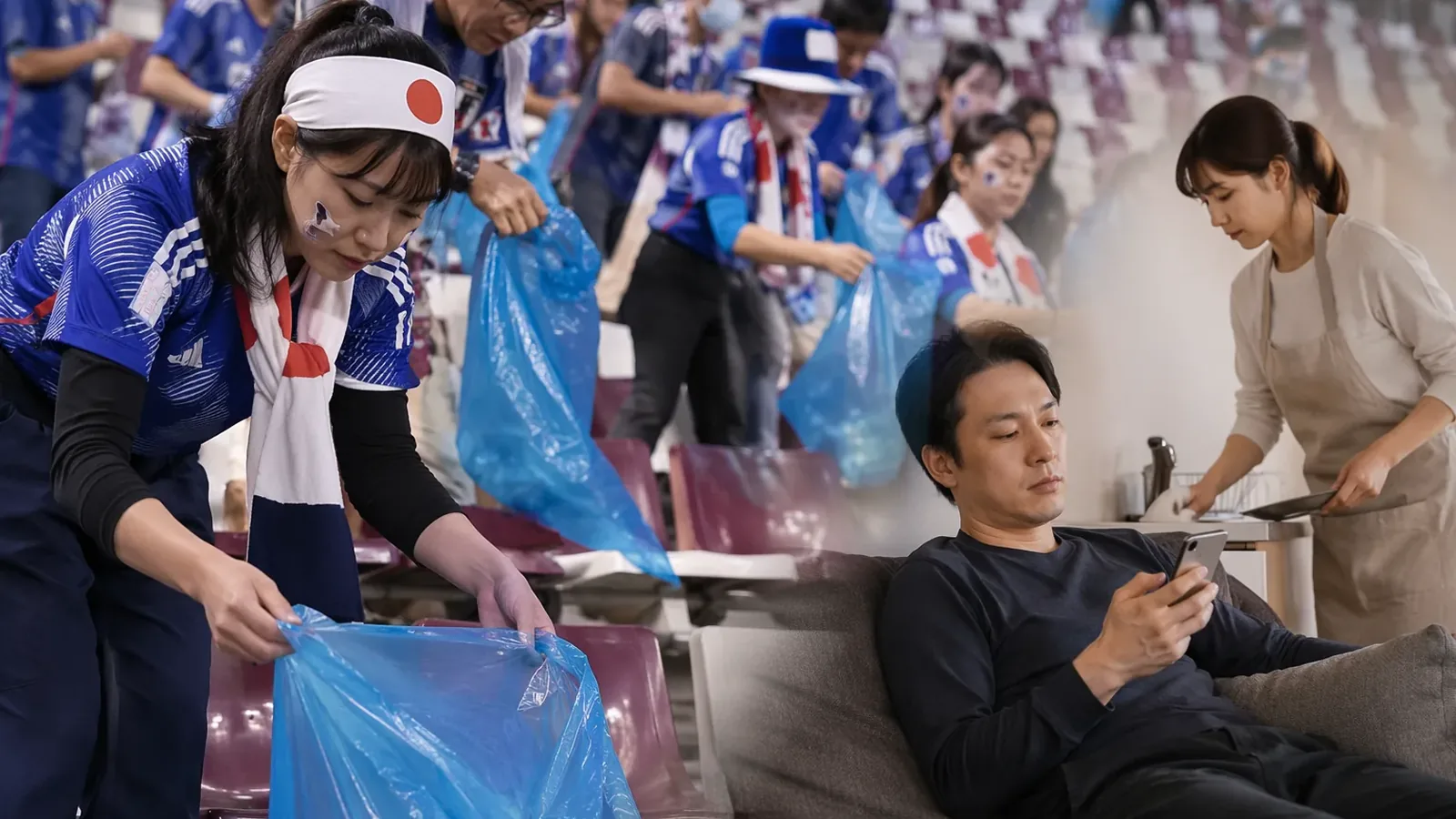
Japanese football fans have once again gained global attention for their habit of tidying up stadiums after matches, this time following their team’s World Cup clash against the Netherlands. However, their actions have sparked criticism back home, with a viral meme calling out Japanese men for not demonstrating the same level of responsibility in their domestic lives.
The meme, which has been widely shared online, juxtaposes two contrasting scenes: one of a football fan cleaning up a stadium and another of a domestic setting where a woman is seen washing dishes while a man, dressed in the national football team’s Samurai Blue jersey, relaxes on a sofa. Accompanied by the slogan “Please do it at home,” the image has struck a chord, being reposted over 13,000 times on social media.
This critique is rooted in data highlighting the unequal division of unpaid labour in Japan. Studies show that Japanese men contribute minimally to household tasks such as cleaning, shopping, and childcare, even as more women join the workforce. According to OECD statistics, Japanese men rank among the lowest in housework contributions across member countries. While there has been gradual progress, a 2021 government study revealed that men spend an average of just 51 minutes per day on such tasks, compared to three hours and 24 minutes for women.
The criticism extended beyond men, with some social media users pointing out that Japanese people do not always maintain the same cleanliness standards at public events within the country. Litter is reportedly visible on streets after large weekend gatherings and in less frequented areas.
The viral “Please do it at home” meme draws inspiration from a well-known Tokyo Metro poster series designed by artist Bunpei Yorifuji. These posters, featuring bold yellow-and-black visuals, humorously urged passengers to avoid disruptive behaviours such as applying makeup, playing loud music, or making phone calls on trains.
Frequently asked questions
What sparked the backlash against Japanese fans after the World Cup clean-up?
The backlash was sparked by a viral meme criticizing Japanese men for not showing the same level of responsibility in domestic life as they do in cleaning up stadiums after matches.
What does the viral meme depict?
The meme juxtaposes a football fan cleaning a stadium with a domestic scene where a woman is washing dishes while a man relaxes on a sofa, accompanied by the slogan 'Please do it at home.'
How do Japanese men's contributions to household tasks compare to women's?
Studies show that Japanese men contribute minimally to household tasks, averaging just 51 minutes per day, while women spend about three hours and 24 minutes on such tasks.
What is the origin of the slogan used in the meme?
The slogan 'Please do it at home' draws inspiration from a Tokyo Metro poster series designed by artist Bunpei Yorifuji.
What do the OECD statistics indicate about Japanese men's housework contributions?
OECD statistics indicate that Japanese men rank among the lowest in housework contributions across member countries.
You may also like
 Entertainment
Odell Beckham Jr. Faces Online Jokes Over Greek Model Rumors
 National
JSS AHER Delegation Visits Japan’s AIST To Explore Research Cooperation
 Business
Japan's Nationality Disclosure Rule Sparks Fears of Slowing Foreign Property Investment
 National
Japan expands mediation channels to support ASEAN’s Myanmar peace push
Most read
- 1
Air China Adds Extra Flight for Passengers Stranded in Fuel-Starved Cuba
- 2
Western disturbance to bring rain, hail and strong winds across north India
- 3
Yogi Adityanath Directs No Occupied Houses Be Demolished for Achhalda Bridge
- 4
Gwalior Temple Truck Crash Kills 12, Injures 28-29 Devotees During Navratri
- 5
Schools Shut in Five Tamil Nadu Districts, Including Chennai, Amid Heavy Rain
Comments
No comments yet. Be the first to comment.