
Irrigation Minister blames El Nino and previous govt for farmer crisis
Telangana's Irrigation Minister attributes farmer water crisis to El Niño weather patterns and decade of irrigation mismanagement by previous BRS governmen

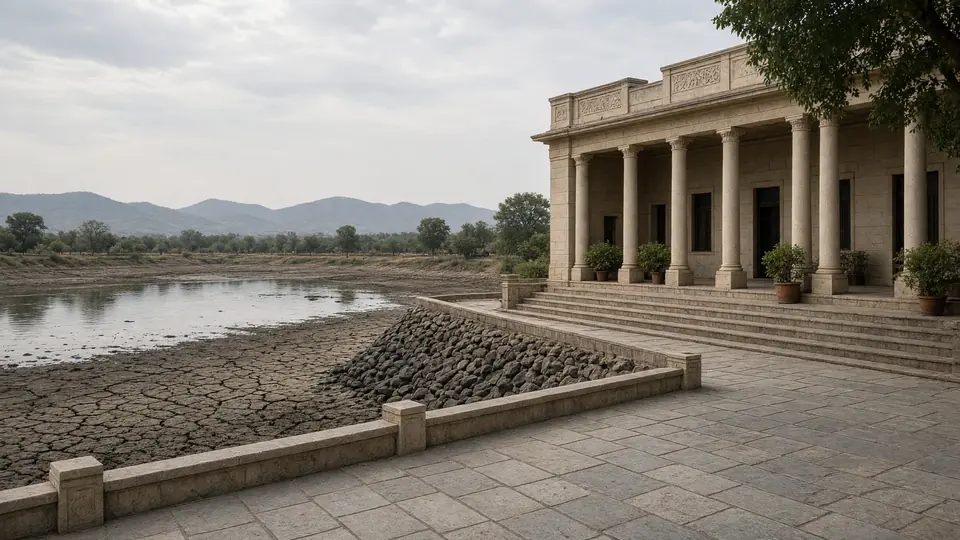
Uttam blames previous govt. failure on irrigation, El Nino for ryots' plight now
The State government has committed to standing by farmers through the ongoing water crisis, with Irrigation Minister N. Uttam Kumar Reddy attributing the situation to a combination of El Nino weather patterns and a decade of irrigation mismanagement under the previous BRS administration.
While initiating a discussion on El Nino effects and remedial measures in the Assembly, the Minister outlined three core priorities: safeguarding drinking water, protecting standing crops, and securing Telangana's rightful share in river waters. He emphasised that the crisis stems from both adverse weather conditions and the legacy of unfinished projects, defective construction, and poor water management left by the previous dispensation.
Government prepared to mitigate El Nino impact
"Even if we cannot prevent El Nino, the government is prepared in advance to reduce its impact," Mr. Uttam Kumar Reddy stated. He explained that the Agriculture and Irrigation Departments had been proactively alerting farmers following warnings from international weather agencies, informing them about the possibility of deficient rainfall, irrigation availability, and suitable or alternative crop choices.
The Minister detailed how the south-west monsoon took nearly 15 days to cover all 33 districts, with rainfall remaining uneven and erratic throughout. He cautioned that encouraging cultivation without adequate water release for irrigation and then withdrawing it when crops reached a critical stage would be irresponsible.
Sharp decline in reservoir storage levels
Highlighting the severity of the water shortage, Mr. Uttam Kumar Reddy presented stark comparisons of usable reservoir storage across the state. As on September 17, Srisailam held only 61.65 tmc ft of water against 153.56 tmc ft available the previous year. Similarly, usable water in Nagarjunasagar stood at just 44.89 tmc ft compared to 174.25 tmc ft held last year.
In the Godavari Basin, the situation was equally concerning. Usable storage in Singur was merely 3.48 tmc ft against 16.69 tmc ft available on the same day last year. Lower Manair Dam's usable water measured 8.95 tmc ft against 21.39 tmc ft on September 17 last year. The total usable water in reservoirs across both the Krishna and Godavari basins stood at 241 tmc ft this year against 585 tmc ft last year.
Water utilisation and tank status
On the question of Krishna water use by Telangana, Mr. Uttam Kumar Reddy noted it was highest at 286.3 tmc ft in 2024-25, while Godavari water utilisation reached 340.93 tmc ft in 2025-26. Of the State's 44,034 tanks, approximately 40 per cent had less than one-quarter full, and only 18 per cent of tanks have storage between 75 per cent and 100 per cent of their capacity.
Kaleshwaram barrages and pending projects
The Minister squarely blamed the previous government for the Kaleshwaram project barrages' failure, rendering them unusable for water diversion. He stated that designs for the rehabilitation of the barrages were expected to be ready by mid-November.
Addressing the Tummidihatti barrage issue, Mr. Uttam Kumar Reddy urged BJP leaders to press the Centre to advance the barrage proposal with a 152 metre full reservoir level by convincing the BJP governments in Maharashtra and at the Centre. He alleged that abandoning the Pranahita, Chevella project was a historic blunder committed by the previous BRS government.
The discussion underscored how current water management challenges reflect both immediate climatic pressures and longstanding infrastructure deficits, requiring both short-term crisis response and longer-term structural reforms to protect the state's agricultural economy.
Source: The Hindu
Frequently asked questions
What does the Irrigation Minister say caused the current farmer crisis?
Minister N. Uttam Kumar Reddy attributes the crisis to a combination of El Nino weather patterns and a decade of irrigation mismanagement under the previous BRS administration, including unfinished projects, defective construction, and poor water management.
How much has reservoir storage declined compared to last year?
Total usable water in reservoirs across the Krishna and Godavari basins stood at 241 tmc ft this year compared to 585 tmc ft last year. Major reservoirs like Srisailam hold only 61.65 tmc ft against 153.56 tmc ft the previous year.
What are the government's three core priorities during the water crisis?
The Irrigation Minister outlined three core priorities: safeguarding drinking water, protecting standing crops, and securing Telangana's rightful share in river waters.
What is the status of the state's tanks during this water shortage?
Of the State's 44,034 tanks, approximately 40 per cent have less than one-quarter full, while only 18 per cent of tanks have storage between 75 per cent and 100 per cent of their capacity.
You may also like
 National
Ex-servicemen, widows in Telangana to get higher welfare grants
 National
Telangana's 2.6 million MSMEs urged to adopt cleaner industrial technologies
 Weather
IMD warns of thunderstorms and lightning across 25 Telangana districts
 National
Telangana suspends FSSAI licenses of nine restaurants over food safety violations
Most read
- 1
Tesla audits Chinese suppliers to scale up Optimus robot production
- 2
Former minister Lakhan Singh Rajput to inaugurate temple bhandara at Shri Chakreshwar Mahadev
- 3
Firozabad BSA finds four government schools locked during inspection
- 4
Tamil Nadu dengue cases fall for third consecutive year to 17,049
- 5
Social workers stage silent protest at Fufund railway station for train halts
Comments
No comments yet. Be the first to comment.