
IPS Officer Anurag Sujania Resigns Amid Poisonous Liquor Deaths in Madhya Pradesh
Questions over government system after poisonous liquor deaths The resignation of IPS officer Anurag Sujania, amid cases of deaths caused by poisonous liquor in Morena and Sagar, has intensified

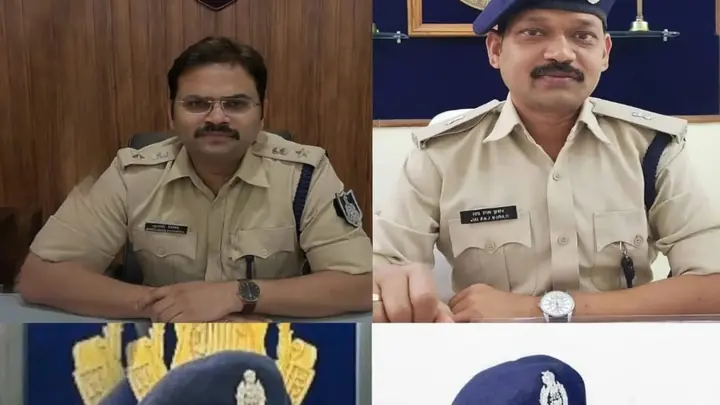
Questions over government system after poisonous liquor deaths
The resignation of IPS officer Anurag Sujania, amid cases of deaths caused by poisonous liquor in Morena and Sagar, has intensified questions over the functioning of Madhya Pradesh’s administrative and political system. The controversy has also brought renewed attention to the figure of 100 deaths and to allegations that a network linked to officials, employees and influential people continues to operate without fear.
RTI activist Dr Anand Rai has now launched a sharp attack over the entire episode through a post on his Facebook wall. His comments have opened a fresh debate over the role of the Excise Department, the police administration and alleged political protection for the illegal liquor trade.
Rai has questioned whether officials from the Excise Department to the police have become “silent partners” in the illegal business. His allegations have placed the working of the government machinery under scrutiny, particularly after the resignation of Sujania and the poisonous liquor deaths reported in Morena and Sagar.
Questions over the Excise Department
In his post, Anand Rai alleged that the Excise Department, which is responsible for regulating liquor sales and controlling illegal liquor trade in the state, cannot escape questions about its own role. He questioned the functioning of officials from the DEO level to the Excise Commissioner level.
Rai also alleged that some officials may have a share in the illegal liquor business or may be providing protection to those involved in it. His post referred to the alleged involvement of influential officials and even relatives of people holding positions at the top of the power structure.
These allegations have not been independently confirmed. An investigation is still required to establish whether the claims about the alleged involvement and protection are correct.
The central question is how the illegal liquor business continues to flourish when the Excise Department has an entire administrative setup and rules are in place to control the sale and transportation of liquor.
The issue is whether the department does not receive information about the illegal trade or whether there is a serious weakness in the monitoring system itself. The presence of officials and regulations has not prevented questions from being raised over the continuing illegal movement and sale of liquor.
Rai has also alleged that, in some places, the role of the police in the illegal liquor business appears suspicious. He said that if the police take strict action, the sale and transportation of illegal liquor can be stopped effectively.
This has widened the focus of the controversy. The question is no longer limited to the liquor mafia. It also concerns the government machinery responsible for stopping the trade and protecting people from poisonous liquor.
Why were four TIs deployed?
Anand Rai’s post specifically referred to the Khategaon liquor case. He questioned why four police station in-charges, or TIs, had to be deployed to stop an Eicher vehicle carrying illegal liquor to Gujarat.
According to the questions raised in his post, the four TIs had to leave their responsibilities related to law and order and crime control to take part in the action against the vehicle. Rai asked why such a large police deployment was needed when the Excise Department already exists to act against illegal liquor.
He also questioned why the same level of urgency is not seen when police have to arrest accused people in murder cases, rape cases and organised crime cases. The comparison was used in his post to question the priority given to the liquor action and the effectiveness of the existing monitoring system.
The issue raised by Rai is whether the Excise Department’s monitoring arrangements are adequate. If the department is responsible for controlling illegal liquor, the deployment of four TIs for the action has raised questions about coordination between the Excise Department and the police.
The source material does not establish why the four TIs were deployed. It records the question raised by Rai over the police action and the responsibility of the Excise Department.
Allegations over illegal transport of steel rods
Rai’s post did not limit the allegations to the liquor trade. He also alleged that steel rods are being transported illegally from Raipur and Maharashtra to Indore’s iron market.
He further alleged that GST evasion is taking place on a large scale in this business. Rai questioned why action is not taken against such transportation if bills and transit permits, or TP, are checked during the movement of the goods.
These allegations, if found to be correct, could bring more departments under scrutiny. The issue would then not remain limited to alleged inaction by the Excise Department or the police. The monitoring systems of the Commercial Tax Department and the Transport Department could also come under investigation.
The post therefore raises questions about the supervision of goods transportation, the checking of documents and the enforcement of tax rules. However, the allegations about the illegal movement of steel rods and GST evasion also require investigation and evidence.
Alleged cycle after a change in police leadership
The most serious allegation in the post concerns the functioning of the police administration. Anand Rai claimed that whenever a new police captain takes charge in a district, action is first taken against illegal traders to establish the officer’s presence.
He alleged that after this initial action, a new cycle of illegal businesses and alleged protection begins. According to the claim, illegal operators are able to re-enter the business after the initial enforcement action.
Rai also alleged that influential members of the mafia have enough power to get a police captain removed from the post if the officer takes particularly strict action against illegal activities.
The claim suggests that police officers who act firmly against illegal businesses may face pressure from influential people. These allegations have not been established. Independent investigation and concrete evidence would be required to verify them.
The allegation has nevertheless added another layer to the debate over administrative accountability. The question is whether the removal or transfer of an officer can affect action against illegal businesses, and whether district-level enforcement can remain independent of pressure.
Sujania’s resignation adds to the debate
The developments surrounding the resignation of IPS officer Anurag Sujania had already raised questions about the functioning of the police administration and the government in Madhya Pradesh.
Sujania was recently given the responsibility of AIG. Before that, he was the Superintendent of Police of Sagar. His resignation, during the period in which cases of deaths caused by poisonous liquor were being discussed, has intensified the debate over administrative accountability.
The resignation has become an important part of the wider controversy because it has brought attention to the responsibility of officers and departments during cases involving poisonous liquor deaths. The issue is not limited to the decision of one officer to resign. It has also raised questions about the system in which several departments are responsible for preventing the illegal liquor trade.
Anand Rai’s Facebook post has given a new dimension to that debate. His allegations cover the Excise Department, the police, the Commercial Tax Department and the Transport Department. They also refer to alleged political protection and the alleged involvement of influential officials and relatives of people at the top of the power structure.
Five questions before the government
The controversy has placed five main questions before the government.
The first is at what level accountability will be fixed in the Excise Department after the deaths caused by poisonous liquor.
The second is when the allegations of alleged involvement of officials and influential people in the illegal liquor trade will be investigated impartially.
The third is why four police station in-charges, or TIs, had to be deployed for the action against illegal liquor despite the presence of the Excise Department.
The fourth is how effective the district-level monitoring system is in stopping the transportation and sale of illegal liquor.
The fifth is who will fix the government’s accountability if officers in a district are forced to work under pressure from the mafia.
The questions raised after the poisonous liquor deaths are therefore not limited to those accused of selling the liquor. They also concern the system responsible for stopping the trade and protecting people’s lives.
If illegal businesses continue to flourish despite departmental monitoring, and poisonous liquor continues to cause deaths, accountability cannot remain limited only to small-time smugglers. The role of the Excise Department, the police and the other departments concerned will have to be examined through an impartial investigation.
Otherwise, the concern raised in the source material is that every major liquor case may be followed by a few actions, changes in officials and resignations, while the alleged network behind the deaths remains unchanged.
You may also like
 Education
Two Groups of Shri Ram College Students Clash at Morena Overbridge, Video Emerges
 National
Excise Department Launches Muzaffarnagar Drive Against Illegal Liquor, Overcharging
 Business
Hathras Excise Department Inspects Liquor Shops, Verifies Stock and QR Codes
 National
Minor Allegedly Fires Licensed Rifle During Morena Birthday Party
Most read
- 1
SK Hynix Reports Sixth Straight Record Operating Profit as AI Chip Demand Surges
- 2
Hong Kong Proposes Criminalising Bid-Rigging in Building Maintenance Sector
- 3
American Influencer Marvin Achi Objects After Shivani Kumari Applies Soot To His Face
- 4
Hong Kong Runners Criticise Water Shortages, Tough Course at Inaugural Marathon
- 5
Om Birla Inaugurates Kochi International Book Festival as Event Begins
Comments
No comments yet. Be the first to comment.