
India successfully tests advanced LRLACM cruise missile for long-range strikes
India's LRLACM missile enhances long-range strike capabilities with stealth and precision. A game-changer in missile technology.

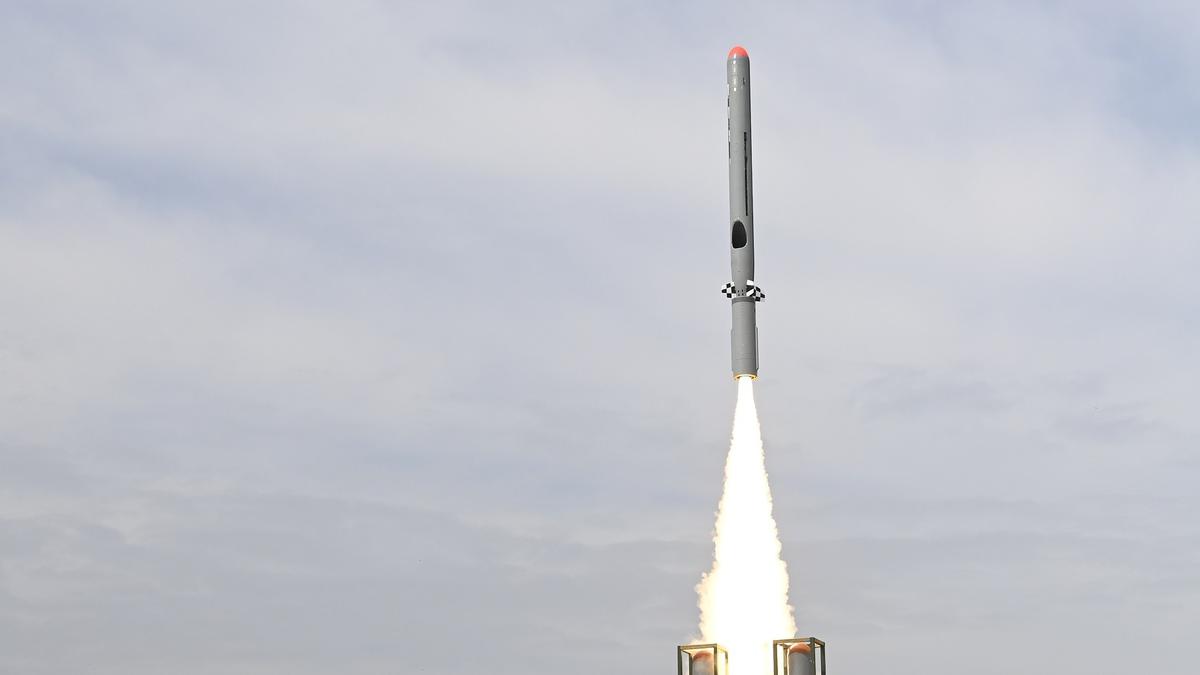
Sea-Skimming, Terrain-Hugging, Precision-Guided: Inside India's New LRLACM Cruise Missile
NEW DELHI: In a significant stride towards bolstering its long-range strike capabilities, India has successfully tested the Long Range Land Attack Cruise Missile (LRLACM). Developed by the Defence Research and Development Organisation (DRDO), the missile is being hailed as India’s answer to the American Tomahawk cruise missile. Designed to fly low, evade enemy radars, and strike targets with precision over hundreds of kilometres, the LRLACM represents a leap forward in India’s missile technology.
While India already possesses the supersonic BrahMos missile, the LRLACM is tailored for a different role. Its strength lies in stealth, range, and accuracy rather than speed. The recent test, conducted from Dr APJ Abdul Kalam Island off the Odisha coast, marks a critical step towards its induction and showcases the advanced technologies shaping India’s next-generation precision-strike arsenal.
A Stealthy and Adaptive Flight Profile
Unlike ballistic missiles such as the Agni series, which follow a high-arching trajectory into the upper atmosphere, the LRLACM remains within the atmosphere throughout its flight. It operates more like an unmanned aircraft, continuously adjusting its route and altitude to evade detection by enemy air-defence systems. This makes it significantly harder to track and intercept.
Cruise missiles like the LRLACM are often considered ideal for first-strike operations due to their ability to penetrate heavily defended airspace and neutralise critical targets before broader military campaigns commence.
Terrain-Hugging and Radar Evasion
One of the missile's standout features is its terrain-following capability. The LRLACM is engineered to fly at very low altitudes, using advanced onboard sensors and navigation systems to follow the contours of the ground. By hugging the terrain, the missile can remain concealed from enemy radar systems until the final moments of its approach, leaving defenders with minimal reaction time. This low-altitude flight profile is a key reason why cruise missiles are among the most challenging weapons to intercept.
The missile employs sophisticated terrain contour matching and digital navigation technologies. Instead of relying solely on satellite navigation, it compares the terrain below with pre-loaded digital maps, allowing it to navigate accurately even in environments where GPS signals are degraded or unavailable. Such systems, long associated with advanced Western missiles like the Tomahawk, ensure the LRLACM’s precision and reliability over extended ranges and complex routes.
Future Naval Variants and Sea-Skimming Capability
Although the current version of the LRLACM is land-based, future naval variants are expected to incorporate sea-skimming capabilities. A sea-skimming missile flies just a few metres above the water’s surface, using the curvature of the Earth and sea clutter to evade detection. Combined with its low radar visibility and unpredictable flight paths, this capability would make the LRLACM a formidable weapon against both land and maritime targets.
Precision Strikes and Strategic Impact
The LRLACM is designed to deliver precision strikes on high-value targets such as command centres, air bases, radar stations, logistics hubs, and other critical military infrastructure. Unlike weapons intended for area bombardment, it is engineered to hit specific targets with minimal collateral damage. Modern guidance systems enable the missile to approach targets from unexpected directions, enhancing its effectiveness in strategic operations where accuracy is paramount.
With an estimated range of around 1,000 kilometres, the LRLACM can engage targets deep within hostile territory while keeping launch platforms and personnel safely out of enemy air-defence range. This stand-off strike capability is increasingly vital as air-defence systems grow more sophisticated.
A Successor to Nirbhay
The LRLACM is widely regarded as the operational successor to the Nirbhay cruise missile programme. Technologies developed and refined over more than a decade of Nirbhay testing have been integrated into the LRLACM, resulting in a more advanced and mature system that combines long range, precision guidance, survivability, and indigenous innovation.
Complementing BrahMos
India’s missile arsenal already includes the BrahMos, one of the fastest cruise missiles in the world. However, the BrahMos and LRLACM serve distinct purposes. While the BrahMos relies on its supersonic speed, nearly three times the speed of sound, to overwhelm defences, the LRLACM prioritises stealth, extended range, and the ability to penetrate enemy defences undetected. Together, these two systems provide Indian military planners with versatile options for both rapid engagement and deep-strike missions.
The successful development of the LRLACM underscores India’s growing expertise in advanced missile technologies, marking a significant milestone in its defence capabilities.
Frequently asked questions
What is India's LRLACM cruise missile?
The Long Range Land Attack Cruise Missile (LRLACM) is an advanced cruise missile developed by India's Defence Research and Development Organisation (DRDO). It is designed to fly low, evade enemy radars, and strike targets with precision over hundreds of kilometres, similar to the American Tomahawk missile.
How does the LRLACM differ from India's BrahMos missile?
While India already possesses the supersonic BrahMos missile, the LRLACM is tailored for a different role. The LRLACM's strengths lie in stealth, range, and accuracy rather than speed.
What makes the LRLACM difficult to detect and intercept?
The LRLACM uses terrain-following capability to fly at very low altitudes, using advanced onboard sensors to follow ground contours. This keeps it concealed from enemy radar systems until the final moments of approach. It also employs terrain contour matching and digital navigation technologies, allowing accurate navigation even when GPS signals are degraded.
Where was the recent LRLACM test conducted?
The recent test was conducted from Dr APJ Abdul Kalam Island off the Odisha coast, marking a critical step towards the missile's induction into India's arsenal.
You may also like
 Defence
India Successfully Tests Indigenous Long-Range Land Attack Cruise
 Defence
Vietnam-BrahMos missile deal nearing finalization, says BrahMos Aerospace chief
 National
India and Slovakia elevate ties to Comprehensive Partnership
 Politics
BJP MP Gulam Ali Khatana alleges Pakistan orchestrated OIC’s anti-India resolutions
Most read
- 1
Air China Adds Extra Flight for Passengers Stranded in Fuel-Starved Cuba
- 2
Western disturbance to bring rain, hail and strong winds across north India
- 3
Yogi Adityanath Directs No Occupied Houses Be Demolished for Achhalda Bridge
- 4
Gwalior Temple Truck Crash Kills 12, Injures 28-29 Devotees During Navratri
- 5
Schools Shut in Five Tamil Nadu Districts, Including Chennai, Amid Heavy Rain
Comments
No comments yet. Be the first to comment.