
Hong Kong medical schools must teach doctors to work alongside AI, leaders say
Healthcare leaders discuss preparing Hong Kong doctors for AI integration, emotional intelligence, and clinical expertise in evolving medical practice.

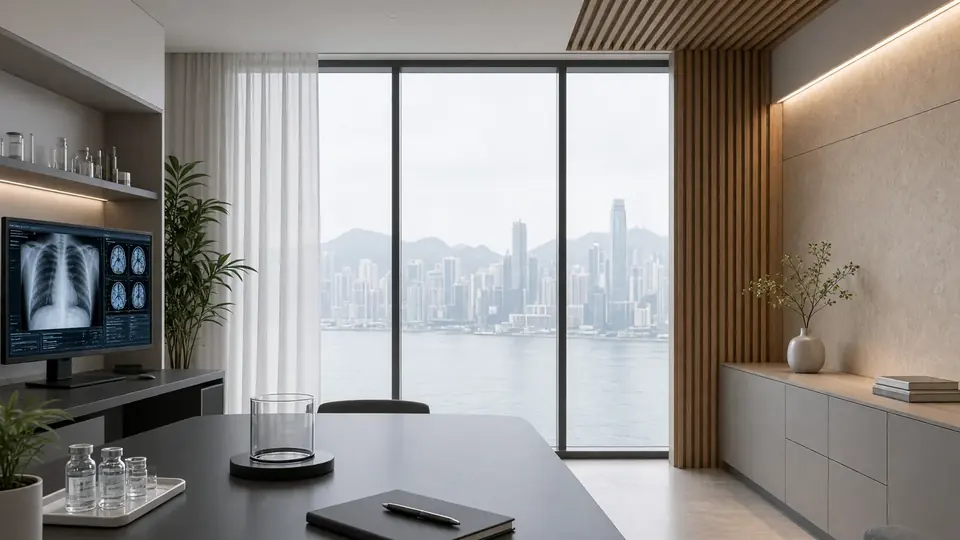
Medical schools must equip Hong Kong's next generation of doctors with clinical expertise, emotional intelligence and the ability to work alongside artificial intelligence, healthcare leaders said at a global education forum.
AI will not replace doctors, but demands new skills
Traditional measures of medical competence are shifting as AI transforms clinical practice, according to Dr Chung Kin-lai, chief executive officer of CUHK Medical Centre. Soft skills have become increasingly important in the profession, Chung noted.
Medical experts emphasised that aspiring doctors must balance rigorous clinical training with emotional resilience, an open-minded stance toward AI technology and the ambition to reshape healthcare delivery. The consensus among panellists was clear: AI will not replace doctors, but will benefit those who learn to ask better questions.
Preparing for an 18-million patient base
Chung reframed the cross-border flow of patients as an opportunity rather than a threat. "We always talk about people going north, going to Shenzhen … for medical services. But I would say that it's a good thing for a future doctor. You're going to be a doctor not just for seven million people. You're going to be a doctor for 18 million people," he said.
The remarks came during a panel discussion on the opening day of the Global Education Summit, co-organised by the South China Morning Post and HSBC Premier. The session, titled "Powering Hong Kong's Healthcare Talent Pipeline: From Medical Education to Research and Industry Impact", examined how the sector is readying young doctors and healthcare professionals for a rapidly changing environment.
The two-day summit drew approximately 5,000 policymakers, educators and parents from around the world to address regional talent development, AI integration and evolving academic pathways.
Source: South China Morning Post
Frequently asked questions
Will artificial intelligence replace doctors?
No, according to healthcare leaders at the Global Education Summit. AI will not replace doctors, but will benefit those who learn to use it effectively and ask better questions.
What new skills do medical students need to develop?
Beyond clinical expertise, aspiring doctors must develop emotional intelligence, emotional resilience, an open-minded stance toward AI technology, and the ability to work alongside artificial intelligence systems.
How is the patient base changing for Hong Kong doctors?
Hong Kong doctors will increasingly serve an 18-million patient base across the border, not just the local seven million population, as cross-border patient flows create new opportunities for medical professionals.
What is the Global Education Summit addressing?
The two-day summit, co-organised by the South China Morning Post and HSBC Premier, brings together approximately 5,000 policymakers, educators and parents to address regional talent development, AI integration, and evolving academic pathways in healthcare.
You may also like
 Technology
Doctors must retain final say on AI in healthcare, medical leaders agree
 Education
Ghaziabad Doctor Soni Sharma Clears NEET-PG, Gulmohar Enclave Celebrates
 International
US and China seek stability amid race for AI and semiconductor dominance
 International
US and China should establish AI safety standards like nuclear-era safeguards, says lawmaker
Most read
- 1
Tesla audits Chinese suppliers to scale up Optimus robot production
- 2
Former minister Lakhan Singh Rajput to inaugurate temple bhandara at Shri Chakreshwar Mahadev
- 3
Firozabad BSA finds four government schools locked during inspection
- 4
Tamil Nadu dengue cases fall for third consecutive year to 17,049
- 5
Social workers stage silent protest at Fufund railway station for train halts
Comments
No comments yet. Be the first to comment.