
Heavy Rains Refill Andhra Reservoirs, Village Tanks After Prolonged Dry Spell
Heavy rains replenish Andhra Pradesh tanks and reservoirs, easing water scarcity in villages after a prolonged dry spell linked to El Nino.

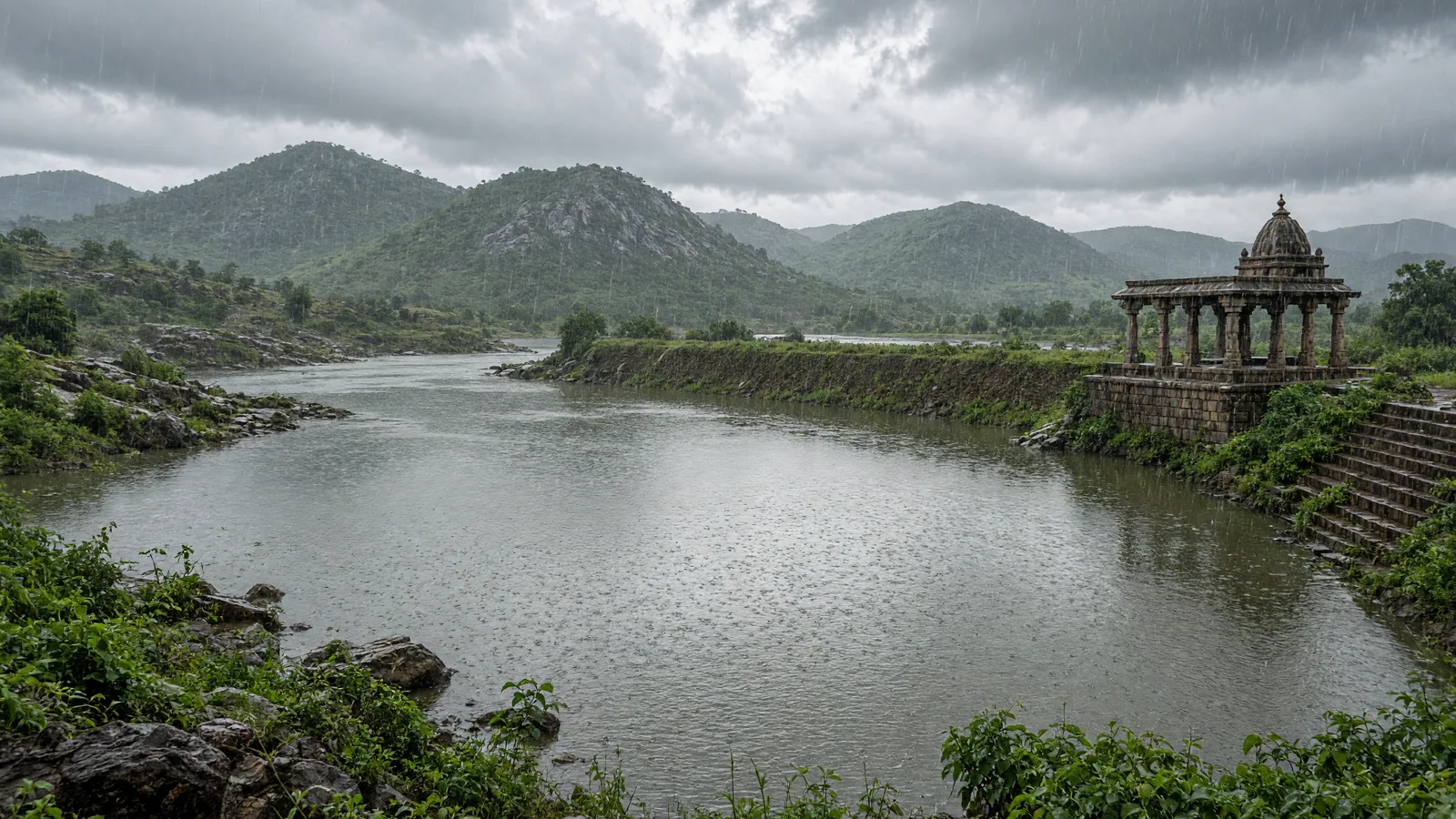
Recent heavy rains have turned several depleted water bodies in Andhra Pradesh into full reservoirs and tanks, with fresh inflows reaching village storage tanks, the Krishna River basin, Mudasarlova Reservoir and Gambheeram Gedda Reservoir after a prolonged dry spell linked to El Niño-related weather patterns.
Dry beds turn into sheets of water
Two days of rain have redrawn a landscape that had visibly carried the impact of an extended dry period in Andhra Pradesh.
In June, the tank beds in Alluru and Gaadhepalem villages near Ongole were baked and cracked under summer heat.
Concrete wells stood exposed in the parched earth, underlining how far the water had receded in those village tanks.
Villagers had to walk long distances with pots and plastic containers to collect drinking water during that dry spell.
Cattle, too, were seen wandering across empty lake beds where water had disappeared.
The same landscape is now almost unrecognisable after the arrival of rain.
Fresh rainwater has covered the cracked earth, filled tanks and converted dusty, barren stretches into shimmering sheets of water.
The quick transformation, captured just days apart, shows how rapidly the landscape can respond once the rains arrive.
Heavy rains and increased inflows have replenished water sources across the State.
Tail-end villages see local storage improve
The change is particularly significant in the tail-end areas of Prakasam district, where several village tanks had dried up during the summer.
During the peak dry period, irrigation authorities released water in August from the Ramateertham Reservoir through the Nagarjuna Sagar Right Canal network.
That release was meant to replenish summer storage tanks in the tail-end villages.
Officials said the water was released specifically to meet drinking water requirements rather than for irrigation.
The recent rains have now filled several of these tanks, covering the exposed beds and improving local water availability.
In Gaadhepalem village, a school student had earlier been seen walking across a dry pond to reach a well.
A dry tank in Gaadhepalem village near Ongole had left villagers dependent on a well within it.
The village’s reverse osmosis plant had also become defunct, adding to the problems faced during the shortage.
After the rain, the same tank presented a very different view.
The Irrigation Department has now filled the tank with water released from the Ramateertham Reservoir, and the groundwater level has also improved.
Krishna basin flows force barrage regulation
In Vijayawada, rising inflows into the Krishna River basin prompted the Water Resources Department to lift the gates of the Prakasam Barrage.
The department regulated the discharge of floodwaters as water levels rose.
Officials continued to monitor inflows and regulate releases from the barrage.
Before the rains, youth had been playing cricket on sand dunes formed over the Krishna River.
The waterway had receded because there was deficit rainfall due to the El Niño effect.
There was no discharge from Prakasham barrage owing to poor rainfall in the catchment area.
The situation changed after incessant rains, when many rivulets and streams began overflowing upstream.
After Irrigation officials released water from Prakasam barrage, fishermen tried their luck in the Krishna River.
Visakhapatnam reservoirs recover after heavy rain
In Visakhapatnam, the Mudasarlova Reservoir, which had recorded depleted storage earlier, received sufficient inflows after the recent rains.
Large stretches of the Mudasarlova Reservoir had been seen dried up on August 2, exposing the reservoir bed amid low rainfall in Visakhapatnam.
Following heavy rains in Visakhapatnam, the reservoir that had gone almost dry was seen brimming on September 24.
The inflow and water surge brought tourists to enjoy the scenic view.
An aerial view of Mudasarlova Reservoir in Visakhapatnam on September 25 showed the nearly depleted reservoir after it received fresh inflows following heavy rain.
At Gambheeram Gedda Reservoir, the contrast has also been striking.
Just two days earlier, only a few patches of water were visible in the reservoir.
It is now brimming with water.
Gambheeram Gedda Reservoir had seen a sharp decline in water levels during the prolonged dry spell.
After the recent rains in Visakhapatnam, it was seen filled to the brim.
Heavy rainfall in Visakhapatnam, under the influence of a deep depression in the Bay of Bengal, also sent water cascading down the steps of the Simhachalam hill.
A sharp contrast across Prakasam district
The visual record from Prakasam district captures the scale of distress before the rains and the scale of recovery after them.
At Singarakonda tank near Addanki in Prakasam district, the tank was almost completely dried up during the dry spell.
The remaining water there was visibly stagnant and covered with algae.
In Alluru and Gaadhepalem near Ongole, dry tank beds, exposed wells and dependence on distant or limited drinking water sources marked the earlier phase of the shortage.
The fresh inflows have now covered exposed tank beds in several places and improved local water availability.
The wider pattern is the same across the reported locations: depleted water bodies during low rainfall have responded quickly to heavy rain and inflows.
The change includes filled village tanks near Ongole, regulated releases at Prakasam Barrage in Vijayawada, and recovered reservoir storage in Visakhapatnam.
The report was published on September 27, 2026, at 10:00 am IST, with text by G.V.R Subba Rao.
Source: The Hindu
Frequently asked questions
What changed in Andhra Pradesh after the recent heavy rains?
The rains refilled several depleted water bodies, including village tanks, parts of the Krishna River basin, Mudasarlova Reservoir and Gambheeram Gedda Reservoir, after a prolonged dry spell.
Which village areas saw dried tanks fill again?
Village tanks in areas such as Alluru and Gaadhepalem near Ongole, especially in tail-end parts of Prakasam district, filled with fresh rainwater after previously being dry and cracked.
Why had water been released from Ramateertham Reservoir earlier?
Irrigation authorities released water in August through the Nagarjuna Sagar Right Canal network to replenish summer storage tanks in tail-end villages for drinking water needs, not irrigation.
What happened at the Prakasam Barrage in Vijayawada?
Rising inflows into the Krishna River basin led the Water Resources Department to lift the gates of the Prakasam Barrage and regulate floodwater discharge.
You may also like
 Weather
Heavy rain hits Tirupati as low-pressure area forms off Tamil Nadu coast
 Politics
Jagan Mohan Reddy Calls YSRCP’s Support for 2023 Poll Law a Mistake
 Weather
IMD Predicts Wet Spell, Heavy Rain In Andhra Pradesh Till October 21
 Business
31 MoUs Exchanged as Ministers Pitch Andhra Pradesh as Global Manufacturing Hub
Most read
- 1
Air China Adds Extra Flight for Passengers Stranded in Fuel-Starved Cuba
- 2
Western disturbance to bring rain, hail and strong winds across north India
- 3
Yogi Adityanath Directs No Occupied Houses Be Demolished for Achhalda Bridge
- 4
Gwalior Temple Truck Crash Kills 12, Injures 28-29 Devotees During Navratri
- 5
Heavy Rain Waterlogs Bengaluru, Snarls Traffic; Ride-Hailing Fares Surge
Comments
No comments yet. Be the first to comment.