
Climate finance fund fails to deliver aid to Nepal after glacier disaster
Analysis of why the UN climate finance system cannot deliver emergency aid to disaster-stricken countries like Nepal despite procedural compliance.

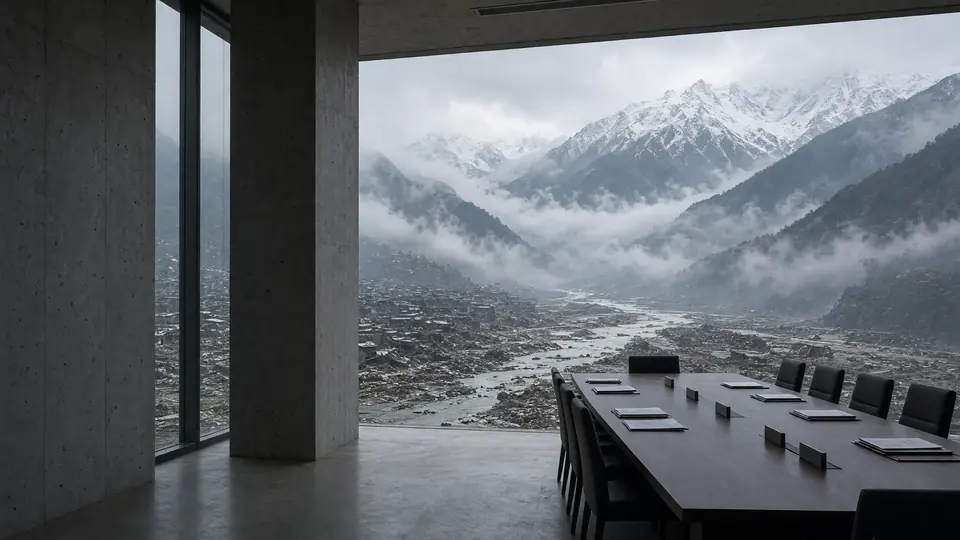
Analysis: Why climate finance systems are failing countries like Nepal
A glacier outburst flood that buried entire settlements in Nepal and triggered national mourning late last month has exposed a blunt reality: the international climate finance architecture cannot deliver emergency assistance at the speed disasters now demand.
Nepal followed every procedural requirement. It submitted a request through the UN Fund for Responding to Loss and Damage, the mechanism created specifically for climate-vulnerable nations. It framed the appeal as liability, not charity, the legally correct approach for a country responsible for less than 0.1 per cent of global greenhouse gas emissions. The fund's response has been bureaucratic delay. Not a single dollar has been released since the fund's creation, and its first funding decision is scheduled only for December. Even its own board has called for an emergency meeting.
The velocity mismatch
The contrast with other forms of climate mobilisation is stark. In the weeks since the disaster, the international calendar has filled with convenings: a climate finance week in Istanbul, a week of chief-executive meetings in Baku, Azerbaijan, and a Pacific leaders' summit in Palau. Mobilisation is abundant, just not the kind that transfers money from one account to another. A fund incapable of sending US$20 million to a grieving country in the time it takes to stage three high-level meetings is not yet operational.
"It is a promise with a letterhead," writes Rizwan Basir, a sociologist and senior technical specialist at the Climate Resourcing and Coordination Centre in Islamabad, Pakistan.
The illusion driving summits
Every climate summit now operates on the same assumption: the next pledge will be the one that finally delivers. It will not. The money promised by wealthy nations to vulnerable ones is not arriving at anything close to the advertised scale, and sustaining that pretence has become the primary function of climate diplomacy.
With barely nine weeks remaining before the UN climate summit Cop31 opens in Antalya, Turkey, the urgent task is not a larger pledge. It is making existing finance reach the people already drowning in the consequences. Nepal is the visible test case, and the system is failing it.
Source: South China Morning Post
Frequently asked questions
What happened in Nepal that exposed climate finance failures?
A glacier outburst flood buried entire settlements in Nepal, triggering national mourning. The disaster exposed that the international climate finance architecture cannot deliver emergency assistance at the speed disasters now demand.
How did Nepal request climate finance assistance?
Nepal submitted a request through the UN Fund for Responding to Loss and Damage, the mechanism created specifically for climate-vulnerable nations, framing the appeal as liability rather than charity.
Has the climate finance fund released any money to Nepal?
No. Not a single dollar has been released since the fund's creation. The fund's first funding decision is not scheduled until December, despite Nepal's urgent need following the disaster.
Why is the current climate finance system inadequate?
The system suffers from a velocity mismatch: while international climate summits and meetings occur frequently, the funds promised by wealthy nations to vulnerable countries are not arriving at the advertised scale, and the bureaucratic processes cannot respond to disasters at the speed required.
You may also like
 National
Nepal seeks UN climate fund aid after August floods kill over 1,300 people
 Maharashtra
FSSAI Proposes Ban On Non-Milk Products Being Sold As Paneer
 Business
Make in India at 12: Manufacturing Share Sees Little Change
 International
US and China seek stability amid race for AI and semiconductor dominance
Most read
- 1
Tesla audits Chinese suppliers to scale up Optimus robot production
- 2
Former minister Lakhan Singh Rajput to inaugurate temple bhandara at Shri Chakreshwar Mahadev
- 3
Firozabad BSA finds four government schools locked during inspection
- 4
Tamil Nadu dengue cases fall for third consecutive year to 17,049
- 5
Social workers stage silent protest at Fufund railway station for train halts
Comments
No comments yet. Be the first to comment.