
China's Han Zheng Urges Two-State Solution At UN As Xi Stays Away
Han Zheng represented China at the UN, signaling Beijing's Middle East stance and focus on US ties as Xi Jinping stayed away from the assembly.

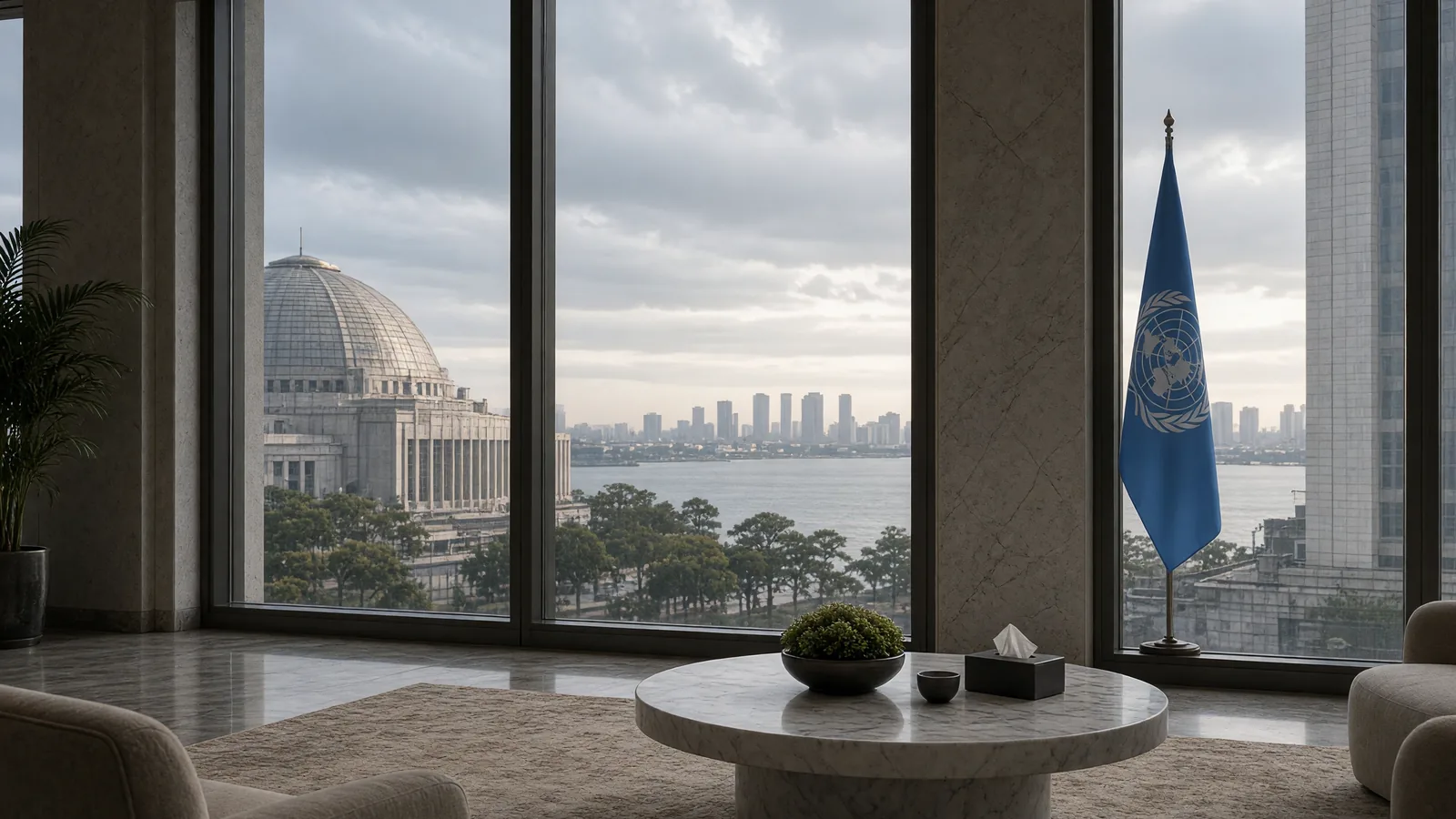
China’s vice-president Han Zheng represented Beijing at the UN General Assembly and used the platform to call on “major countries” to respect the sovereignty and security of Middle Eastern nations, while also urging movement toward a two-state solution for the “Palestinian question.”
Han made the remarks on Saturday at the UN General Assembly, known as the UNGA. His comments were read as an implicit dig at the US and Israel, according to the source material, as China continued to present itself as a supporter of multilateralism and as a country with growing soft power.
The speech came against the wider question of why Xi Jinping skipped the UN after his Trump summit. The source material says China is touting multilateralism and its expanding soft power even as Beijing gives greater weight to its relationship with Washington. In that context, Han’s appearance at the UN was significant not only for what he said, but also for who was not there.
Xi Jinping did not attend the gathering. Instead, China was represented by Han, one of its senior leaders. That choice fits a broader pattern in Beijing’s handling of the annual General Assembly, where Xi has appeared in person only once since coming to power in 2012.
Bonnie Glaser, managing director of the German Marshall Fund of the United States, said Chinese officials had already indicated months earlier that Xi was unlikely to attend unless the occasion carried special anniversary significance.
“Many months ago, Chinese officials said that Xi wouldn’t go to the UN unless it was to mark a major anniversary,” said Bonnie Glaser, managing director of the German Marshall Fund of the United States.
“Seems like a missed opportunity.”
Xi’s record at the UN General Assembly helps explain why his absence was not entirely unexpected. Since coming to power in 2012, he has addressed the annual General Assembly gathering once in person. That appearance was in 2015, when he attended for the 70th anniversary.
During the pandemic, Xi appeared by video in 2020 and 2021. Those appearances did not involve an in-person address at the annual gathering. He also missed the 80th anniversary last year, when Premier Li Qiang spoke on China’s behalf.
In other years, China has generally been represented by other senior officials. Those officials have included Han Zheng and Foreign Minister Wang Yi. Han’s role at the UNGA therefore continued an established pattern in which Beijing sends senior figures other than Xi to represent China at the annual General Assembly.
At the same time, Han’s address allowed China to put forward its diplomatic messaging on the Middle East. By calling on “major countries” to respect the sovereignty and security of Middle Eastern nations, Han framed Beijing’s position in terms of state sovereignty and regional security. His reference to a two-state solution for the “Palestinian question” placed that issue at the center of his UN remarks.
The wording also carried a clear political signal. The source material describes Han’s comments as an implicit dig at the US and Israel. China did not present the remarks only as a regional statement; it used the UN platform to underline its broader message on multilateralism.
That message sits alongside another reality identified in the source material: Beijing is giving greater weight to its relationship with Washington. This is why Xi’s absence after his Trump summit drew attention. China continues to showcase its support for multilateral platforms such as the UN, but its top leadership decisions also reflect the importance it places on the relationship with the US.
Han’s appearance, therefore, served multiple purposes. It maintained China’s presence at the UNGA. It allowed Beijing to speak on Middle Eastern sovereignty, security and the “Palestinian question.” It also underscored that Xi’s personal attendance at the General Assembly has been rare, generally reserved for moments such as the 70th anniversary in 2015 or handled through video appearances during the pandemic years of 2020 and 2021.
The key takeaway is that Xi Jinping’s absence was consistent with his past UN pattern, even if, as Bonnie Glaser put it, it “Seems like a missed opportunity.”
Frequently asked questions
Who represented China at the UN General Assembly?
China was represented by Vice-President Han Zheng at the UN General Assembly.
What did Han Zheng say about the Middle East?
Han Zheng called on “major countries” to respect the sovereignty and security of Middle Eastern nations and urged movement toward a two-state solution for the “Palestinian question.”
Why was Xi Jinping absent from the UN General Assembly?
The article says Xi Jinping did not attend, consistent with a pattern in which he has appeared in person at the annual General Assembly only once since coming to power in 2012.
When did Xi Jinping attend the UN General Assembly in person?
Xi Jinping attended the UN General Assembly in person in 2015 for the 70th anniversary.
How has China usually been represented at the annual UN General Assembly?
China has generally been represented by senior officials other than Xi, including Han Zheng, Foreign Minister Wang Yi, and Premier Li Qiang.
You may also like
 Religious
Xi Jinping visits Egypt after nine years, deepening China-Arab ties
 International
China Links Visa Approval To Direct Outcome Of Trump-Xi Summit
 International
Chinese Business Leaders Left Out Of Xi White House State Dinner
 Education
Xi Urges Sichuan University To Back China’s National Strategy
Most read
- 1
Air China Adds Extra Flight for Passengers Stranded in Fuel-Starved Cuba
- 2
Western disturbance to bring rain, hail and strong winds across north India
- 3
Yogi Adityanath Directs No Occupied Houses Be Demolished for Achhalda Bridge
- 4
Gwalior Temple Truck Crash Kills 12, Injures 28-29 Devotees During Navratri
- 5
Schools Shut in Five Tamil Nadu Districts, Including Chennai, Amid Heavy Rain
Comments
No comments yet. Be the first to comment.