
China's EV makers pivot to humanoid robots leveraging autonomous driving tech
Chinese automakers like Nio leverage autonomous driving tech to build consumer humanoid robots at accessible price points.

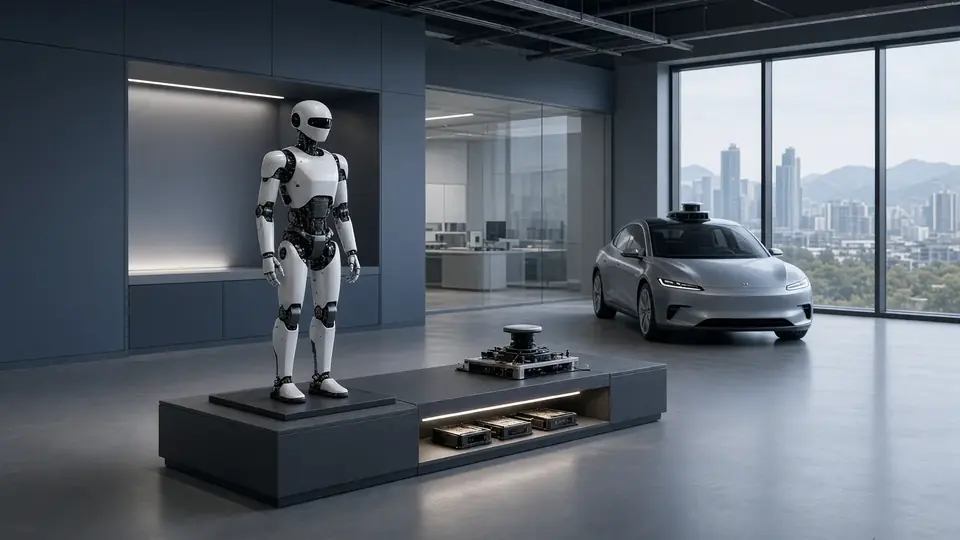
Shanghai-based electric vehicle maker Nio is betting that the technology powering its premium cars can unlock synergies in humanoid robotics, as a wave of Chinese smart-car manufacturers pivot toward consumer robots.
From Steering Wheels to Humanoids
Nio CEO William Li told investors in March that future automobiles will essentially function as robots, with perception, decision-making and execution all driven by artificial intelligence. The carmaker's existing vehicles already incorporate perception, decision-making and control systems similar to those required for robotics, according to Li.
Despite this optimism, Li has adopted what he calls a "latecomer" strategy in robotics to sidestep the substantial losses that typically accompany early-stage investment in the sector.
Industry-Wide Shift
Nio is far from alone in this strategic pivot. More than 10 Chinese manufacturers of intelligent vehicles have now entered the robotics space, driven by what they see as natural overlap between the two industries.
The connection stems from shared supply chains and technology: robotics and smart EV production both rely on key components including cameras and radar, as well as overlapping software systems. This convergence is being accelerated by rapid advances in physical AI, which underpins the broader vision of mobility manufacturers moving into humanoid robotics.
The shift signals Chinese automakers' belief that their investments in autonomous driving sensors, AI decision-making platforms and vehicle control systems can be repurposed for humanoid robots aimed at the consumer market, potentially at price points more accessible than current industrial robotics offerings.
Source: South China Morning Post
Frequently asked questions
Why are Chinese EV makers moving into humanoid robots?
Chinese EV makers see natural overlap between autonomous driving and robotics technology. Both rely on shared components like cameras and radar, as well as overlapping software systems. Their existing investments in autonomous driving sensors, AI decision-making platforms, and vehicle control systems can be repurposed for humanoid robots.
What is Nio's strategy for entering the robotics market?
Nio CEO William Li has adopted a 'latecomer' strategy, which allows the company to sidestep the substantial losses that typically accompany early-stage investment in robotics. Li believes future automobiles will function as robots with AI-driven perception, decision-making, and execution, capabilities Nio's vehicles already possess.
How many Chinese manufacturers have entered the robotics space?
More than 10 Chinese manufacturers of intelligent vehicles have now entered the robotics space, leveraging their expertise in autonomous driving technology.
What advantage could Chinese humanoid robots have over existing offerings?
Chinese automakers aim to bring humanoid robots to the consumer market at price points more accessible than current industrial robotics offerings, leveraging their scale and existing technology investments.
You may also like
 Technology
China targets 6G, robotics and quantum tech as growth engines by 2030
 Technology
Man sues AI company after chatbot's burial date advice brings family misfortune
 Technology
BSNL official urges engineering students to pursue AI, robotics, quantum technology
 Technology
Chinese AI firms generate $10.7 billion revenue, lagging US competitors by tenfold
Most read
- 1
Tesla audits Chinese suppliers to scale up Optimus robot production
- 2
Former minister Lakhan Singh Rajput to inaugurate temple bhandara at Shri Chakreshwar Mahadev
- 3
Firozabad BSA finds four government schools locked during inspection
- 4
Tamil Nadu dengue cases fall for third consecutive year to 17,049
- 5
Social workers stage silent protest at Fufund railway station for train halts
Comments
No comments yet. Be the first to comment.