
China's ENN Claims Hydrogen-Boron Fusion First On Compact Tokamak
ENN Group says its EXL-50U compact tokamak achieved hydrogen-boron fusion, marking progress in neutron-free magnetic confinement research.

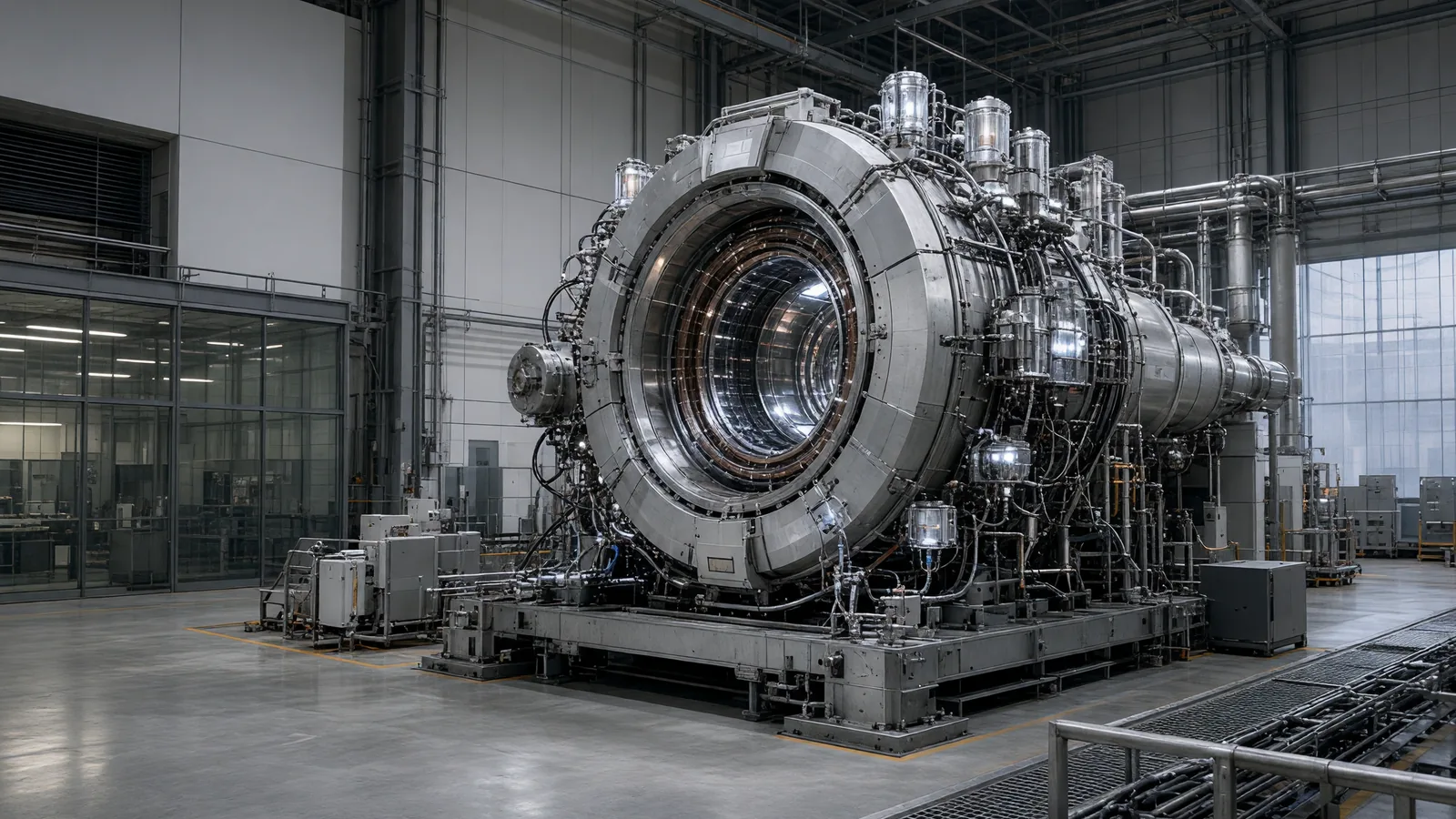
A Chinese company says it has achieved hydrogen-boron fusion reactions on its own compact tokamak device, a development described as a “significant and valuable” advance in neutron-free magnetic confinement fusion research.
ENN reports a first on its EXL-50U device
ENN Group, based in Langfang, Hebei province, announced on Monday that its EXL-50U spherical device had successfully achieved hydrogen-boron fusion reactions.
The EXL-50U is described as a compact tokamak that uses a magnetic field to confine charged gas, or plasma, for nuclear fusion research.
The company stated: “This marks the first time a commercial fusion company has achieved a hydrogen-boron fusion reaction on its own device.”
The reported result involves high-parameter hydrogen-boron plasma control, which the source described as a first for the Chinese company.
Why the fuel choice matters in fusion research
The feat was hailed as a “significant and valuable contribution” to global research on magnetic confinement hydrogen-boron reactions.
The advance is being framed in the context of neutron-free magnetic confinement fusion, where hydrogen-boron reactions are a focus of research.
Current mainstream controlled nuclear fusion research, represented by the International Thermonuclear Experimental Reactor in France, predominantly uses deuterium-tritium, or D-T, as fuel.
Against that backdrop, ENN Group’s announcement places hydrogen-boron work by a commercial fusion company alongside the wider global effort to study controlled nuclear fusion.
Source: South China Morning Post
Frequently asked questions
What did ENN Group claim to achieve?
ENN Group said its EXL-50U compact tokamak successfully achieved hydrogen-boron fusion reactions.
What is the EXL-50U device?
The EXL-50U is described as a compact spherical tokamak that uses a magnetic field to confine plasma for nuclear fusion research.
Why is the reported hydrogen-boron result significant?
The result was described as a significant contribution to research on neutron-free magnetic confinement fusion reactions.
How does hydrogen-boron fusion differ from mainstream fusion fuel research?
The article says mainstream controlled fusion research, including ITER in France, mainly uses deuterium-tritium fuel, while ENN’s announcement focuses on hydrogen-boron reactions.
You may also like
 Education
Nanjing University Course Asks Students to Call Strangers to Build Confidence
 Technology
Brazil, China Agree Five-Year Programme to Bring AI to Small Farmers
 International
Thailand Gains Edge Over Vietnam as Chinese Firms Expand Overseas
 International
China’s Hybrid Car Exports to EU Surge 204% Ahead of Import Cap
Most read
- 1
Air China Adds Extra Flight for Passengers Stranded in Fuel-Starved Cuba
- 2
Western disturbance to bring rain, hail and strong winds across north India
- 3
Yogi Adityanath Directs No Occupied Houses Be Demolished for Achhalda Bridge
- 4
Gwalior Temple Truck Crash Kills 12, Injures 28-29 Devotees During Navratri
- 5
Heavy Rain Waterlogs Bengaluru, Snarls Traffic; Ride-Hailing Fares Surge
Comments
No comments yet. Be the first to comment.