
China masters rocket booster recovery but hasn't reused one yet
Chinese aerospace company LandSpace successfully recovered a Zhuque-3 rocket booster, but China lags behind SpaceX in reusing rocket components for cost sa

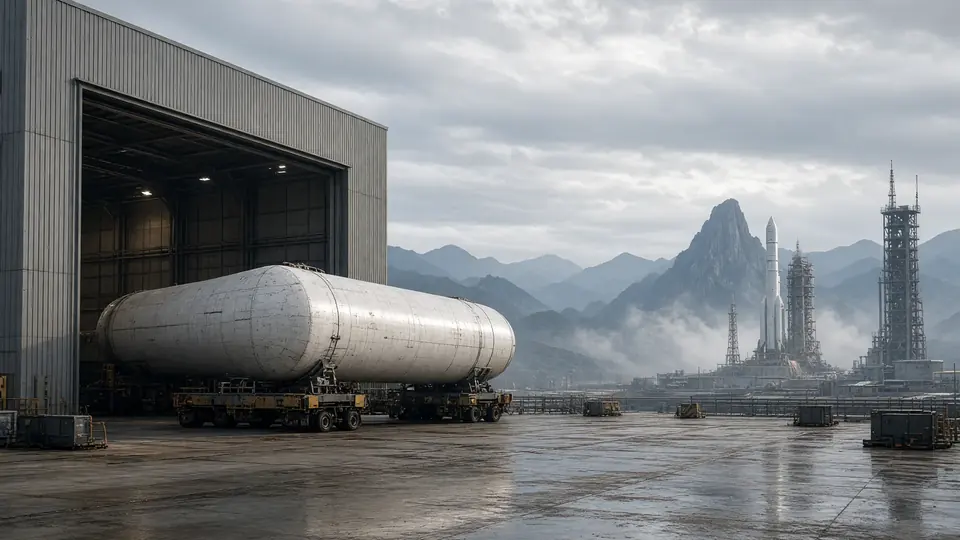
China has demonstrated the technical capability to recover rocket boosters but has not yet relaunched a single one, highlighting the gap between Beijing's space ambitions and the practical challenges that lie ahead.
Last month, Chinese private aerospace company LandSpace successfully landed the booster of its Zhuque-3 rocket on deployable landing legs at a site in the northwestern province of Gansu. The landing marked the country's first successful ground-based controlled recovery using landing legs, an approach that closely resembles that of SpaceX's Falcon 9 rocket system.
The achievement represents the latest in a succession of breakthroughs in booster-recovery efforts in recent months, both on land and at sea, demonstrating China's growing technical prowess in this field. Despite these advances in recovery operations, the country has yet to take the critical next step of actually reusing any of the recovered boosters, a stark contrast that lays bare the distance between where China currently stands and where it aims to be.
The gap is particularly striking when compared to the United States. American commercial space firm SpaceX has been eager to tout its deployment of reusable first-stage rocket boosters, claiming to have flown more than 600 missions with the cost-cutting launch components. SpaceX's head start in reusable rocket technology has given it a tremendous lead in this field, but Chinese commercial space companies are now exploring ways to catch up in the cost-saving technology.
The ability to reuse rocket components represents a crucial cost-saving technology that could determine competitiveness in the emerging space economy. By recovering and relaunching boosters rather than allowing them to be destroyed after a single use, space companies can dramatically reduce the expense of each mission, making space access more affordable and frequent launches more economically viable.
China's progress on reusable rockets forms part of the country's broader strategy in commercial spaceflight, a sector where the United States currently holds a commanding advantage. As technological developments augur an era of renewed space exploration, China is aiming to become a major player in this evolving landscape. The country's efforts to master booster recovery and eventual reuse represent a critical component of this ambition, even as the challenges of matching American capabilities remain substantial.
The recovery breakthroughs achieved in recent months signal that China has cleared one major technical hurdle in the reusable rocket equation. The ability to bring boosters back safely, whether on land or at sea, requires sophisticated guidance systems, precise control during descent, and robust landing mechanisms. LandSpace's successful use of deployable landing legs demonstrates that Chinese companies have developed these capabilities to a functional level.
However, recovery is only half the battle. The real test of reusable rocket technology lies in refurbishment and relaunch. After a booster returns from its first flight, it must be inspected, tested, and potentially repaired before it can safely fly again. This process requires not only technical expertise but also rigorous quality control systems and confidence in the hardware's ability to withstand multiple flight cycles. The fact that China has not yet attempted to reuse any of its recovered boosters suggests that this phase of the technology remains under development.
The contrast with SpaceX's operations is instructive. The American company has not only recovered hundreds of boosters but has also built an entire operational model around their reuse, with some individual boosters flying multiple times. This operational maturity represents years of iterative development, learning from both successes and failures, and building the infrastructure and procedures necessary to support rapid turnaround and relaunch.
For China, the path forward will likely involve continued testing and validation of recovered hardware, development of refurbishment procedures, and eventually, the first relaunch attempt. Until that milestone is reached, the country's reusable rocket program remains a work in progress, showcasing impressive technical achievements while still falling short of the full capability demonstrated by its American competitor.
Frequently asked questions
Has China successfully recovered rocket boosters?
Yes, China has demonstrated the technical capability to recover rocket boosters. Last month, Chinese private aerospace company LandSpace successfully landed the booster of its Zhuque-3 rocket using deployable landing legs in Gansu province, marking the country's first successful ground-based controlled recovery using this approach.
Has China reused any recovered rocket boosters?
No, China has not yet relaunched any recovered boosters. Despite recent breakthroughs in recovery operations, the country has yet to take the critical next step of actually reusing any of the recovered boosters.
How does China's progress compare to SpaceX?
SpaceX has a significant head start in reusable rocket technology, having flown more than 600 missions with reusable first-stage rocket boosters. While Chinese companies are now exploring ways to catch up in this cost-saving technology, they have not yet achieved the operational reuse that SpaceX has demonstrated.
Why is rocket booster reuse important?
The ability to reuse rocket components is a crucial cost-saving technology that could determine competitiveness in the emerging space economy. By recovering and relaunching boosters rather than destroying them after a single use, space companies can dramatically reduce the expense of each mission and make space access more affordable.
You may also like
 International
China launches 30 CubeSats to monitor space weather between Earth and moon
 Accident
SpaceX Starship orbital test could generate debris exceeding Russia's 2021 anti-satellite strike
 National
Seychelles First Lady meets Space Mom at all-girls lunar mission in India
 Uttar Pradesh
ISRO scientists inspire 500 students with India's space exploration vision at Lucknow school
Most read
- 1
Tesla audits Chinese suppliers to scale up Optimus robot production
- 2
Former minister Lakhan Singh Rajput to inaugurate temple bhandara at Shri Chakreshwar Mahadev
- 3
Firozabad BSA finds four government schools locked during inspection
- 4
Tamil Nadu dengue cases fall for third consecutive year to 17,049
- 5
Social workers stage silent protest at Fufund railway station for train halts
Comments
No comments yet. Be the first to comment.