
Brazil's rare earth magnet production delayed until at least 2032, China dominance persists
Brazil won't produce rare earth magnets domestically until 2032 at earliest, leaving China's dominance in the critical technology unchallenged this decade.

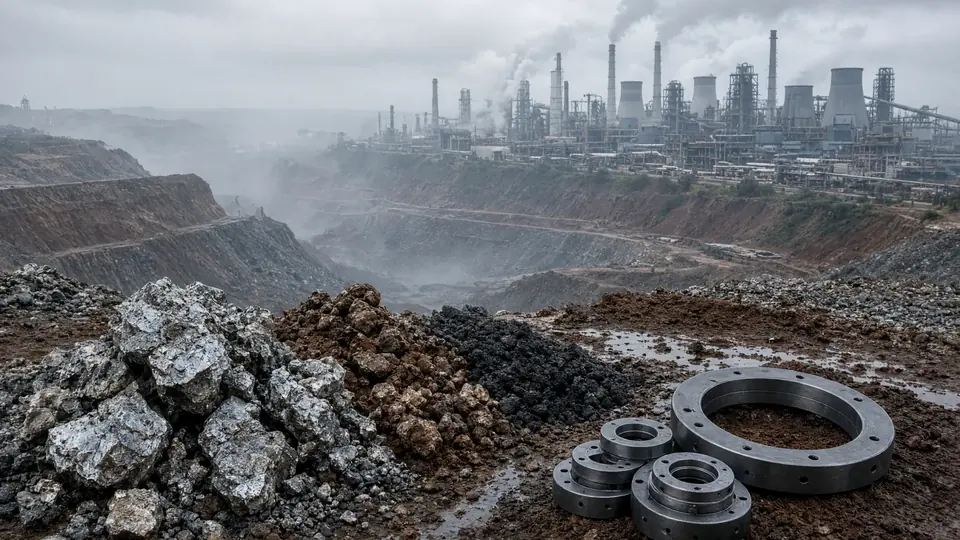
Brazil will not produce rare earth magnets from domestically sourced raw materials until at least 2032, leaving China's dominance over the critical technology unchallenged for the remainder of the decade.
Andre Luis Pimenta de Faria, coordinator of Brazil's main magnet pilot plant operated by Senai, the research and training arm of the country's national industry confederation, told a public policy panel Wednesday that the country faces a protracted timeline despite holding vast rare earth reserves. Speaking at Exposibram, Brazil's largest mining congress, Faria said the plant could deliver its first batches by the end of 2028, but only by relying on imported inputs rather than Brazilian ore.
Technology and infrastructure gaps widen timeline
The pilot plant operates on Asian process technology selected during its design phase and currently purchases processed ore from abroad to feed its furnaces. Brazil also lacks production capacity for electrolytic iron, a high-purity input essential for magnet manufacturing that differs significantly from the iron ore the country exports in massive volumes as one of the world's two largest suppliers.
"If we look at the full picture of everything needed to produce a permanent magnet, we are talking about a more distant horizon, maybe 2032, 2035," Faria said.
Industry voices caution on optimistic projections
Pablo Cesario, chief executive of the Brazilian Mining Institute, described even Faria's timeline as overly hopeful. He noted that the average gap between proven reserves and first production in Brazil stretches to 17.2 years.
"This is a 10 or 15-year game. And in those 10 or 15 years the others are running too," Cesario said, underscoring the moving-target nature of global competition in rare earth processing.
The assessment highlights the gulf between Brazil's raw material wealth and its ability to capture value further along the supply chain, where China has built a near monopoly on transforming rare earths into permanent magnets used in electric vehicles, wind turbines, and electronics.
Source: South China Morning Post
Frequently asked questions
When will Brazil start producing rare earth magnets domestically?
Brazil will not produce rare earth magnets from domestically sourced materials until at least 2032. The pilot plant could deliver its first batches by end of 2028, but only using imported inputs rather than Brazilian ore.
What is preventing Brazil from producing rare earth magnets sooner?
Brazil faces technology and infrastructure gaps, including reliance on Asian process technology, lack of domestically processed ore, and missing production capacity for electrolytic iron, a high-purity input essential for magnet manufacturing that differs from the iron ore Brazil exports.
Why will China maintain dominance in rare earth magnets?
China has built a near monopoly on transforming rare earths into permanent magnets used in electric vehicles, wind turbines, and electronics. Even with Brazil's vast rare earth reserves, the country lacks the downstream processing capabilities to compete during the decade-long development timeline.
What does Brazil's track record suggest about timeline accuracy?
According to the Brazilian Mining Institute CEO, the average gap between proven reserves and first production in Brazil is 17.2 years. Industry experts caution that even the 2032 timeline may be optimistic, as global competitors continue advancing during Brazil's development period.
You may also like
 International
China targets Western materials in C919 jets, expands domestic sourcing drive
 Technology
Apple leak raises doubts about India's manufacturing reliability
 Entertainment
Tesla audits Chinese suppliers to scale up Optimus robot production
 International
Chinese researchers discover Pacific seabed deposit with record precious metal concentrations
Most read
- 1
Tesla audits Chinese suppliers to scale up Optimus robot production
- 2
Former minister Lakhan Singh Rajput to inaugurate temple bhandara at Shri Chakreshwar Mahadev
- 3
Firozabad BSA finds four government schools locked during inspection
- 4
Tamil Nadu dengue cases fall for third consecutive year to 17,049
- 5
Social workers stage silent protest at Fufund railway station for train halts
Comments
No comments yet. Be the first to comment.