
Wilhelm Wundt's Insights on Intangible Forces Shaping Human Behavior
Explore Wundt's quote on virtue and reason, revealing how intangible concepts shape human behavior and decision-making.

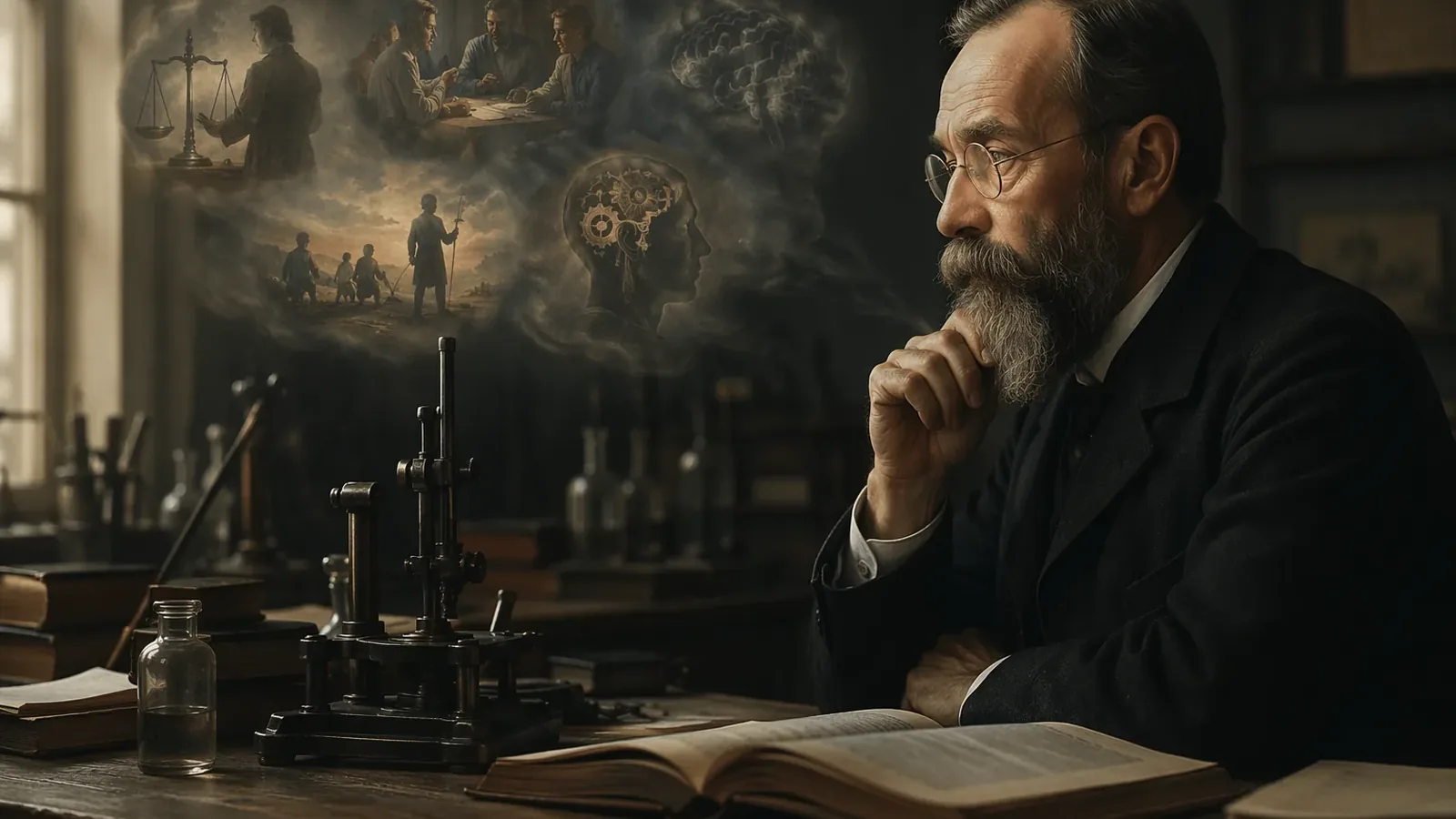
Wilhelm Wundt, often regarded as the father of modern psychology, once remarked, “We speak of virtue, honour, reason; but our thought does not translate any one of these concepts into a substance.” At first glance, this quote might seem abstract, but its meaning is deeply rooted in everyday human experience. Wundt’s observation sheds light on how people rely on intangible concepts to navigate life, even though these ideas lack any physical form.
The Gap Between Words and Reality
In daily life, people frequently use terms like trust, honour, fairness, and respect to describe what they value. These ideas influence countless decisions, whether to stay in a job, maintain a friendship, or leave an unfair situation. Yet, none of these concepts exist as physical objects that can be held, measured, or directly observed.
Wundt’s quote draws attention to this paradox. While concepts like honour or fairness cannot be pointed to as physical entities, they are undeniably real in how they shape human behaviour. For instance, trust is not something you can see or touch, but its presence, or absence, is felt in actions, decisions, and relationships.
How the Mind Creates Meaning
Wundt’s work focused on understanding how the human mind builds meaning from experience. He believed that abstract ideas like honesty or courage become real through patterns of behaviour. For example, honesty is not an object but is recognised when someone tells the truth despite the consequences. Similarly, courage is seen when someone acts despite fear. Over time, repeated experiences with these behaviours form the concepts that feel real to us because their effects are tangible.
This ability of the human mind to treat invisible ideas as guiding forces is a unique aspect of human cognition. It allows societies to create rules, expectations, and shared systems of behaviour without needing physical representations for every concept.
Why Wundt’s Idea Feels Relevant Today
In modern life, measurable outcomes often take precedence. Numbers dominate how we evaluate performance at work, success in school, or even influence on social media. Yet, many of the most critical decisions in life are guided by unquantifiable factors. A manager might retain an employee because of their dependability rather than their metrics. A person might trust a doctor because of their communication and consistency, not just their qualifications. Friendships and relationships thrive not on measurable achievements but on shared understanding and respect.
Wundt’s insight reminds us that the most important forces in human life, trust, respect, fairness, are often the least tangible. These values cannot be reduced to numbers or objects, yet they are essential for relationships, workplaces, and societies to function.
Lessons from Wundt’s Observation
1. Not Everything That Matters Can Be Measured: While systems often prioritise measurable outcomes, intangible factors like trust and respect are critical for their success.
2. Abstract Ideas Become Visible Through Behaviour: Concepts like integrity or fairness are not objects but are recognised through actions, such as taking responsibility or treating others justly.
3. Human Thinking Extends Beyond Physical Reality: The human mind’s ability to treat invisible ideas as real allows for the creation of shared values and societal norms.
About Wilhelm Wundt
Born in 1832, Wilhelm Wundt was a pioneering German psychologist and philosopher. He established one of the first formal psychology laboratories in Leipzig in 1879, marking a significant step in turning psychology into a structured field of study. Wundt’s work focused on how people perceive, interpret, and organise their experiences, using observation and experimentation to explore the mind systematically. His influence extended far beyond psychology, opening up broader questions about how humans construct meaning from their lived experiences.
Final Thoughts
Wundt’s timeless observation highlights a fundamental truth: much of human life is guided by ideas that cannot be physically shown, yet their impact is profound. In a world increasingly driven by measurement, his insight serves as a reminder that the most important aspects of life, trust, honour, fairness, exist not in objects, but in actions and relationships.
Frequently asked questions
Who was Wilhelm Wundt and why is he significant?
Wilhelm Wundt is often regarded as the father of modern psychology. He focused on understanding how the human mind builds meaning from experience and how abstract ideas shape human behaviour.
What did Wundt mean by saying concepts like virtue and honour lack physical substance?
Wundt observed that while people rely on intangible concepts like trust, honour, fairness, and respect to make decisions and navigate life, these ideas have no physical form that can be held, measured, or directly observed.
How do abstract ideas become real according to Wundt's work?
Wundt believed that abstract ideas like honesty or courage become real through patterns of behaviour. For example, honesty is recognised when someone tells the truth despite consequences, and its effects are tangible even though the concept itself cannot be physically pointed to.
Why is Wundt's insight relevant in modern life?
Today, many critical life decisions are guided by unquantifiable factors like dependability, communication, consistency, shared understanding, and respect, not just measurable outcomes. Wundt's insight reminds us that these invisible forces remain powerful guides in human behaviour and decision-making.
You may also like
 National
Rajeev Khandelwal's 'slavery in love' comment ignites relationship debate
 National
JD Vance's new memoir explores faith amid Catholic Church challenges
 National
Solo travellers reveal surprising personality traits, says psychology research
 National
Optical illusion test reveals your current mindset: bird or cage?
Most read
- 1
Air China Adds Extra Flight for Passengers Stranded in Fuel-Starved Cuba
- 2
Western disturbance to bring rain, hail and strong winds across north India
- 3
Yogi Adityanath Directs No Occupied Houses Be Demolished for Achhalda Bridge
- 4
Gwalior Temple Truck Crash Kills 12, Injures 28-29 Devotees During Navratri
- 5
Schools Shut in Five Tamil Nadu Districts, Including Chennai, Amid Heavy Rain
Comments
No comments yet. Be the first to comment.