
Supreme Court Live: No Illegal Detention of Protesters, Metro to Run Normally
At a special Sunday hearing after the CJP protest against CEC Gyanesh Kumar, the Supreme Court ordered a review of barricades, normal Metro and rail services, and undisrupted internet in Delhi.

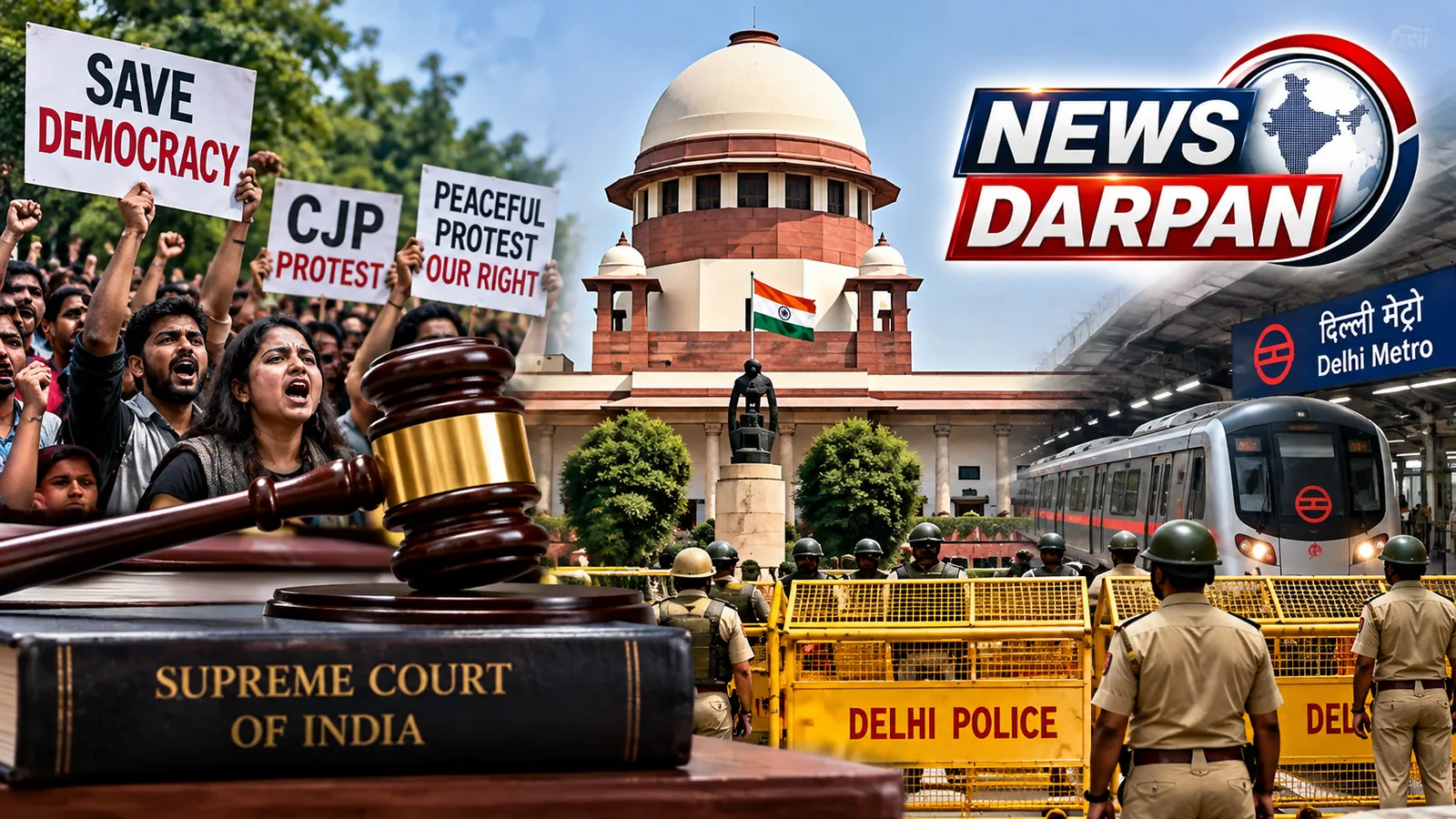
The Supreme Court held a special hearing on 11 October 2026 after protests in Delhi demanding the resignation of Chief Election Commissioner (CEC) Gyanesh Kumar. The court directed that peaceful and unarmed protesters must not be detained without following the procedure established by law, that Metro and rail services run normally, and that movement across the city be eased. It also ordered an immediate review of barricading, saying barricades should stay only where law and order or traffic conditions genuinely require them.
The hearing came after several petitions were filed against police action linked to the Cockroach Janta Party (CJP) protest in Delhi. The petitioners raised questions about the detention of protesters, restrictions on Metro and other transport services, and disruption of internet services.
What did the Supreme Court direct?
The special bench of the Supreme Court issued several key directions on public order and citizens' freedom of movement.
- No illegal detention: Peaceful and unarmed people cannot be detained without following the procedure laid down by law.
- Normal Metro and rail services: Services must run normally unless restrictions are necessary for public order.
- Review of barricading: Authorities must immediately review where barricades are needed and where they can be removed.
- Smooth movement: Movement of people must be normalised, subject to traffic rules and necessary law-and-order restrictions.
The core message of the directions was that, in the name of maintaining law and order, authorities must not impose excessive curbs on ordinary people's movement or on the right to protest peacefully.
Directions on internet and curbs near the Supreme Court
During the hearing, the court also directed that internet services continue without disruption. To ensure that access to the Supreme Court and other courts is not obstructed or made uncertain, it ordered the removal of prohibitory notices under Section 163 of the BNSS put up in the vicinity.
Under Section 163, the administration can, in certain circumstances, restrict gatherings and activities to maintain public order. The court, however, made it clear that the right to peaceful protest cannot be extinguished altogether and that such restrictions must be used within the bounds of law.
Why tension rose in Delhi after the CJP protest
The Cockroach Janta Party and other opposition groups had called for protests demanding the resignation of Chief Election Commissioner Gyanesh Kumar. Protesters raised questions over alleged irregularities in the Special Intensive Revision (SIR) of electoral rolls.
On 10 October, heavy police deployment was seen across several parts of Delhi. Barricades went up at many places and people heading to join the protest were detained. Some Metro stations were also shut, causing hardship to commuters. Petitions challenging these actions were then filed in the Supreme Court.
Government and officials asked to respond
During the hearing, lawyers for the petitioners alleged that peaceful protesters, lawyers and others had been detained and that movement in the city had been disrupted. These allegations were made on behalf of the petitioners.
The Supreme Court issued notice to the officials concerned and sought their response on the detentions and other restrictions. It also asked them to file a report on compliance with its earlier directions.
The court further clarified that the right to protest is subject to law. In other words, the administration must act keeping in mind both the permission for peaceful protest and its responsibility to maintain public order.
What the Supreme Court directions mean for the public
The directions aim to keep normal life and public transport in Delhi running smoothly. Their key effects are:
- An emphasis on running Metro and rail services normally.
- A review of barricades that block movement without sufficient reason.
- Adherence to legal procedure in any detention of peaceful and unarmed people.
- A direction not to disrupt internet services.
- Ensuring that lawyers and citizens can reach the courts.
The court also made clear, however, that restrictions which are necessary for public order and consistent with law can still be imposed. The directions therefore do not mean that all security arrangements will be withdrawn in every situation.
Supreme Court live: what happens next?
The Supreme Court has sought responses and a compliance report from the authorities concerned. The questions raised at the hearing include the detention of protesters, curbs on Metro services, barricading and internet disruption. The officials' replies and the court's next orders will be key at the next hearing.
The central message of the case is that steps taken to maintain public order must be lawful and proportionate. Peaceful protest and the movement of ordinary citizens must not be obstructed unnecessarily.
Frequently asked questions
What did the Supreme Court say about detaining protesters?
Peaceful and unarmed protesters must not be detained without following the procedure established by law.
What did the Supreme Court direct about Metro and rail services?
Metro and rail services must run normally unless restrictions are necessary for public order.
What did the court order regarding barricades in Delhi?
Authorities must immediately review barricading and remove barricades where they are not genuinely needed for law and order or traffic conditions.
What did the Supreme Court direct about internet services?
Internet services must continue without disruption.
Why were protests held in Delhi?
The Cockroach Janta Party and other opposition groups protested while demanding the resignation of Chief Election Commissioner Gyanesh Kumar and raising questions about alleged irregularities in the Special Intensive Revision of electoral rolls.
You may also like
 Politics
Delhi Police Detain Cockroach Janata Party Founder Before Proposed Connaught Place March
 Uttar Pradesh
Colors for Peace Brings 1,500 Students Together in New Delhi
 Weather
Delhi-NCR May See Six Days Of Rain As Yellow Alert Issued
 Politics
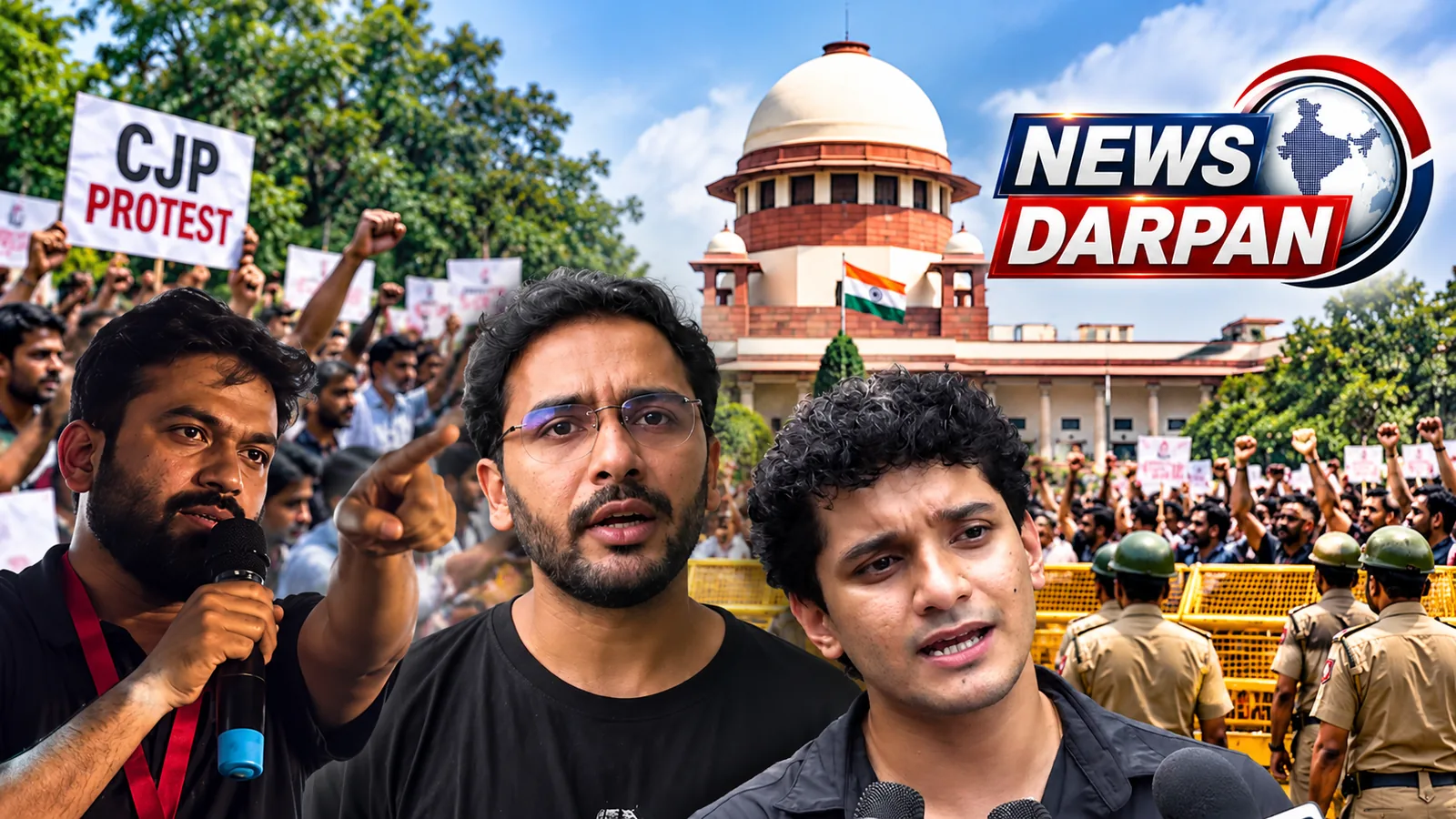
CJP Protest Delhi: Abhijeet Dipke, 2 Others Released on One-Year Peace Bond
Most read
- 1
Air China Adds Extra Flight for Passengers Stranded in Fuel-Starved Cuba
- 2
Western disturbance to bring rain, hail and strong winds across north India
- 3
Yogi Adityanath Directs No Occupied Houses Be Demolished for Achhalda Bridge
- 4
Gwalior Temple Truck Crash Kills 12, Injures 28-29 Devotees During Navratri
- 5
Schools Shut in Five Tamil Nadu Districts, Including Chennai, Amid Heavy Rain
Comments
No comments yet. Be the first to comment.