
Southeast Asia risks becoming an AI infrastructure provider without controlling its own digital future
As US and China compete over AI, Southeast Asian nations face pressure to control their own AI infrastructure and avoid technological dependency.

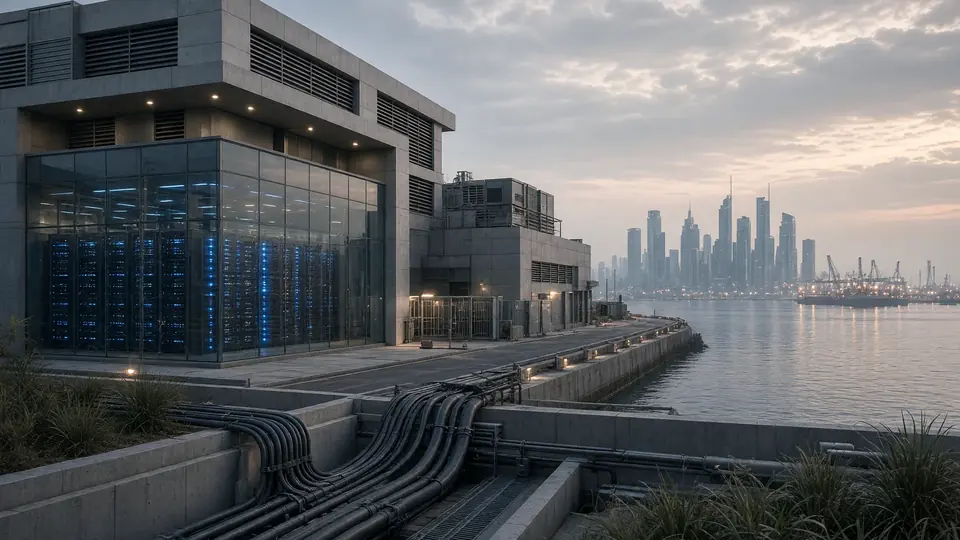
The Strategic Autonomy Challenge
Asean nations face a fundamental shift in what it means to remain independent in international affairs. Power once rested on military strength, territory, energy reserves, capital and trade routes, but the digital revolution elevated information itself into a strategic asset. Now artificial intelligence is converting that information into a capability that can reshape entire economies, governments and societies.
For Southeast Asia, the question is no longer whether the region will join the AI revolution but whether it will control enough of the underlying infrastructure, knowledge and systems to determine its own trajectory, or whether it will simply lease intelligence from external powers.
Infrastructure Without Control
The region is becoming a physical centre of the AI economy, with data centres multiplying and investment pouring into digital infrastructure. The International Energy Agency projects that electricity demand from data centres across Southeast Asia will more than double by 2030. Malaysia and Singapore are positioning themselves as major regional hubs, while Indonesia and Thailand compete for a larger share of the digital infrastructure boom.
Yet a strategic paradox emerges beneath this expansion. Asean may supply the land, electricity, connectivity, markets and physical infrastructure that power the AI economy while remaining dependent on outside actors for advanced chips, foundational models, cloud platforms and the technological standards that govern them. This creates a more subtle form of dependency: states retain formal sovereignty even as they rely on foreign AI systems to operate critical functions.
Eroding Assumptions
The dilemma matters because Asean's traditional approach to strategic autonomy was forged in an era when states could diversify economic and diplomatic ties without committing to a single technological architecture. That assumption is weakening. The United States and China are building rival technology ecosystems.
Earlier this month, Reuters reported that Washington was preparing to encourage countries participating in its Pax Silica initiative to choose between competing American and Chinese AI frameworks. China, meanwhile, is deepening AI engagement across Southeast Asia through training programmes, infrastructure projects, research partnerships and industrial applications.
The choice Asean confronts is not between technological dominance and isolation but between dependence and agency.
Source: South China Morning Post
Frequently asked questions
Why is AI infrastructure considered a strategic issue for Southeast Asia?
AI has become a strategic asset that can reshape economies, governments and societies. The question for Southeast Asia is whether the region will control enough of the underlying infrastructure, knowledge and systems to determine its own trajectory, or whether it will depend on external powers for AI capabilities.
What is the strategic paradox facing Asean countries regarding AI infrastructure?
While Southeast Asia is becoming a physical centre of the AI economy with multiplying data centres and investment, the region supplies land, electricity, connectivity and physical infrastructure but remains dependent on outside actors for advanced chips, foundational models, cloud platforms and technological standards that govern them.
How are the United States and China competing for influence over Southeast Asia's AI future?
The United States is encouraging countries in its Pax Silica initiative to choose between competing American and Chinese AI frameworks. China is deepening AI engagement through training programmes, infrastructure projects, research partnerships and industrial applications across Southeast Asia.
How has the traditional approach to strategic autonomy in Asean become challenged?
Asean's traditional approach relied on diversifying economic and diplomatic ties without committing to a single technological architecture. This assumption is weakening as the United States and China build rival technology ecosystems, forcing countries to choose between competing frameworks rather than maintaining independence.
You may also like
 Technology
Chinese scholar warns US supply chain strategy against Beijing will backfire
 Business
Turkey Becomes ASEAN Dialogue Partner, Enhancing Global Geopolitical Role
 Technology
Asian investors now demand AI revenue proof, not just tech exposure, BofA finds
 Technology
Chinese teen builds 500,000-strong following with AI problem-solving videos
Most read
- 1
Tesla audits Chinese suppliers to scale up Optimus robot production
- 2
Former minister Lakhan Singh Rajput to inaugurate temple bhandara at Shri Chakreshwar Mahadev
- 3
Firozabad BSA finds four government schools locked during inspection
- 4
Tamil Nadu dengue cases fall for third consecutive year to 17,049
- 5
Social workers stage silent protest at Fufund railway station for train halts
Comments
No comments yet. Be the first to comment.