
Scientists operate first underwater solar power system in open ocean
Yunnan University successfully operates perovskite solar cells 10 meters below sea surface, generating electricity from filtered sunlight in open ocean.

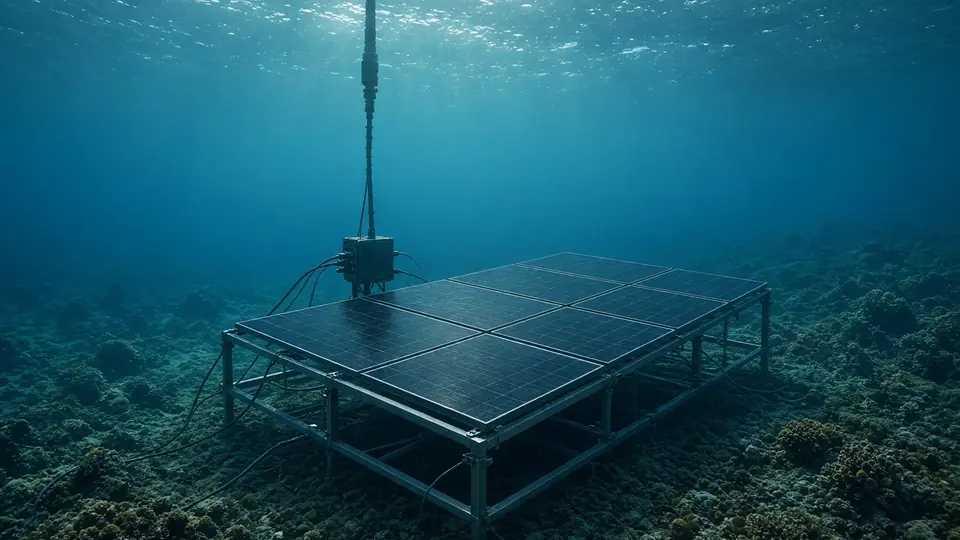
A research team from Yunnan University has successfully operated a perovskite-based solar power system submerged 10 metres below the sea surface, marking the first time solar cells have functionally generated electricity at depth in open ocean conditions.
The experimental installation charged batteries and illuminated an LED panel using only the filtered sunlight penetrating the water column. The achievement addresses a fundamental technical challenge: conventional silicon solar cells cannot efficiently capture the narrow blue-green light spectrum that persists underwater as depth increases.
Breakthrough uses lead halide perovskite technology
The Yunnan University scientists deployed lead halide perovskite solar cells for the trial, published in the journal Joule. Perovskite materials can be tuned to absorb wavelengths that penetrate water more effectively than silicon.
The research demonstrates that energy harvesting remains viable even in the dim underwater environment where most visible light has been absorbed. Until now, sunlight's rapid fading beneath the surface has been considered an insurmountable barrier to submarine photovoltaic systems.
The publication date was September 11. The system was tested at 33 feet depth, establishing proof of concept for powering future underwater operations through renewable energy.
Source: South China Morning Post
Frequently asked questions
What is the breakthrough achievement described in this article?
Scientists from Yunnan University successfully operated the first underwater solar power system in open ocean, with perovskite-based solar cells generating electricity at 10 metres (33 feet) below the sea surface.
Why is underwater solar power technically challenging?
Conventional silicon solar cells cannot efficiently capture the narrow blue-green light spectrum that persists underwater as depth increases. Most visible light is absorbed by water, making sunlight's rapid fading beneath the surface a major barrier.
What type of solar technology was used in this experiment?
The researchers deployed lead halide perovskite solar cells, which can be tuned to absorb wavelengths that penetrate water more effectively than silicon-based alternatives.
What did the underwater solar system successfully power?
The experimental installation charged batteries and illuminated an LED panel using only the filtered sunlight penetrating the water column.
You may also like
 International
China's Perovskite Solar Farm Surpasses Silicon in Major Trial
 Karnataka
KERC proposes lower solar power tariffs for subsidy beneficiaries starting July 2026
 Education
University students pledge commitment to net zero emissions and sustainable living
 Politics
Modi accuses developed nations of shifting climate blame to India
Most read
- 1
Tesla audits Chinese suppliers to scale up Optimus robot production
- 2
Former minister Lakhan Singh Rajput to inaugurate temple bhandara at Shri Chakreshwar Mahadev
- 3
Firozabad BSA finds four government schools locked during inspection
- 4
Tamil Nadu dengue cases fall for third consecutive year to 17,049
- 5
Social workers stage silent protest at Fufund railway station for train halts
Comments
No comments yet. Be the first to comment.