
Omar Abdullah Calls for Entrepreneurial Investment to Boost J&K Economy
Omar Abdullah urges investors to unlock Jammu & Kashmir's growth through enterprise, focusing on agriculture and sustainable economic opportunities.

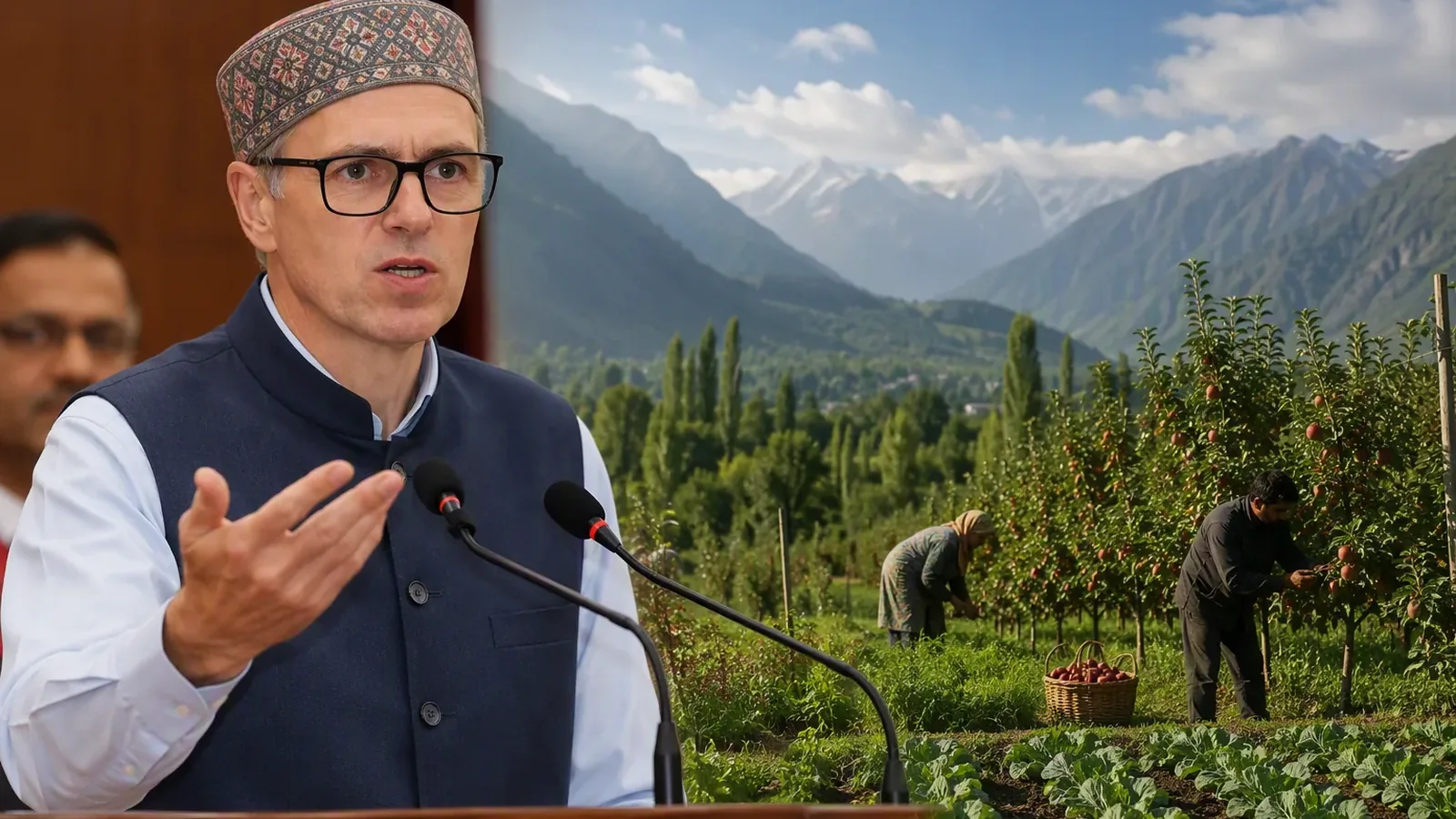
Omar Abdullah Urges Investors to Unlock J&K’s Growth Through Enterprise
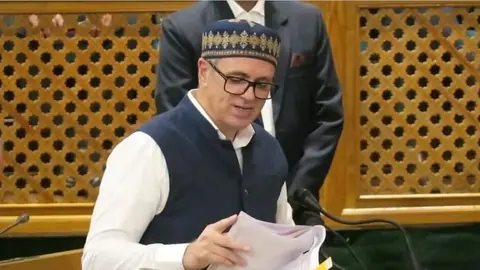
Jammu and Kashmir Chief Minister Omar Abdullah has called on investors and entrepreneurs to focus on building businesses in the Union Territory, stressing that its future prosperity lies in fostering enterprise rather than relying solely on government support. Speaking at IIMBue’s Leadership Conclave 2026 in Bengaluru on Saturday, Abdullah highlighted the need to improve access to finance, markets, technology, and mentorship to empower ordinary citizens to create sustainable economic opportunities.
Agriculture at the Core of J&K’s Economic Revival
Abdullah underscored the critical role of agriculture, horticulture, and dairy in driving Jammu and Kashmir’s economic growth. These sectors, he noted, contribute the largest share to the Union Territory’s Gross State Domestic Product (GSDP) but remain overlooked despite their potential to generate long-term prosperity. “Jammu and Kashmir is an agrarian society. The biggest opportunities are still there, even if they are not glamorous,” he said. He pointed to areas like dairy processing, post-harvest management, and high-value horticulture as key avenues for entrepreneurial growth.
For instance, Abdullah revealed that only 7% of the Union Territory’s milk production is currently processed, with the remaining 93% sold raw. He urged entrepreneurs to address this gap while also exploring crop diversification into premium products such as blueberries, which could complement the region’s dominant apple industry.
Enterprise as the Modern Asset
Drawing a parallel between land as the defining productive asset of the last century and enterprise today, Abdullah argued that broadening access to entrepreneurial opportunities is the key to inclusive growth. “If land was the productive asset of that age, today ours is enterprise,” he said, adding that governments must rebuild confidence, reduce uncertainty, and restore belief in effort-driven opportunities to create a thriving ecosystem for businesses.
Policy Over Promises
Addressing IIM-B alumni and industry leaders, Abdullah stressed that genuine economic transformation comes from consistent policy reforms rather than headline-grabbing electoral promises. “The change of orbit happens through smaller decisions, not necessarily the big-ticket announcements that make election manifestos,” he said, emphasizing the importance of inclusive and locally beneficial growth.
Why It Matters
Abdullah’s remarks come at a time when Jammu and Kashmir is seeking to diversify its economy beyond tourism and subsidies. By focusing on enterprise-driven value addition in agriculture and allied sectors, the Union Territory has the potential to create sustainable incomes and reduce dependency on government spending. His call to action for investors and entrepreneurs could pave the way for a more resilient and self-reliant economy in the region.
Source: The Hindu
Frequently asked questions
What does Omar Abdullah say is key to J&K's economic future?
Omar Abdullah emphasizes that J&K's future prosperity depends on fostering enterprise and entrepreneurship rather than relying solely on government support. He stresses the need to improve access to finance, markets, technology, and mentorship to empower citizens to create sustainable economic opportunities.
Which sectors does Abdullah identify as having the most potential for J&K's growth?
Abdullah highlights agriculture, horticulture, and dairy as critical to J&K's economic revival. He notes these sectors contribute the largest share to the Union Territory's GSDP and identifies opportunities in dairy processing, post-harvest management, and high-value horticulture like premium blueberries.
What specific opportunity does Abdullah point out in J&K's milk production?
Abdullah reveals that only 7% of J&K's milk production is currently processed, with 93% sold raw. He urges entrepreneurs to address this gap by investing in dairy processing infrastructure.
How does Abdullah compare enterprise to land in terms of economic assets?
Abdullah argues that while land was the defining productive asset of the last century, enterprise is the modern productive asset today. He stresses that broadening access to entrepreneurial opportunities is key to inclusive growth.
You may also like
 Politics
Omar Abdullah Likely to Reshuffle J&K Cabinet Next Week: Sources
 Politics
J&K’s Revised Industrial Policy Nears Final Stage, Deputy CM Says
 Politics
Omar Abdullah Set To Introduce Five Bills In J&K Assembly
 Politics
Omar Abdullah Says J&K Statehood Decision Rests With Centre, Seeks Timeline
Most read
- 1
Air China Adds Extra Flight for Passengers Stranded in Fuel-Starved Cuba
- 2
Western disturbance to bring rain, hail and strong winds across north India
- 3
Yogi Adityanath Directs No Occupied Houses Be Demolished for Achhalda Bridge
- 4
Schools Shut in Five Tamil Nadu Districts, Including Chennai, Amid Heavy Rain
- 5
Gwalior Temple Truck Crash Kills 12, Injures 28-29 Devotees During Navratri
Comments
No comments yet. Be the first to comment.