
Malaysian entrepreneurs turn traditional Sarawak rice wine tuak into premium brand
Young entrepreneurs transform Sarawak's traditional tuak rice wine into premium brands, balancing cultural heritage with commercial growth.

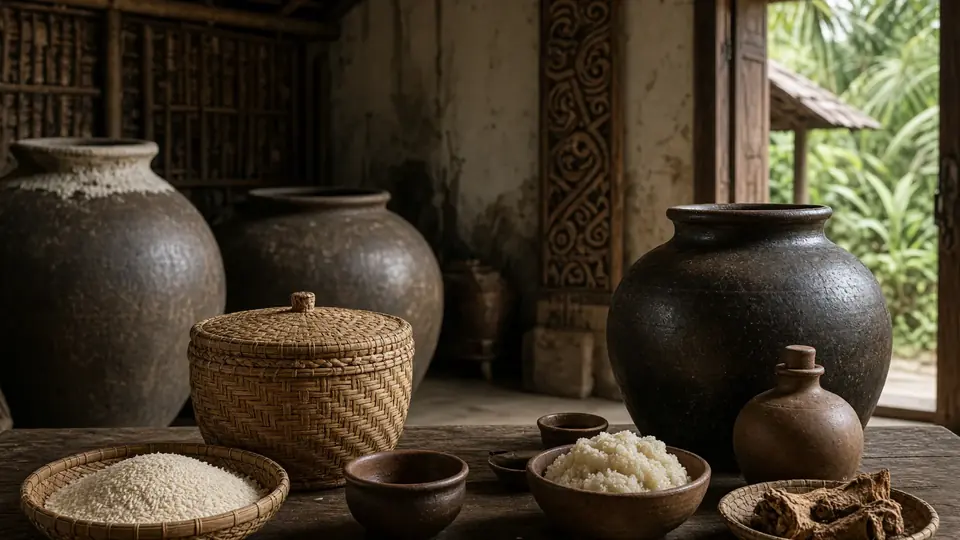
Young Malaysian entrepreneurs are transforming tuak, the indigenous rice wine of Sarawak, into a premium commercial brand, raising questions about how far tradition can bend before its cultural heart is lost.
From Longhouse Jars to Urban Tasting Flights
At Raffly Langi's family longhouse in Sarawak, on Malaysian Borneo, tuak arrived without labels or brand identity. His aunt brewed the rice wine for Gawai, the harvest festival celebrated by Dayak communities, an umbrella term for indigenous groups whose longhouses remain centres of family, rituals and communal life. She prepared it from steamed glutinous rice and ragi, a fermentation cake made with rice flour, yeast and spices, then drew the finished tuak from a jar and served it unflavoured.
Years later, the 33-year-old Raffly has brought that family recipe to the Klang Valley, the urban region around Kuala Lumpur. Under the brand Tuak Alus, he produces tuak and develops modern flavours for drinkers unfamiliar with the traditional brew.
Tradition Meets Commercial Innovation
Tuak traditionally comes in two versions: the sweeter indu, or female, and the drier laki, or male. Artisan brands now offer flavours derived from pandan, pineapple and roselle.
The drink can still be purchased in Sarawak for US$5 to US$7.50 in an unlabelled plastic or glass bottle. At Klang Valley pop-ups, producers sell premium bottles, promote brand collaborations and offer tasting flights, with prices around US$25 or more each.
The Cultural Tension at the Bottom of the Bottle
As tuak moves from longhouses into mainstream markets, brewers face a persistent question: how much can the drink be changed before the culture that gives it meaning fades? Given tuak's origins in Sarawak, industry players must balance adherence to traditional processes against commercial limitations.
The challenge reflects a broader dilemma for indigenous products entering urban economies, whether scaling up and diversifying flavours honors or erodes the communal rituals and ancestral knowledge embedded in every jar.
Source: South China Morning Post
Frequently asked questions
What is tuak and where does it come from?
Tuak is an indigenous rice wine of Sarawak, Malaysia, traditionally brewed by Dayak communities. It is made from steamed glutinous rice and ragi, a fermentation cake made with rice flour, yeast and spices. Traditionally, tuak was prepared for Gawai, the harvest festival celebrated by Dayak communities in their longhouses.
What are the traditional versions of tuak?
Tuak traditionally comes in two versions: indu (female), which is sweeter, and laki (male), which is drier. Both versions are served unflavoured in their traditional form.
How has tuak been commercialized and what are the new price points?
Young entrepreneurs like Raffly Langi are bringing tuak to urban markets under brands like Tuak Alus, introducing modern flavours derived from pandan, pineapple and roselle. While traditional tuak in Sarawak sells for US$5 to US$7.50 in unlabelled bottles, premium bottles sold at Klang Valley pop-ups cost around US$25 or more, often featuring brand collaborations and tasting flights.
What cultural challenge do tuak producers face when commercializing the drink?
As tuak moves from longhouses into mainstream markets, producers must balance commercial innovation with cultural preservation. The key challenge is determining how much the drink can be changed in terms of flavour and presentation before the culture and communal rituals that give it meaning are lost.
You may also like
 Health
Medical helicopter crashes in Malaysia, killing five health ministry staff
 National
Malaysia's Monarchy Gains Influence Amid Political Turmoil
 Crime
Crime
Najib Razak must pay 50 million ringgit fine to leave prison
 Entertainment
Malaysia's PM courts India with charm and Kishore Kumar song at Brics summit
Most read
- 1
Tesla audits Chinese suppliers to scale up Optimus robot production
- 2
Former minister Lakhan Singh Rajput to inaugurate temple bhandara at Shri Chakreshwar Mahadev
- 3
Firozabad BSA finds four government schools locked during inspection
- 4
Tamil Nadu dengue cases fall for third consecutive year to 17,049
- 5
Social workers stage silent protest at Fufund railway station for train halts
Comments
No comments yet. Be the first to comment.