
Malaysia and Indonesia launch joint cloud-seeding to battle wildfire haze crisis
Indonesia permits joint cloud-seeding operations as wildfires blanket Malaysia with haze, forcing 600 school closures and severely reducing air quality.

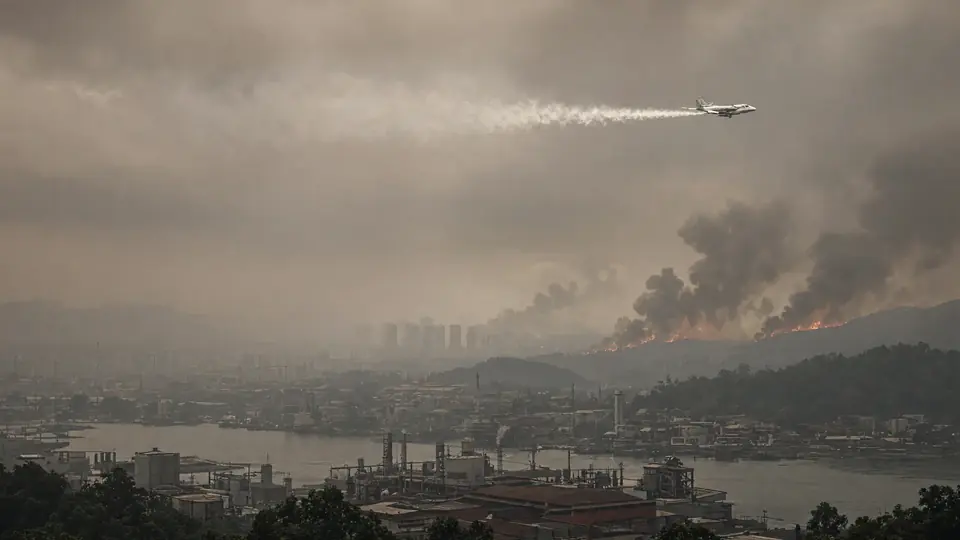
Indonesia has granted Malaysia permission to conduct joint cloud-seeding operations across their shared border as wildfires on Sumatra and Kalimantan continue to pump thick haze into the region.
The transboundary pollution has forced the closure of nearly 600 schools in Malaysia and reduced visibility so severely that Kuala Lumpur's Petronas Twin Towers, normally visible for miles, have disappeared behind a grey shroud.
Coordinated airspace operations
Malaysia's disaster management agency and meteorological department are now scheduling cloud-seeding flights in border areas, with the Indonesian military handling coordination on the ground. Natural Resources and Environmental Sustainability Minister Arthur Joseph Kurup confirmed on Monday that 16 Malaysian locations had recorded unhealthy readings on the air pollutant index as of 10am on August 26.
The wildfires driving the crisis are burning across Indonesia's Sumatra island and Kalimantan, the Indonesian portion of Borneo that Malaysia shares. Authorities from both nations are coordinating response operations along the Bornean frontier.
Relief versus prevention
While the joint cloud-seeding effort offers immediate relief from the choking conditions, experts caution that fire prevention at the source remains the fundamental challenge. The haze episodes, a recurring regional crisis, stem from slash-and-burn land clearing practices that ignite peatlands and forests, sending plumes of smoke across Southeast Asia when weather patterns shift.
The school closures and air quality emergency underscore how quickly the situation has deteriorated, turning what is typically a seasonal environmental nuisance into a public health crisis that disrupts daily life across multiple Malaysian states.
Source: South China Morning Post
Frequently asked questions
Why did Malaysia and Indonesia launch joint cloud-seeding operations?
Wildfires burning across Indonesia's Sumatra island and Kalimantan are pumping thick haze into the region, causing severe air pollution and visibility problems in Malaysia. The joint cloud-seeding operations aim to provide immediate relief from the choking conditions.
What impact has the haze had on Malaysia?
The transboundary pollution has forced the closure of nearly 600 schools in Malaysia and reduced visibility so severely that Kuala Lumpur's Petronas Twin Towers have disappeared behind a grey shroud. As of August 26, 16 Malaysian locations had recorded unhealthy air pollutant index readings.
How are Malaysia and Indonesia coordinating the cloud-seeding effort?
Malaysia's disaster management agency and meteorological department are scheduling cloud-seeding flights in border areas, while the Indonesian military handles coordination on the ground. Both nations are coordinating response operations along the Bornean frontier.
What is the underlying cause of the haze crisis?
The wildfires stem from slash-and-burn land clearing practices that ignite peatlands and forests. When weather patterns shift, smoke plumes travel across Southeast Asia, turning what is typically a seasonal environmental nuisance into a recurring public health crisis.
You may also like
 National
Malaysia moves PM's National Day address indoors as hazardous haze forces venue shift
 Defence
Malaysia's $500 Million Warship Arrives Without Missile Systems
 National
Philippine President Considering Absolute Pardon For Mary Jane Veloso
 Crime
Crime
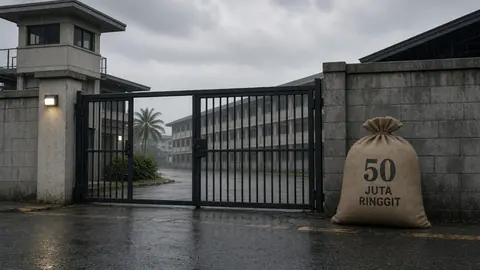
Najib Razak must pay 50 million ringgit fine to leave prison
Most read
- 1
Tesla audits Chinese suppliers to scale up Optimus robot production
- 2
Former minister Lakhan Singh Rajput to inaugurate temple bhandara at Shri Chakreshwar Mahadev
- 3
Firozabad BSA finds four government schools locked during inspection
- 4
Tamil Nadu dengue cases fall for third consecutive year to 17,049
- 5
Social workers stage silent protest at Fufund railway station for train halts
Comments
No comments yet. Be the first to comment.