
Kerala's corneal shortage hampers transplant goals despite donor awareness campaigns
Kerala retrieves only 1,700 corneas yearly, far below targets. Poor tissue quality and low usable rates hamper corneal transplant programs.

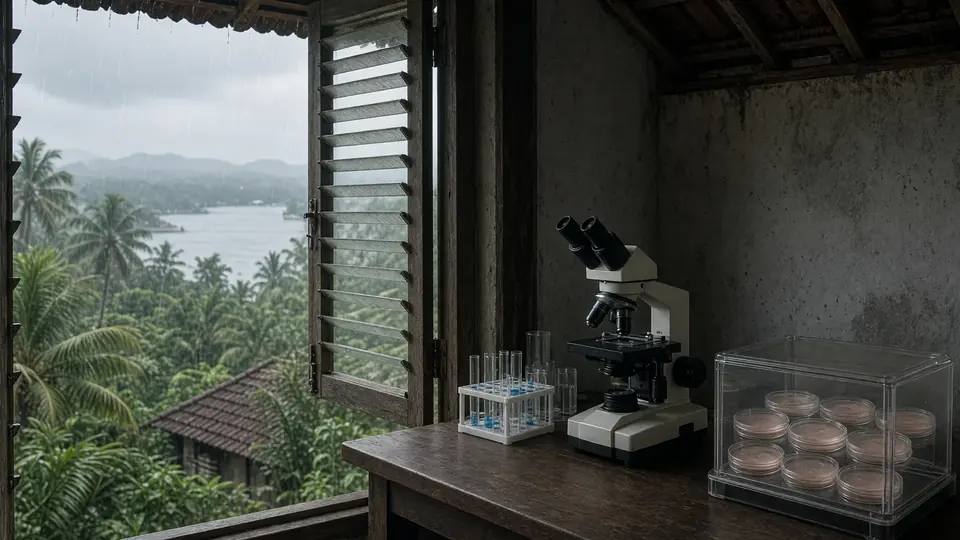
'Young' cornea scarcity stalls Kerala's corneal blindness fight
Kerala retrieves only 1,700 corneas annually, far below targets, and just 40-50% prove usable for transplants, leaving ophthalmologists warning that poor tissue quality, not awareness alone, is crippling the State's effort to reverse preventable blindness.
Tissue quality, not awareness, drives shortage
While many residents understand eye donation, actual pledges fail to convert because families withhold consent, fear disfigurement, or donate corneas that prove medically unsuitable, specialists say. The crux lies in age: endothelial cell density, essential for post-surgery corneal clarity, declines with age, and elderly donor tissue carries higher rejection risk even when grafted. "The primary reason for the low utilisation rate is poor tissue quality," explains Dr. Reshmi P. Haridas, cornea specialist at Thiruvananthapuram General Hospital.
Demand-supply mismatch widens
National statistics project India needs one lakh corneal transplants yearly to serve 1.20 lakh people living with corneal blindness, yet at current utilisation rates the country must harvest double the present volume to meet demand. Kerala's 1,700-cornea annual haul pales beside Andhra Pradesh's 10,000, undershooting National Programme for Control of Blindness and Visual Impairment benchmarks. Corneal disease causes 40% of blindness in the 0, 49 age bracket and 18% among those over 50, while 25,000 fresh cases, including graft failures, join the waitlist each year.
Hospital retrieval programmes offer solution
Ophthalmologists are urging Kerala to scale Hospital Cornea Retrieval Programmes, a proactive model in which grief counsellors approach bereaved families in hospitals, dedicated teams harvest tissue within the six-hour window, and medical records enable swift contraindication screening. The model's advantage is access to younger donors and higher-quality tissue. Little Flower Hospital, Angamaly, which operates an established HCRP and eye bank, transplanted 645 of 1,624 corneas retrieved in 2023, a 48% utilisation rate, while Government Medical College, Kozhikode, managed just 25% without a robust programme.
"A team from the eye bank goes directly to the deceased person's home, retrieves just the cornea… and the process hardly takes 15 minutes. There is no disfigurement," Dr. Haridas notes, adding that anyone, diabetic, hypertensive, or with cataract, may donate. The push comes as Thiruvananthapuram General Hospital this year became India's first district government facility to perform keratoplasty, signalling expanded public-sector capacity that now awaits a matching supply chain.
Source: The Hindu
Frequently asked questions
Why does Kerala face a corneal shortage despite donor awareness campaigns?
While awareness exists, the core issue is tissue quality, not awareness. Kerala retrieves only 1,700 corneas annually, but only 40-50% prove usable for transplants. Elderly donor tissue has lower endothelial cell density, critical for post-surgery clarity, and carries higher rejection risk. Families also withhold consent or fear disfigurement.
How large is the demand-supply gap for corneal transplants in India?
India needs one lakh corneal transplants yearly to serve 1.20 lakh people with corneal blindness, but current utilisation rates require harvesting double the present volume to meet demand. At current rates, 25,000 fresh cases join the waitlist annually.
What is the Hospital Cornea Retrieval Programme and how does it improve outcomes?
HCRP is a proactive model where grief counsellors approach bereaved families in hospitals, dedicated teams harvest corneas within six hours, and medical records enable swift screening. It accesses younger donors and higher-quality tissue. Little Flower Hospital achieved 48% utilisation with this model, compared to 25% at facilities without robust programmes.
Who is eligible to donate corneas?
Anyone can donate corneas, including people with diabetes, hypertension, or cataracts. The retrieval process takes just 15 minutes and causes no disfigurement to the deceased.
You may also like



Most read
- 1
Tesla audits Chinese suppliers to scale up Optimus robot production
- 2
Former minister Lakhan Singh Rajput to inaugurate temple bhandara at Shri Chakreshwar Mahadev
- 3
Firozabad BSA finds four government schools locked during inspection
- 4
Tamil Nadu dengue cases fall for third consecutive year to 17,049
- 5
Social workers stage silent protest at Fufund railway station for train halts
Comments
No comments yet. Be the first to comment.