
Karnataka launches ₹27-crore cloud-seeding operation to combat monsoon deficit
Karnataka to begin artificial rainfall initiative across all four divisions over 60 days, targeting 30% success rate to address monsoon deficit.

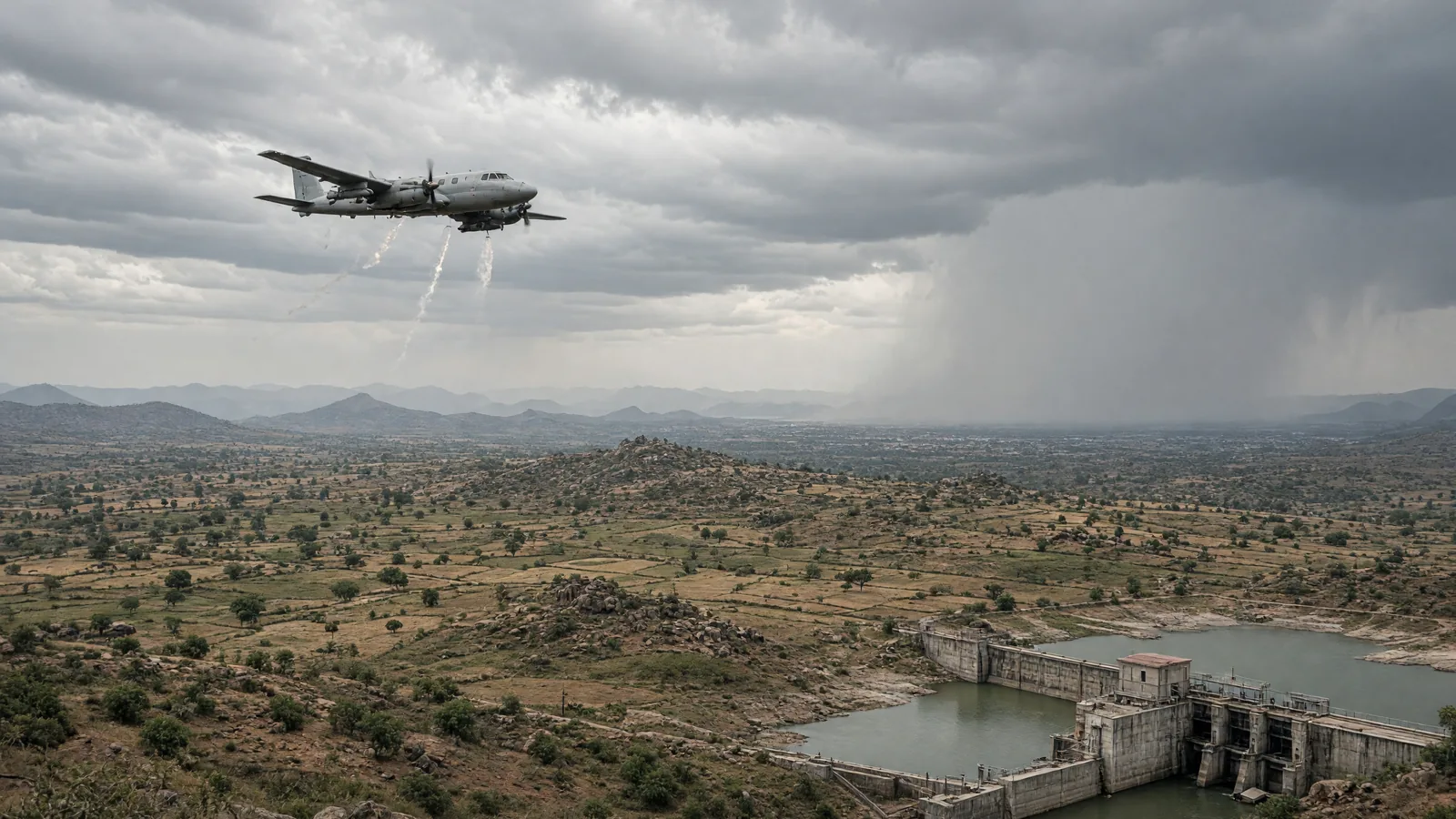
Karnataka is expected to launch a ₹27-crore cloud-seeding operation within three days after clearing the final technical and administrative hurdles on Tuesday, Major Irrigation Minister N. Cheluvarayaswamy announced.
The intervention will span 200 flying hours over a 60-day period, targeting areas with thick cloud density between 8 a.m. and 6 p.m. daily. The state is turning to artificial precipitation measures after a deficit monsoon and weather forecasts indicating a lack of sustained rainfall, raising concerns about potential water scarcity.
Targeting 30% success rate
September offers the most favourable conditions for the exercise, with the dense cloud cover necessary for effective seeding, according to Cheluvarayaswamy. Cloud volume typically drops significantly by October, narrowing the operational window. The minister said Karnataka aims for a 30% success rate in the current initiative, higher than the 18-20% average achieved during three previous cloud-seeding exercises in the state.
Four-division deployment
Cloud seeding will be conducted across all four revenue divisions of Karnataka. Flight paths will be dynamically routed based on real-time cloud density and atmospheric conditions rather than fixed routes. Each seeding operation is designed to induce precipitation within an estimated 15-kilometre radius of the targeted area.
Three-tier oversight mechanism
The government has set up separate committees to execute and monitor the programme. A monitoring committee headed by the Additional Chief Secretary to the Water Resources Department will oversee policy execution, inter-departmental coordination, and overall governance. A technical committee comprising scientists and experts from IISc, IIT, and the India Meteorological Department will track meteorological parameters and radar data. A field operation and evaluation committee will manage daily flight sorties, seeding dispersal protocols, and ground-level rainfall impact assessment.
While some rainfall has been recorded in parts of the state, the scattered precipitation has not provided the continuous monsoon activity needed to secure adequate water reserves, prompting the artificial intervention.
Source: The Hindu
Frequently asked questions
What is Karnataka's cloud-seeding operation and how much will it cost?
Karnataka is launching a ₹27-crore cloud-seeding operation to combat monsoon deficit. The intervention will span 200 flying hours over a 60-day period, targeting areas with thick cloud density between 8 a.m. and 6 p.m. daily.
What success rate is Karnataka aiming for with this cloud-seeding initiative?
Karnataka aims for a 30% success rate in the current initiative, which is higher than the 18-20% average achieved during three previous cloud-seeding exercises in the state.
Why is September considered the best time for cloud seeding in Karnataka?
September offers the most favourable conditions for cloud seeding due to dense cloud cover necessary for effective seeding. Cloud volume typically drops significantly by October, narrowing the operational window.
How will Karnataka monitor and oversee the cloud-seeding programme?
The government has set up three committees: a monitoring committee headed by the Additional Chief Secretary to oversee policy execution, a technical committee with scientists from IISc, IIT, and the India Meteorological Department to track meteorological parameters, and a field operation committee to manage daily flight sorties and rainfall assessment.
Which areas of Karnataka will be covered by the cloud-seeding operation?
Cloud seeding will be conducted across all four revenue divisions of Karnataka. Flight paths will be dynamically routed based on real-time cloud density and atmospheric conditions, with each operation designed to induce precipitation within an estimated 15-kilometre radius.
You may also like
 Crime
Crime
Farmer Arrested After Over 500 Cannabis Plants Found In Karnataka’s Vijayapura
 Entertainment
Kambala Makes Mysuru Dasara Debut With 150 Buffalo Pairs Racing
 Technology
Canada Eyes Expanded Karnataka Partnerships in Quantum Computing, AI, Aerospace, Defence
 Karnataka
Karnataka Seeks Centre’s Intervention To Resume LPG Connections, 36,000 Applications Pending
Most read
- 1
Air China Adds Extra Flight for Passengers Stranded in Fuel-Starved Cuba
- 2
Western disturbance to bring rain, hail and strong winds across north India
- 3
Yogi Adityanath Directs No Occupied Houses Be Demolished for Achhalda Bridge
- 4
Gwalior Temple Truck Crash Kills 12, Injures 28-29 Devotees During Navratri
- 5
Schools Shut in Five Tamil Nadu Districts, Including Chennai, Amid Heavy Rain
Comments
No comments yet. Be the first to comment.