
Israeli soldier finds solace in Himalayas, escaping war's toll
A 25-year-old Israeli veteran escapes conflict by retreating to Dharamkot, Himalayas, with his wife to recover from war's personal toll.
Getting away from gunshots
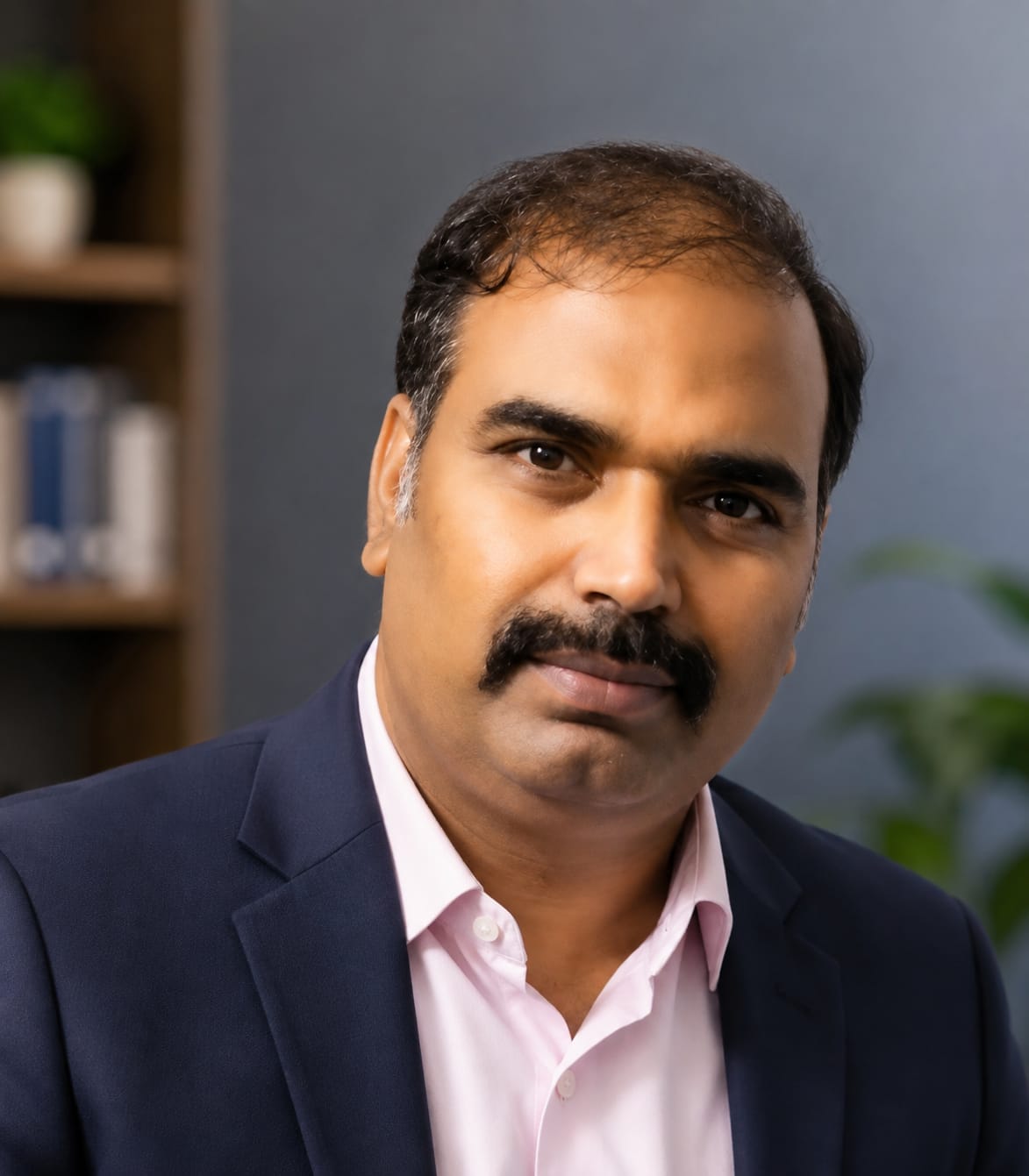
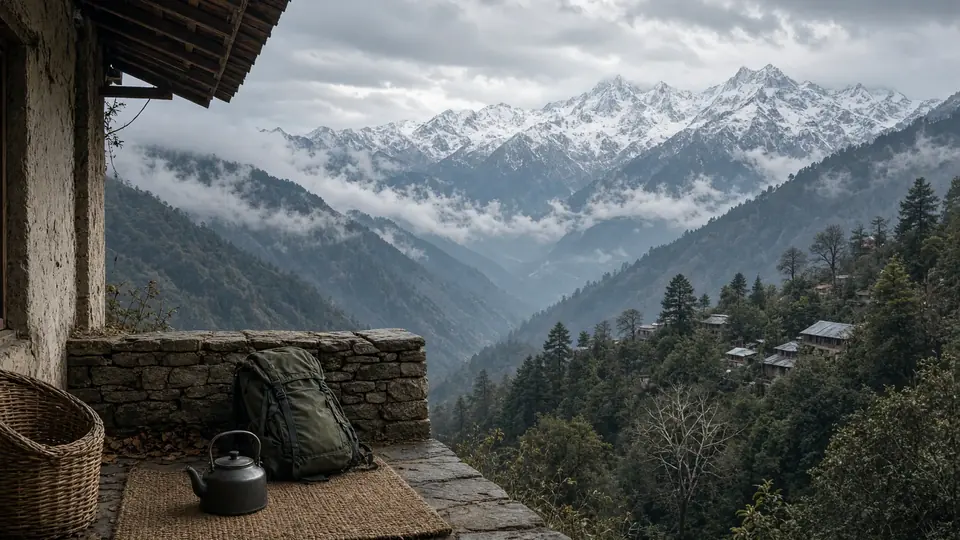
Jish savours lemon pie and ginger tea at a vegan bakery in Dharamkot, more than a week after arriving in India following his mandatory military service in Israel. The 25-year-old former soldier, who served two years in the Israel Defense Forces reserve military service, has come to this misty Himachal Pradesh village to escape the weight of conflict that has claimed many of his friends and countless civilians since October 2023.
This is Jish's second visit to India, he first came in May last year after hearing stories through social media and his friends' first-hand accounts, staying nearly five months. That first journey took him across the Himalayas on a motorcycle, from Dharamkot to Manali's Parvati Valley and onward to Ladakh. This time, he has travelled with his wife, seeking respite in a landscape far removed from the gunfire that has defined their recent lives.
A wedding postponed by war
The ongoing US-Israel war with Iran left its mark on Jish's personal life in profound ways. Just one month before Hamas attacked Israel in October 2023, he got engaged. "I was on the battlefield. My fiancé prepared all the stuff, you know, the wedding dress, and so on. It's difficult," he says. He joined the IDF when he was 19.
The conflict that disrupted his wedding plans has been relentless. "Since October 2023, we have lost many friends and many civilians. It's like an endless war between two nations, the Jewish nation and the Arab nation," Jish explains.
Dharamkot, a village about two-three kilometres uphill from Mcleodganj in Himachal Pradesh's rain-washed pine forests, has become known as Mini Israel because a number of Israelis flock here after they complete their conscription terms. Around 80,000 Israelis visit India annually, according to a paper titled 'Decoding the hummus trail of India: regaining the lost prudence', published in 2022 in Anatolia, an international journal of tourism and hospitality research.
The draw of peace and nature
For Jish, who will soon head out on a hired bike to Delhi and onward to Rajasthan, Dharamkot offers something Israel cannot. "There are different courses, like music sessions, yoga, drawing, and painting, there are so many options to unwind. In India, unlike Israel, there is more peace and Nature, landscapes, and special people," he says as he prepares to leave for his painting class in lower Dharamkot. Charcoal painting and pencil sketching are popular among foreign tourists in this Himalayan village.
The trip to India represents more than tourism for the former soldier. "There is a strong and deep connection between Israel and India, like a religious connection and some shared values between these two nations. India is different from Western societies that are materialistic. The trust factor is what's really attractive in India," says Jish, who will soon start a course in Judaism philosophy in Israel this October. He will remain in India until then.
Jish currently attends a painting class in lower Dharamkot, run by residents largely through hired instructors, one of the ways he chooses to unwind in the Himalayan landscape.
The Hummus Trail network
The Hummus Trail gets its name from hummus, a Middle Eastern food traditionally made from cooked chickpeas, tahini (sesame paste), lemon juice, garlic, and olive oil. The trail has many cafés and restaurants catering to Israeli travellers. The route spans several places in the mighty mountains of the Himalayas, like Kasol, Old Manali, Rishikesh, and Ladakh. It stretches across Uttar Pradesh's Varanasi and Pushkar in Rajasthan, extending to South Goa, Gokarna and Hampi in Karnataka, and Vattakanal in Tamil Nadu.
Hodaya, 23, also from Israel, has come to Dharamkot with her friend, drawn by the popularity of the Hummus Trail. "Most Israelis follow the Shvil Hummus (Hummus Trail) route in India and Nepal, as it has many cafés with Hebrew menus, Israeli music, and food. I have been in India for about two months now, travelling between Manali, Leh, and Dharamkot. It's relaxing here," says Hodaya, who is set to return to Israel in a couple of days.
Asked how she feels about the ongoing conflict, she shrugs it off with a smile, saying, "I am used to it, so I am not stressed anymore".
Hebrew signs and international community
The stone walls across Dharamkot are dotted with posters in Hebrew, alongside English. In lower Dharamkot, more accessible by road than the upper areas, the bulletin boards outside cafés, restaurants, roadside stalls, and homestays on the market stretch serve as a news feed for different events for the village's international community. There are wellness workshops, music and art events, community activities, and notices for parties.
The village sits in narrow market lanes, its stone-paved roads lined by tall pine trees, in a location popular among Israeli backpackers along the Hummus Trail. Last year, a little over 1 lakh foreign tourists visited Himachal, including visitors from Europe, Canada, the U.S., and Israel among other countries, according to Bhanu Gupta, joint director at Himachal's Tourism department.
Unsteady flow of travellers
This year, however, Dharamkot's narrow, stone-paved roads lined by tall pine trees look relatively deserted. The influx of Israeli travellers has been skewed and uneven, according to local hospitality players. Yet, over the years, the steady footfall of foreign tourists has helped the economy of this tiny village, even as the locals worry about the adverse impact of drug-laced raves in the forest.
Narender Pathania, 54, who runs an eight-room guest house in Dharamkot, points out that the flow of Israeli travellers has been unsteady for the past three years. The first lull, he says, was in 2023. That year, on October 7, Hamas-led Palestinian armed groups crossed into southern Israel, killing more than 1,200 people. Soon, the century-old Israel-Palestine conflict, one of the longest and most-violent in the world, escalated, as Israel intensified attacks on Palestine.
At least 20,179 children were killed and 44,143 children injured as a direct result of attacks on Gaza between October 7, 2023, and October 7, 2025, according to a UN commission report released on June 23, 2026. "The current total is certainly higher. Thousands of children are feared to be buried under rubble. In the 300 days after the ceasefire was announced 300 more children were killed, one child every day with still hundreds more, injured," according to UNICEF.
Economic impact of conflict
The tourists, Pathania says, further dropped after the US-Israel and Iran conflict broke out in February 2026. "Almost all of them had left when the war with Iran started. Now some have returned, but the flow is lower. All my rooms, which used to be packed during these days, are vacant. It eventually brings loss. Tourism is the primary livelihood for many in our village," he says.
Pathania adds that Israelis' Indian sojourn lasts several months, so they prefer budget-friendly homestays over expensive hotels. "Of late, tourists come with their children. Many cafés here cater specifically to the food preferences of Israelis. They visit Manali, Srinagar, Ladakh, and even trek to Chamba from here. They go to meditation centres, lean towards spirituality. Many lie in the lush green field for hours, just relaxing," he adds.
Pottery, ceramics and expensive alternatives
Vivek Kumar hails from neighbouring Dharamshala and manages routine affairs at 'Dharamkot studio' that offers pottery and ceramic courses in Dharamkot. He says, "Among the foreigners who come to us, Israelis make up the largest share. We have different courses ranging from five to 35 days. A minimum two-hour workshop is also available to experience the process of shaping wet clay into finished objects. Most of those who enrol with us are Israelis. In their country, these things are quite expensive, as I understand from speaking with them," he says.
Sanjeev Gandhi, chief advisor to the Hotel and Restaurant Association, Smart City, Dharamshala, who himself runs Hotel Gandhi's Paradise at Dharamkot, shares his experience on why Israelis are drawn to the town. "Most Israelis come carrying the weight of war and stress. They come to forget. What they value most about Dharamshala is the silence," says Gandhi, recalling a number of them telling him that the biggest draw is that they don't hear gunshots.
Not all Israelis need to serve conscription though. There are military exemptions for Israel's ultra-Orthodox Jewish community, who constitute about 13% of the population. This has triggered protests in the past, also leading to some stress among communities.
The darker side: drugs and rave parties
The Hummus Trail, also notorious as the Hashish Trail, is a route taken for readily available cheap drugs, says the Anatolia paper. In June 2026, taking suo motu action, the Himachal Pradesh High Court directed the transfer of three senior officers, including the then Deputy Commissioner and Superintendent of Police of Kullu district, in connection with the alleged nexus between officials and organisers of big-scale rave parties in Kullu district.
The drug issue was addressed in the 2007 Israeli-Canadian documentary Flipping Out, directed by Yoav Shamir. It follows Israeli soldiers after their discharge as they travel to India, exploring drug use and the psychological breakdowns some experience. The film also documents Israeli officials' response, including a meeting between the then Deputy Prime Minister Eli Yishai and former soldiers.
Cultivation and foreign involvement
Om Prakash Sharma, a former Narcotics Control Bureau (NCB) officer, who handled several enforcement operations in Himachal, Punjab, and Jammu-Kashmir, while he worked with the NCB's Chandigarh zone from 2002 to 2007, asserts that cultivation of cannabis and opium in remote areas of Kullu district and Mandi district of Himachal continues unabated. "The narcotics trade cannot survive unless there's support from the socio-political and administrative strata. Foreigners have been found involved in the illicit drug trade," he says, adding that regular Himachali people get involved because of "local poverty" and "easy money".
The modus operandi is simple, they throw money at people, Sharma explains. They know that forest lands and even private lands are available for cultivation at a meagre sum, he says. "These people, usually with Nepalese and other labourers, then cultivate and harvest it, after which the networks of foreigners operate its trade. Foreigners have even been marrying local women as a part of their strategy as well," he adds.
During his tenure, Sharma busted many drug deals, including 155 kilograms of charas (hashish) in Chandigarh, smuggled out of Kullu by Israeli, Czech Republic, and Indian (Kullu) nationals, and bound for Amsterdam in 2005. "During our operations, we had recovered the foreign strain of the cannabis seeds from some foreigners' houses. That was a hybrid seed, which clearly points to the extent of foreign involvement in the illicit drug trade," says Sharma, who has also served as convener-cum-advisor of the Himachal Pradesh Nasha Nivaran Board, formed to curb the drug menace.
"Rave parties in secluded forest areas are being organised in the name of tourism, which is not possible without the shelter of bigwigs and administrative machinery and local political patronage," he adds.
Local perspectives on rave parties
Monika Pathania, former councillor of Dharamkot ward, which falls under Dharamshala Municipal Corporation, says, "People talk about rave parties happening here, but that's simply not true. Such things don't happen at all in the village. It could be happening in remote areas where police presence is minimal, but in Dharamkot and neighbouring Bhagsunag there are police check posts to keep a tab on unlawful activities". She insists the village is only known for its meditation centres.
Ashwani Bamba, president of the Dharamsala Hotel and Restaurant Association, explains that Israelis tend to travel in groups and usually they prefer to spend less on accommodation, but are willing to indulge when it comes to food and, as he puts it, "Other things". Recalling that things were different a decade or so ago, Bamba points out that then, drug consumption was open. Now, not so much.
Gandhi is worried that locals too are impacted by drugs. "We have been urging the locals and administration to create a joint team to tackle the drug menace," he says.
For many young Israelis like Jish, Dharamkot is an escape from war, a holiday of healing and hash. The village in Himachal Pradesh's rain-washed pine forests continues to draw those seeking silence after the sound of gunfire, even as the flow of visitors remains uneven in the wake of ongoing regional conflicts. The popular vegan bakery-cum-café in the narrow market lane where Jish sits represents one part of this dual reality, a place of respite and meditation centres, but also one wrestling with questions about drug culture and the sustainability of tourism built around post-conflict escape.
Source: The Hindu
Frequently asked questions
Who is Jish and why did he travel to India?
Jish is a 25-year-old former Israeli soldier who completed two years of mandatory military service in the Israel Defense Forces. He traveled to India to escape the weight of conflict and find solace in the Himalayas, particularly in Dharamkot, Himachal Pradesh, after losing many friends since October 2023.
How did the war impact Jish's personal life?
Jish got engaged one month before Hamas attacked Israel in October 2023. He was on the battlefield when his fiancée prepared for their wedding. The couple has since postponed their wedding due to the ongoing conflict, though they are now traveling together to India for respite.
Why is Dharamkot known as 'Mini Israel'?
Dharamkot, a village in Himachal Pradesh's pine forests, has earned this nickname because many Israeli soldiers flock there after completing their conscription terms. Around 80,000 Israelis visit India annually, with many gravitating toward this peaceful mountain village.
What does Jish appreciate about India compared to Israel?
Jish values India's peace, nature, and landscapes. He appreciates the availability of courses in music, yoga, drawing, and painting for relaxation. He also highlights that India offers a strong connection based on shared values with Israel, plus a trust factor and spiritual depth that he finds absent in more materialistic Western societies.
You may also like
 Kerala
Kerala mountaineers become first from state to summit Ramjak peak
 Agriculture
Two children die of snakebite after parents mistook symptoms for stomach ache
 National
Himachal High Court gives state six weeks to settle pending DA arrears for employees
 Politics
Himachal Pradesh Cabinet Ministers List 2026 with Contact Numbers and Portfolios
Most read
- 1
Tesla audits Chinese suppliers to scale up Optimus robot production
- 2
Former minister Lakhan Singh Rajput to inaugurate temple bhandara at Shri Chakreshwar Mahadev
- 3
Firozabad BSA finds four government schools locked during inspection
- 4
Tamil Nadu dengue cases fall for third consecutive year to 17,049
- 5
Social workers stage silent protest at Fufund railway station for train halts
Comments
No comments yet. Be the first to comment.