
Google opens Fitbit Edge pre-orders at $179.99 ahead of October 27 launch
Google has opened $179.99 pre-orders for the Fitbit Edge, a slim fitness tracker with health coaching, a screen and up to seven days of battery life.

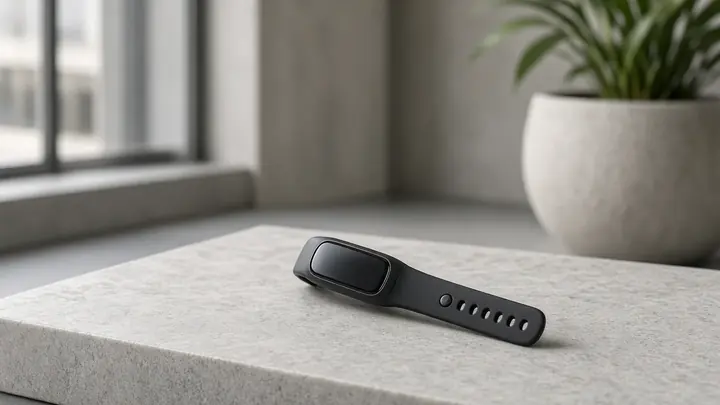
Fitbit Edge tracker
Google has opened pre-orders for the Fitbit Edge, with the tracker listed at $179.99 and scheduled to be on shelves October 27. The company is positioning the device between a full smartwatch and a more discreet, screenless fitness band.
The Fitbit Edge is designed for everyday wear, with automatic workout tracking, personalised health coaching and battery life of up to seven days on a single charge. Google’s announcement describes it as an ultra-slim fitness tracker that combines health and fitness tools with a screen, physical controls and smartphone-linked features.
Bloomberg describes the Edge as a replacement for the Fitbit Charge 6 and as another route for consumers to try Google’s recently revamped Google Health app. CNET places it between the $100 Fitbit Air and the $400 Pixel Watch 5 in price, features and form factor.
A tracker between Fitbit Air and Pixel Watch
Google says the Edge is aimed at people who want something between an advanced smartwatch such as the Pixel Watch and the simpler experience of a screenless band such as Fitbit Air. The company previously introduced Google Health Coach across its smartwatch lineup, including Pixel Watch, and on lightweight, screenless wearables such as Fitbit Air.
The Edge brings that coaching experience to a device Google describes as its most focused, ultra-slim glanceable product yet. It is intended for active lifestyles as well as everyday wear, rather than being limited to a particular type of training or workout.
CNET says the concept is not new for Fitbit, pointing to earlier trackers such as the Inspire and Charge, which combined a simple screen with Fitbit’s health and fitness tracking. Those earlier devices worked with both iOS and Android, while the screenless Fitbit Air represented a different direction for the company.
The Edge therefore returns a visible display to Fitbit’s tracker line while retaining a slimmer and lighter format than a conventional smartwatch. CNET describes the product as an option for people who are not fully convinced by smartwatches but also do not want a completely screenless wearable.
The tracker has been introduced three years after the Charge 6, according to CNET. Its arrival also gives Google a chance to bring features from across its wearable lineup into a new Fitbit product.
Design, display and controls
Google says the Fitbit Edge is encased in durable recycled aluminium and has a slim profile that contours naturally to the wrist. The company describes it as small and comfortable while still serving as a daily companion for wellness goals.
The tracker measures 11.5mm in thickness. Google says its case is 45% lighter than the Apple Watch Series 12.
Despite the thin design, Google says the Edge has its largest and brightest tracker screen yet, with 46% more viewing area than previous trackers. The company says the display remains easy to read in direct sunlight.
Google describes the screen as a Hybrid OLED display with glanceable tiles and expressive clock faces. CNET describes it as a 1.34-inch colour AMOLED display and says it is 46% larger than the display on the Charge 6.
The display also has an always-on option, according to CNET. That gives users the choice of keeping key information visible rather than relying only on a raise-to-wake interaction.
Google has redesigned the physical side button to provide tactile feedback. The button can be used for quick actions such as bringing up the workout pause screen.
CNET says the button can also be used to access menus. The inclusion of a physical control gives the tracker a way to handle workout actions without requiring every interaction to take place through the display.
Google says the Edge’s design follows the natural curve of the wrist, with a soft shape and an elegant silhouette. The company has also redesigned the on-device interface, building on the experience introduced with Pixel Watch 5.
The interface uses glanceable complications to keep information such as steps and weather in view. It also provides access to on-demand workouts and brings health metrics such as sleep, cycle tracking and heart rate to the wrist through fluid tiles.
The tracker supports customisation through interchangeable bands and a library of watch faces. Google says the watch faces and accessories are intended to suit different daily routines, health needs and personal styles.
Four finishes and a Stephen Curry edition
The Fitbit Edge is available in four finishes: Obsidian, Fog, Olive and Canyon. Google pairs the finishes with its Active Bands, which it describes as ultra-soft.
The Obsidian version has a Matte Black case, while Fog has a Polished Silver case. Olive comes with a Satin Pyrite case, and Canyon comes with a Warm Gold case.
Google is also offering interchangeable accessories beyond the standard Active Bands. The options include an Active Sport band, a micro-adjustable Performance Loop band, a Magnet band and a Metal Links band.
The company is launching a Stephen Curry Special Edition Fitbit Edge in collaboration with Stephen Curry, described in the announcement as a four-time NBA Champion and Google Performance Advisor. The edition uses his signature rye tones and game day orange.
Google says the Stephen Curry edition is water-repellent and moisture-wicking. It is priced at $219.99 in the company’s announcement.
Bloomberg describes the Curry version as a $220 special edition available in select countries. CNET says the edition costs an additional $50.
Fitness and health tracking
Under its exterior, the Edge combines biometric sensors with health and fitness tracking tools. Google says the aim is to provide a fuller picture of a user’s well-being through an on-wrist experience.
The tracker can record workouts during the day and sleep stages at night. Google says its battery capacity of up to seven days allows users to continue that tracking without charging every day.
CNET says the Edge has built-in GPS, unlike Fitbit Air, which relies on a phone for GPS. The tracker also includes an altimeter.
Its health sensors track heart rate, blood oxygen and skin temperature, and the device supports ECG readings, according to CNET. Bloomberg also lists automatic workout detection and wellness features among the device’s additions.
The Edge supports more than 50 exercise types, while Google says it can automatically recognise more than 40. CNET says Google has improved automatic detection since the launch of Fitbit Air, including recognition of racquet sports.
During workouts, users can view information such as pace and heart-rate zones on the tracker. CNET identifies this as a difference from Fitbit Air, where those workout metrics were not available on the wrist in the same way.
The Edge can also broadcast live heart-rate data to compatible exercise equipment. That allows users to view their heart rate on a treadmill or another supported machine while exercising.
Google says heart-rate tracking is 40% more accurate than on the Charge 6. CNET presents that as a Google claim and says it would be interested in testing the performance against a chest strap.
The Edge also includes proactive health monitoring and can track changes in insulin resistance, according to Bloomberg. Google’s Health Guardian feature measures monthly blood-pressure and insulin-resistance trends, according to CNET.
These features are linked to Google Health Premium rather than being presented only as basic tracker functions. Google is including three months of Google Health Premium with the purchase of the Edge.
CNET says the subscription costs $10 per month or $100 per year after the included period. Premium unlocks the AI-powered Google Health Coach and Health Guardian.
Google has also said Health Guardian is coming to Fitbit Air, although it has not announced when that will happen. That places the Edge within a broader expansion of Google’s health tools rather than making the tracker a standalone change to Fitbit’s product range.
Battery life and charging
Google rates the Edge for up to seven days of battery life on a single charge. The company also describes the battery as lasting from weekend to weekend.
The seven-day estimate depends on the device’s settings. CNET reports that Google’s estimate uses the raise-to-wake setting.
With the always-on display enabled, the estimate falls to two days, according to CNET. That makes the display setting a significant factor for users deciding whether the Edge’s battery advantage over a smartwatch is more important than keeping the screen continuously visible.
The tracker supports fast magnetic charging. Google says five minutes of charging can provide a full day of battery when the device is running low.
CNET gives the same five-minute, one-day charging figure but says a full charge takes about 90 minutes. The difference between a quick top-up and a complete recharge may matter for users who do not have long periods available to charge a wearable.
The Edge uses the same charger as Fitbit Air, according to CNET. CNET also says Google allows users to move between Fitbit devices and Pixel Watch without interrupting their health data.
That arrangement could let a user switch between devices depending on battery status or how much technology they want on the wrist. CNET describes a possible use in which the Edge is worn most days and Fitbit Air is used when the Edge has not been charged or when a less distracting device is preferred.
Repairable construction
The replaceable battery is one of the Edge’s main hardware changes. Bloomberg describes it as a first for Fitbit, while Google calls the Edge its first repairable fitness tracker.
Google says the device uses an internal modular architecture and a replaceable battery designed to extend its life. CNET likewise describes it as Fitbit’s first tracker designed with this level of repairability.
CNET places the change in the context of Google’s wider hardware work, saying the Pixel Watch 4 was redesigned without adhesives to make repairs easier. The publication says a repairable design in a smaller and less expensive tracker could help extend its usable life as batteries degrade over time.
Google says repair options vary by region. It recommends self-repair only for people with the technical expertise to carry it out safely.
The repairable construction does not remove the need for care when working on the device. Google’s guidance, as reported by CNET, limits self-repair to users who can do it safely and have the necessary technical expertise.
Smartphone features without Wear OS
The Edge runs Fitbit’s own operating system rather than Wear OS. That means it is not a miniature Pixel Watch and does not provide access to the Play Store or Gemini.
The Fitbit operating system does allow the tracker to work with both iPhone and Android phones. CNET says the device can show weather, alarms, timers, media controls and turn-by-turn directions.
The Edge can mirror notifications and incoming calls from a connected phone. On Android, it can also send canned replies to messages.
Google’s announcement lists Google Maps, media controls and call and message notifications among the everyday features available on the device. Those additions give the tracker functions beyond health monitoring while keeping it separate from the broader app and operating-system experience of a smartwatch.
There are limits to that approach. The Edge has no microphone or speaker, so users cannot take calls directly from the wrist as they can on a smartwatch.
The tracker also has no NFC for Google Wallet or tap-to-pay. CNET describes that as an omission because the older Charge 6 had the feature.
The absence of Wear OS, the Play Store, Gemini, a microphone, a speaker and NFC separates the Edge from a full smartwatch. At the same time, its screen, notifications, GPS, health sensors and workout tools make it more capable than a purely screenless band.
Pricing and availability
Google’s announcement lists the standard Fitbit Edge at $179.99. Bloomberg refers to it as a $180 tracker, while CNET calls it a $179 device.
The product is available for pre-order through the Google Store and retail partners. Google says it will be on shelves October 27.
Bloomberg also reports that shipments are scheduled to start Oct. 27. CNET says the Edge goes on sale Oct. 27 after being made available for pre-order.
At its listed price, the Edge costs nearly twice as much as Fitbit Air, according to CNET. It also costs more than Fitbit’s other entry-level trackers.
CNET says the price may still appear attractive to buyers who want fitness features but do not need smartwatch features such as contactless payments. The publication compares it with the $249 Apple Watch SE 3 and the $300 Samsung Galaxy Watch 7.
For buyers who want GPS, a screen and notifications, CNET says the additional cost over Fitbit Air provides a substantial increase in capability. The comparison places the Edge in a category for people who want more than a basic band but are not ready to choose a smartwatch tied to only an iPhone or only an Android phone.
The battery trade-off remains central
The Edge’s headline battery figure is its ability to last up to seven days with the raise-to-wake setting. That figure is considerably different from the two-day estimate when the always-on display is used.
The choice creates a practical trade-off between immediate access to the time and information and longer battery life. CNET says the decision may depend on how quickly raise-to-wake responds, because the reason for wanting a screen is often the ability to glance at it immediately.
CNET’s first-look account says that if the display remains black while waiting to wake, the experience could reduce the advantage of having a screen over Fitbit Air. The publication also says its own charging habits could make it difficult to keep the device at a full charge because a complete recharge takes about 90 minutes.
Google’s five-minute charging figure offers a faster way to recover a day’s power. It does not change the separate distinction between a short top-up and the time required for a full charge.
The user-replaceable battery adds another consideration over the longer life of the product. CNET says that batteries inevitably degrade over time and that repairability could help extend the tracker’s life.
A narrower smartwatch alternative
The Fitbit Edge is not designed to replace every function of a smartwatch. Its operating system excludes the Play Store and Gemini, and its hardware does not support wrist-based calls or contactless payments.
It does, however, offer a colour screen, built-in GPS, an altimeter, health sensors, workout recognition, notifications and smartphone-linked controls. Those features distinguish it from Fitbit Air while keeping the product smaller and lighter than the smartwatch category described by CNET.
Google is presenting the Edge as a focused fitness tracker with some smartwatch conveniences rather than as a full smartwatch. Its position in the lineup is also shaped by the gap between the screenless Fitbit Air and the Pixel Watch 5.
The combination is intended for people training for a race, managing a busy schedule or building longer-term wellness habits. Google says the device is meant to provide a companion on the wrist for those activities without requiring the full scope of a smartwatch.
Whether the mix is the right balance remains an open question. CNET says its evaluation will depend on how the Edge handles the practical details of raise-to-wake, battery life and the experience of using a tracker that sits between a band and a smartwatch.
For now, the verified proposition is clear: the Edge brings a larger visible display, built-in GPS, expanded health and workout tools, smartphone notifications and a replaceable battery to Fitbit’s tracker range, while retaining compatibility with iPhone and Android devices. Pre-orders are open, and the device is scheduled to reach shelves on October 27.
Frequently asked questions
How much does the Fitbit Edge cost?
The Fitbit Edge is listed at $179.99.
When will the Fitbit Edge launch?
The Fitbit Edge is scheduled to be on shelves on October 27.
How long does the Fitbit Edge battery last?
The Fitbit Edge offers up to seven days of battery life on a single charge.
What is the Fitbit Edge designed for?
The Fitbit Edge is designed for everyday wear, automatic workout tracking and personalised health coaching.
How is the Fitbit Edge positioned in Google's wearable lineup?
Google positions it between a full smartwatch and a more discreet, screenless fitness band.
You may also like
 Uttar Pradesh
Ajay Rajvar named federation’s UP chief general secretary
 International
China’s Hybrid Car Exports to EU Surge 204% Ahead of Import Cap
 National
Nagaland State Lottery to Announce Dear Monday Draws on October 19
 Sports
Roshan Kumar Fetches Rs 15,500, Becomes UP 34 Premier League’s Costliest Buy
Most read
- 1
Air China Adds Extra Flight for Passengers Stranded in Fuel-Starved Cuba
- 2
Western disturbance to bring rain, hail and strong winds across north India
- 3
Yogi Adityanath Directs No Occupied Houses Be Demolished for Achhalda Bridge
- 4
Gwalior Temple Truck Crash Kills 12, Injures 28-29 Devotees During Navratri
- 5
Schools Shut in Five Tamil Nadu Districts, Including Chennai, Amid Heavy Rain
Comments
No comments yet. Be the first to comment.