
Election Commissioner appointment case: SC delivers split verdict on Centre’s larger bench plea
The Supreme Court’s two-judge bench delivered a split verdict on Wednesday on the Centre’s plea to refer petitions challenging the 2023 law on the appointment of the Chief Election Commissioner and
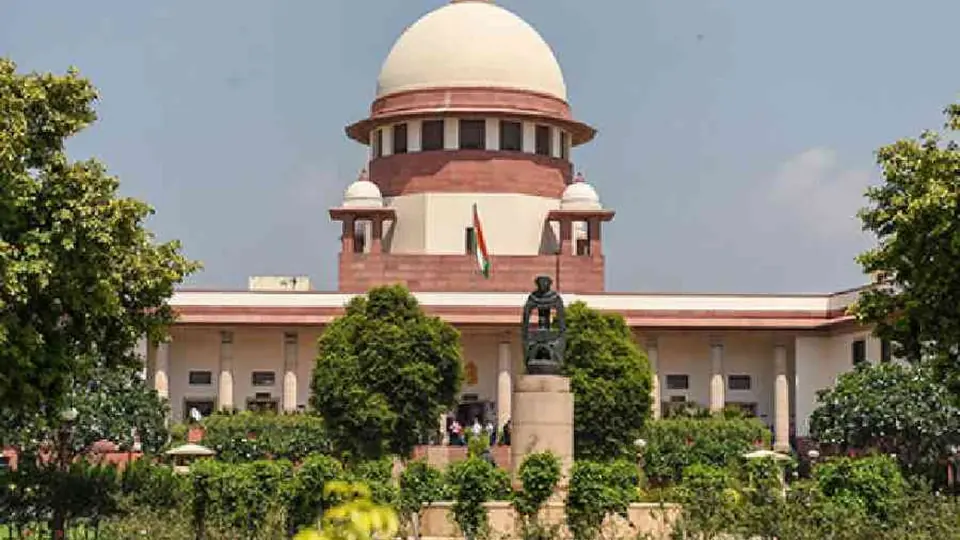
The Supreme Court’s two-judge bench delivered a split verdict on Wednesday on the Centre’s plea to refer petitions challenging the 2023 law on the appointment of the Chief Election Commissioner and Election Commissioners to a Constitution Bench.
Justice Dipankar Datta rejected the prayer to refer the matter to a larger bench, while Justice SC Sharma disagreed and supported referring it. The difference of opinion means the issue will now be placed before the Chief Justice of India, who will consider whether a Constitution Bench should be constituted to examine the validity of the provisions under challenge.
The petitions challenge the 2023 Act for replacing the Chief Justice of India, or CJI, with a Cabinet Minister on the selection panel that appoints Election Commissioners. The case, therefore, concerns the composition of the selection mechanism for appointments to the Election Commission of India.
Justice Datta rejected the government’s request for reference to a larger bench. He also went on to deliver a prima facie opinion on the challenge to the 2023 Act.
“We heard these petitions for over 5 days, speaking in one voice would have served the voice of institutional cohesion. Unfortunately we are divided in our opinion. It is a foundational principle of the constitutional scheme that rulers are bound by law and not above it,” Justice Datta ruled, reported Bar and Bench.
Justice Sharma, however, disagreed with the observations made by Justice Datta. He held that the matter involved a substantial question of law that required consideration by a larger bench.
Because the two judges differed, the bench directed that the matter be placed before the Chief Justice of India. The Chief Justice of India will now decide on the desirability of constituting a Constitution Bench to determine the vires of the law.
Justice Datta also observed that it was not enough for the Election Commission of India, or ECI, to be independent. He said it must also appear to be independent.
The judge further said that a minister nominated by the Prime Minister could not be expected to defy his own nominator. According to Justice Datta, the doctrine of collective responsibility would prevent the minister from opposing the Prime Minister.
“It is far-fetched to expect that a minister who is part of Cabinet of Ministers would adopt a stand disagreeing with leader or government. Inclusion of cabinet ministers fails to provide an independent counterweight that a neutral selector would,” Justice Datta said, reported Bar and Bench.
The Supreme Court’s split verdict does not finally decide the challenge to the 2023 Act. Instead, it leaves the question of whether the case should be heard by a Constitution Bench to the Chief Justice of India. The petitions challenging the change in the selection panel remain pending, with the next step now depending on the decision of the Chief Justice of India on the formation of a larger bench.
Frequently asked questions
What did the Supreme Court decide in the Election Commissioner appointment case?
A two-judge Supreme Court bench delivered a split verdict on the Centre’s plea to refer challenges to the 2023 law on appointments of the Chief Election Commissioner and Election Commissioners to a Constitution Bench.
How did the two judges differ in their views?
Justice Dipankar Datta rejected the request to refer the matter to a larger bench, while Justice SC Sharma supported referring it, saying it involved a substantial question of law.
What will happen after the split verdict?
The matter will be placed before the Chief Justice of India, who will consider whether a Constitution Bench should be constituted to examine the validity of the challenged provisions.
What is being challenged in the 2023 Act?
The petitions challenge the replacement of the Chief Justice of India with a Cabinet Minister on the selection panel that appoints Election Commissioners.
Did the Supreme Court finally decide the validity of the 2023 Act?
No. The split verdict does not finally decide the challenge to the 2023 Act, and the petitions remain pending.
You may also like
 National
Shravasti Power Cuts Enter Third Day, Residents Struggle For Water
 International
Chinese Submarine-Hunting Quantum Sensor Tracks Subway Train Beneath Street
 International
Ivanka Trump Seated Front Row At Xi Ceremony, Ahead Of Cabinet
 International
Seal Nana Swims 200 Km Back To Chinese Island After Release
Most read
- 1
Tesla audits Chinese suppliers to scale up Optimus robot production
- 2
Former minister Lakhan Singh Rajput to inaugurate temple bhandara at Shri Chakreshwar Mahadev
- 3
Firozabad BSA finds four government schools locked during inspection
- 4
Tamil Nadu dengue cases fall for third consecutive year to 17,049
- 5
Social workers stage silent protest at Fufund railway station for train halts
Comments
No comments yet. Be the first to comment.