
Cyber Fraud Is Getting Faster in India: A Practical 15-Minute Safety Drill Every Family Can Use
UPI scams, fake KYC calls, and screen-sharing fraud are now executed in minutes. Here is a newsroom-grade 15-minute safety drill families can run this weekend to reduce risk immediately.


Cybercrime in India is no longer a ‘tech person’s problem.’ It has become a speed problem.
In many recent fraud patterns, victims do not lose money because they are careless. They lose money because the scammer is faster: faster at creating panic, faster at pushing urgency, and faster at getting one wrong tap approved.
The good news is simple: speed can be countered with routine. Families that run a short digital safety drill every week are significantly harder to scam.
Here is a practical 15-minute drill you can run at home.
1) The 60-second rule for money requests
Any money request that arrives through WhatsApp, SMS, or phone call must wait 60 seconds before action. No exceptions. During that 60 seconds, verify on a second channel: call the known number, not the number in the message.
2) The ‘never share’ wall
Write these four lines on paper and keep them near the charging station:
- I will not share OTP.
- I will not share UPI PIN.
- I will not install unknown screen-sharing apps.
- I will not click KYC links sent by SMS.
3) UPI app hygiene check
Open your UPI app and verify:
- Daily transfer limits are sensible.
- AutoPay mandates are only for trusted services.
- Unknown beneficiaries are removed.
- App lock is enabled.
4) SIM and email recovery check
Most account takeovers begin with SIM swap or email compromise. In two minutes:
- Turn on SIM lock PIN.
- Turn on 2FA for primary email.
- Remove old recovery numbers/emails you no longer control.
5) Family red-flag codeword
Agree one household codeword for urgent money requests. If a caller claims to be a relative in distress but cannot provide the codeword, treat it as suspicious and disconnect.
6) Incident card for elders and students
Create one card with three actions:
- Put phone on airplane mode.
- Call bank helpline and block channels.
- Report on 1930 and cybercrime.gov.in.
Why this matters now
Scammers are increasingly using voice mimicry, fake support calls, and ‘urgent compliance’ scripts. Their advantage is psychological pressure. Your advantage is pre-decided behavior.
Bottom line
Digital safety is no longer just software. It is family protocol. If your household can follow a 15-minute drill, you can remove most high-frequency scam pathways before they become financial loss.
This week, do not wait for a close call. Run the drill once. Then repeat every Sunday.
Frequently asked questions
What is the main issue with cybercrime in India according to the article?
Cybercrime in India has become a speed problem, where scammers are faster at creating panic and urgency.
What is the recommended safety drill duration for families?
The recommended safety drill duration for families is 15 minutes.
What should families do if they receive a money request via WhatsApp, SMS, or phone call?
Families should wait 60 seconds before taking action and verify the request through a second channel.
What is the purpose of having a family codeword?
The family codeword is used to verify urgent money requests; if a caller cannot provide it, the request should be treated as suspicious.
How often should families run the safety drill?
Families should run the safety drill once a week, ideally every Sunday.
You may also like
 Cyber Security
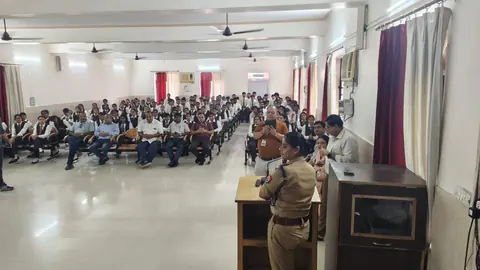
Muzaffarnagar college hosts cyber fraud awareness programme for students, staff
 Cyber Security
7 Simple Habits That Protect You From Phone and Online Scams
 Cyber Security
Kerala jewellers targeted by scammers using fake UPI payment confirmations
 Cyber Security
WhatsApp scams in Hong Kong soar 170 percent, exceeding entire last year's total
Most read
- 1
Air China Adds Extra Flight for Passengers Stranded in Fuel-Starved Cuba
- 2
Western disturbance to bring rain, hail and strong winds across north India
- 3
Yogi Adityanath Directs No Occupied Houses Be Demolished for Achhalda Bridge
- 4
Gwalior Temple Truck Crash Kills 12, Injures 28-29 Devotees During Navratri
- 5
Schools Shut in Five Tamil Nadu Districts, Including Chennai, Amid Heavy Rain
Comments
No comments yet. Be the first to comment.