
Chinese scientists develop muscle grafts that mimic exercise benefits without movement
Chinese researchers develop injectable muscle grafts that deliver exercise benefits without movement, improving bone density, endurance, and cognitive heal

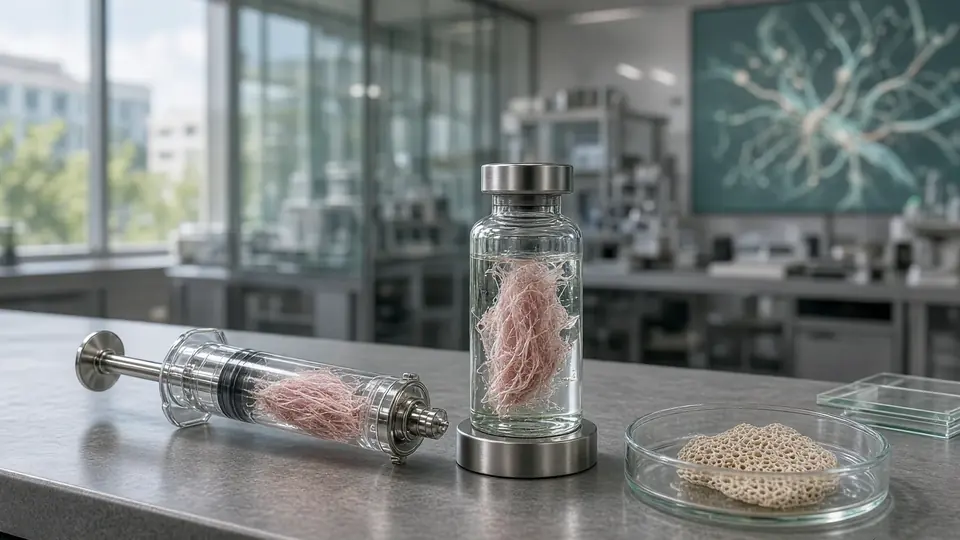
Scientists in China have engineered muscle grafts that mimic the health benefits of physical exercise through a simple injection, offering potential relief for people unable to move freely.
The technique, tested in mice, works by injecting muscle cells beneath the skin where they spontaneously organize into functional muscle tissue. These "myografts" triggered improvements across multiple body systems without any voluntary movement from the animals.
How the grafts affect the body
Beyond building muscle mass, the implanted tissue delivered unexpected systemic benefits. Mice receiving the injections showed increased bone density, better endurance, enhanced liver function and improved cognitive health.
"In a sense, we're distilling the best part of exercise out … and avoiding all the negative effects of exercise, whether it's the stress on the heart or the stress on your joints," explained Ng Shyh-Chang, a professor and principal investigator at the Chinese Academy of Sciences' Institute of Zoology, who co-authored the study.
What comes next
The research team published their findings in the peer-reviewed journal Nature Ageing on Wednesday, positioning the work as a preliminary step toward human application. They acknowledged that significant testing remains before the grafts can be considered for clinical use.
"While the complete safety and [pharmacological] profile of autologous myografts remains to be established in human trials, our mouse preclinical studies constitute a noteworthy first step in this direction," the researchers wrote.
The technology could eventually serve bedridden patients and others who face barriers to conventional exercise, allowing them to access metabolic and musculoskeletal benefits that typically require physical activity.
Source: South China Morning Post
Frequently asked questions
What are muscle grafts and how do they work?
Scientists in China have engineered muscle grafts called 'myografts' that work by injecting muscle cells beneath the skin where they spontaneously organize into functional muscle tissue. These grafts mimic the health benefits of physical exercise without requiring any voluntary movement.
What health benefits did the muscle grafts provide in testing?
In mouse studies, the implanted tissue triggered multiple systemic improvements including increased bone density, better endurance, enhanced liver function, and improved cognitive health, beyond just building muscle mass.
Are these muscle grafts ready for use in humans?
No, the research is still in preliminary stages. The findings were published in Nature Ageing as a first step toward human application, but the researchers acknowledged that significant testing remains before the grafts can be considered for clinical use in humans.
Who could potentially benefit from this technology?
The technology could eventually serve bedridden patients and others who face barriers to conventional exercise, allowing them to access metabolic and musculoskeletal benefits that typically require physical activity.
You may also like
 International
Chinese Submarine-Hunting Quantum Sensor Tracks Subway Train Beneath Street
 International
Seal Nana Swims 200 Km Back To Chinese Island After Release
 International
Former Chinese physician abandons medicine to sell steamed buns, finds greater happiness
 International
China faces pressure to shape maritime law as Pacific islands sink beneath rising seas
Most read
- 1
Tesla audits Chinese suppliers to scale up Optimus robot production
- 2
Former minister Lakhan Singh Rajput to inaugurate temple bhandara at Shri Chakreshwar Mahadev
- 3
Firozabad BSA finds four government schools locked during inspection
- 4
Tamil Nadu dengue cases fall for third consecutive year to 17,049
- 5
Social workers stage silent protest at Fufund railway station for train halts
Comments
No comments yet. Be the first to comment.