
Bonda Tribe Preserves Ringa Weaving Tradition on National Handloom Day
Explore the Bonda tribe's Ringa weaving tradition, a cultural identity preserved through generations in Odisha. Discover the artistry and heritage.

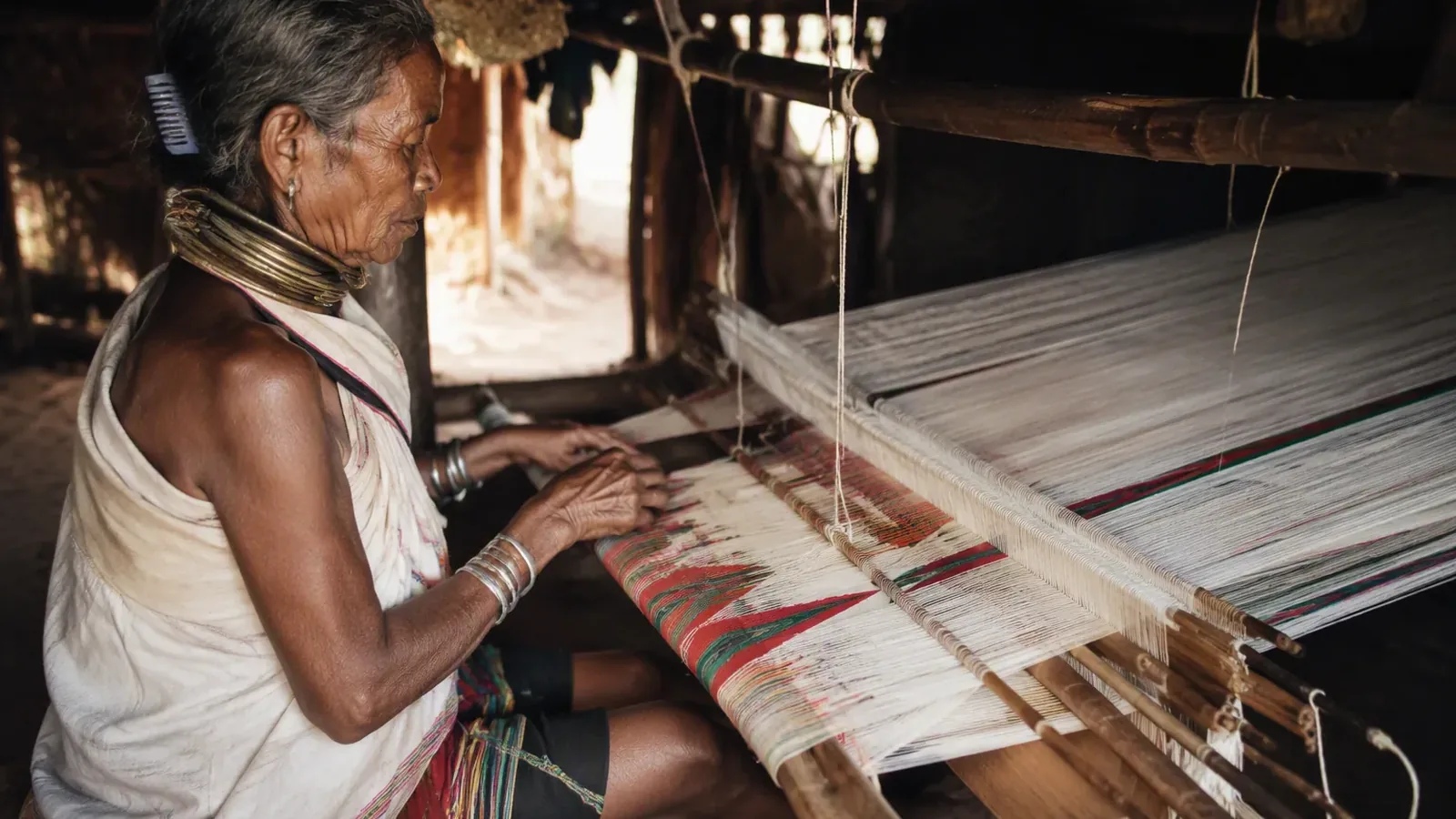
The Bonda tribe of Odisha’s Malkangiri district continues to preserve its centuries-old tradition of weaving the Ringa, a handwoven wraparound skirt that symbolizes their cultural identity. “Every Ringa we weave carries our family’s story,” says Muduli, a weaver from Gokharipada village, as she reflects on the deep connection between the craft and her community’s heritage.
A Textile Rooted in Identity, Not Commerce
Unlike many Indian handloom traditions that evolved for trade, the Bonda tribe’s weaving has remained deeply personal. The Ringa, with its bold horizontal stripes in red, maroon, black, white, and blue, is woven primarily for personal and community use. “It is one of the few textile traditions where a single garment has remained central to the community’s identity for generations,” explains Navaldeep Thareja, a textile engineer documenting India’s lesser-known crafts.
Historically, the Ringa was woven using bark fibre from the Kerang tree, but cotton yarn gradually replaced it as markets became accessible. Despite this shift, the visual identity of the textile has remained intact. The tightly woven fabric is durable, designed for everyday use rather than ceremonial purposes.
Women as Custodians of Tradition
In the matriarchal Bonda society, women play a pivotal role in preserving cultural memory. They not only cultivate crops and manage household responsibilities but also pass down the art of weaving through generations. “Like most Bonda girls, I watched my mother and the elder women weave from a young age,” recalls Muduli. The craft is learned informally, with mothers and grandmothers guiding young girls until the skill becomes second nature.
The loom, often set up within the household, serves as both a practical tool and a repository of family stories. Weaving is seamlessly integrated into daily life, carried out whenever time permits between farming and other chores. A single Ringa takes two to three days to complete, depending on the complexity of the design and the weaver’s availability.
A Tradition Under Pressure
While the Ringa remains a vital part of Bonda identity, the tradition faces challenges. Ready-made garments are increasingly common, and many young people are opting for education and other professions over weaving. “The biggest challenge is that weaving alone does not provide a steady income,” says Muduli.
However, growing interest from visitors, scholars, and collectors has brought modest financial support to the community. Some artisans now sell Ringas as framed textile art or decorative pieces, providing supplementary income and encouraging weavers to continue their craft.
Bridging the Gap Between Tradition and Modernity
Initiatives like Behrupiaa Arts, led by Navaldeep Thareja, aim to create awareness about the Bonda weaving tradition through curated tours. These visits are designed to respect the community’s privacy and foster meaningful interactions. Artisans who wish to engage with visitors often bring their work to locally managed homestays, ensuring that the exchange occurs on their terms.
Despite the uncertainties, the Ringa remains a cherished symbol of Bonda heritage, especially during festivals when families gather in traditional attire. “It makes us happy that people appreciate our weaving and our traditions,” says Muduli. “Every purchase carries encouragement beyond its monetary value, motivating us to pass this craft on to the next generation.”
Source: The Hindu
Frequently asked questions
What is the Ringa and its significance to the Bonda tribe?
The Ringa is a handwoven wraparound skirt that symbolizes the cultural identity of the Bonda tribe in Odisha's Malkangiri district. Each Ringa carries the family's story and has remained central to the community's identity for generations.
How has the material used for weaving Ringa changed over time?
Historically, the Ringa was woven using bark fibre from the Kerang tree, but cotton yarn gradually replaced it as markets became accessible, while the visual identity of the textile has remained intact.
Who are the primary weavers of the Ringa in the Bonda tribe?
In the matriarchal Bonda society, women are the primary weavers, preserving the tradition and passing down the art of weaving through generations.
What challenges does the Ringa weaving tradition face today?
The Ringa tradition faces challenges such as the prevalence of ready-made garments and young people opting for education and other professions over weaving, as weaving alone does not provide a steady income.
How is the community adapting to modern pressures on the Ringa tradition?
The community is adapting by selling Ringas as framed textile art or decorative pieces, providing supplementary income and encouraging weavers to continue their craft.
You may also like
 Politics
BJP Leader Braj Mohan Ram Sworn In as Odisha’s 28th Governor
 Education
Odisha Governor Orders Universities to Fill Teaching Posts Amid 70% Vacancy
 Politics
Yet to assess impact of mines Act on Odisha, says Minister as leg
 Uttarakhand
Odisha sets up expert panel to care for five rescued baby orangutans
Most read
- 1
Air China Adds Extra Flight for Passengers Stranded in Fuel-Starved Cuba
- 2
Western disturbance to bring rain, hail and strong winds across north India
- 3
Yogi Adityanath Directs No Occupied Houses Be Demolished for Achhalda Bridge
- 4
Gwalior Temple Truck Crash Kills 12, Injures 28-29 Devotees During Navratri
- 5
Schools Shut in Five Tamil Nadu Districts, Including Chennai, Amid Heavy Rain
Comments
No comments yet. Be the first to comment.