
Amazon Prime Air pilot repeatedly warned of excessive speed before Miami crash that killed five
Amazon Prime Air Boeing 767 crashed in Miami after pilot continued landing despite repeated warnings of excessive speed and descent alerts, killing five.


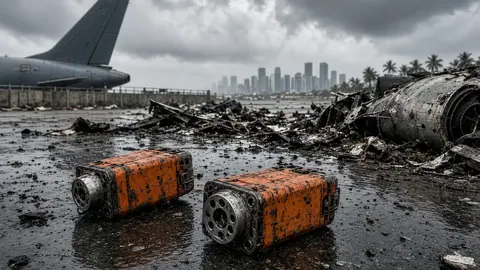
A pilot aboard the Amazon Prime Air cargo plane that crashed in Miami warned repeatedly that the aircraft was flying "too fast" more than a minute before it touched down on the runway, yet continued the approach without a clear response from the other pilot, according to cockpit recordings released by the National Transportation Safety Board.
The automated warning systems in the cockpit also blared multiple alerts as the Boeing 767 descended dangerously, but the crew did not abort the landing. The crash on Sunday killed five people and injured another five.
Descent warnings ignored
The 32-year-old Boeing 767, operated by 21 Air, overran the runway by approximately 396 metres (1,300 feet) before crashing into two vehicles on the ground.
According to the investigative update released on Wednesday, the cockpit voice recorder captured the pilot commenting on the plane's excessive speed while automated warnings sounded, but the other pilot gave no clear verbal response. The NTSB did not identify which speaker was the captain or first officer.
Before touchdown, the cockpit warning system issued "sink rate sink rate" alerts twice as the aircraft plummeted 400 feet in just four seconds. This was followed by five "too low terrain" warnings.
Why no go-around?
"The big question is, why did they continue their approach?" said Anthony Brickhouse, an aerospace safety consultant. "They had several cues that their approach was not stable, but they continued instead of going around".
The NTSB's findings raise questions about crew communication and decision-making during the final moments before the fatal crash.
Source: South China Morning Post
Frequently asked questions
What warnings did the pilot receive before the Miami crash?
The pilot repeatedly warned that the aircraft was flying 'too fast' more than a minute before touchdown. Automated cockpit warnings also issued 'sink rate' alerts twice and five 'too low terrain' warnings as the Boeing 767 descended 400 feet in just four seconds.
Why didn't the crew abort the landing?
According to cockpit recordings, despite multiple warnings of excessive speed and descent rate, the crew did not abort the landing or perform a go-around. The NTSB is investigating why they continued the approach despite several cues indicating the approach was unstable.
What happened during the crash?
The 32-year-old Boeing 767 operated by 21 Air overran the runway by approximately 396 meters (1,300 feet) before crashing into two vehicles on the ground on Sunday. The crash killed five people and injured another five.
What did the NTSB find in the cockpit voice recorder?
The cockpit voice recorder captured one pilot commenting on the plane's excessive speed while automated warnings sounded, but the other pilot gave no clear verbal response, raising questions about crew communication during the final moments before the crash.
You may also like
 Accident
Amazon cargo plane overshoots Miami runway, killing five people on ground
 Accident
Two From Rath Die In Greater Noida Double-Decker Bus Fire
 Crime
Crime
Two Murder Accused Injured, Arrested After Muzaffarnagar Police Encounter
 Religious
Adani Group to invest over ₹1 lakh crore in Bengal by 2035: Gauta
Most read
- 1
Tesla audits Chinese suppliers to scale up Optimus robot production
- 2
Former minister Lakhan Singh Rajput to inaugurate temple bhandara at Shri Chakreshwar Mahadev
- 3
Firozabad BSA finds four government schools locked during inspection
- 4
Tamil Nadu dengue cases fall for third consecutive year to 17,049
- 5
Social workers stage silent protest at Fufund railway station for train halts
Comments
No comments yet. Be the first to comment.