
Experts Seek Coordinated Action on Human, Animal and Environmental Health in Karnataka
Experts at a Bengaluru conclave call for integrated surveillance and coordinated action linking human, animal and environmental health.


Experts call for cross-sector collaboration to implement One Health initiative in Karnataka
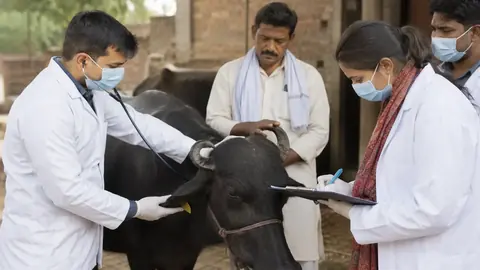
Experts, government representatives and civil society organisations at the One Health Conclave 2026 in Bengaluru called for coordinated action linking human, animal and environmental health.
The conclave brought together scientists, public health professionals, community practitioners and government representatives to examine how the One Health approach could be translated into practical solutions.
Public health systems need integrated surveillance
Speaking in a video address at the inaugural session at the Indian Institute of Science, Bengaluru, Dr. Soumya Swaminathan, Chairperson of the M. S. Swaminathan Research Foundation, said human health could not be protected separately from animal and environmental health.
“Human health cannot be protected in isolation from animal and environmental health,” she said.
She stressed the need to strengthen public health systems so that risks could be detected and addressed before they developed into crises.
She highlighted “the need for integrated surveillance, scientific collaboration, and coordinated prevention to address emerging health threats”.
The conclave was organised by the Karnataka Health Promotion Trust and HCL Foundation, in collaboration with NIMHANS and The Association of People With Disability.
The discussions examined the connections between human, animal and environmental health and called for a shift away from fragmented responses.
The proposed approach involves communities, government institutions and multiple sectors working together on health risks that cross administrative and professional boundaries.
Local bodies seen as central to implementation
Addressing the gathering through video conferencing, Uma Mahadevan, Additional Chief Secretary and Development Commissioner, Government of Karnataka, emphasised the importance of decentralised governance in implementing One Health solutions.
She said panchayats and urban local bodies were well-positioned to bring government departments, frontline workers and communities together.
“Panchayats and urban local bodies are well-positioned to bring together government departments, frontline workers and communities. Their local knowledge and decision-making powers can help shape solutions around community priorities and enable people to participate in addressing interconnected challenges,” she said.
Her remarks placed local knowledge and decision-making at the centre of efforts to address interconnected health challenges.
The discussions also considered how health risks affecting people, animals and the environment are experienced in everyday life by farming communities, livestock keepers, tribal populations and residents of informal urban settlements.
Science and data to support early action
Vijay Chandru, co-founder of STRAND and YANTRI Labs, highlighted the role of science and technology in anticipating and responding to emerging health threats.
He said the COVID-19 pandemic had demonstrated the importance of genomic surveillance, epidemiological data and computational science.
“One Health presents an opportunity to build on these advances by connecting data across human, animal and environmental health systems,” he said.
He added that the challenge was to turn data into intelligence that could help identify emerging threats.
The conclave also discussed anti-microbial resistance and zoonotic diseases as concerns requiring coordinated action across sectors.
Dr. Veena V., DD SSU & CMD and Mahamood Shariff, State Programme Officer, NVBDCP and Climate Change Management, both from the Department of Health and Family Welfare Services, spoke at the event.
Organic farmer and climate change activist Vivek Cariappa and Nidhi Pundhir, Director of HCL Foundation, also spoke at the conclave.
Source: The Hindu
Frequently asked questions
What did experts call for at the One Health Conclave 2026 in Bengaluru?
They called for coordinated action linking human, animal and environmental health in Karnataka.
What public health measures did Dr. Soumya Swaminathan highlight?
She highlighted integrated surveillance, scientific collaboration and coordinated prevention to address emerging health threats.
Why are panchayats and urban local bodies important to the One Health approach?
They can bring together government departments, frontline workers and communities while using local knowledge to shape solutions.
Who organised the One Health Conclave 2026?
The Karnataka Health Promotion Trust and HCL Foundation organised it in collaboration with NIMHANS and The Association of People With Disability.
You may also like



Most read
- 1
SK Hynix Reports Sixth Straight Record Operating Profit as AI Chip Demand Surges
- 2
Hong Kong Proposes Criminalising Bid-Rigging in Building Maintenance Sector
- 3
American Influencer Marvin Achi Objects After Shivani Kumari Applies Soot To His Face
- 4
Hong Kong Runners Criticise Water Shortages, Tough Course at Inaugural Marathon
- 5
Om Birla Inaugurates Kochi International Book Festival as Event Begins
Comments
No comments yet. Be the first to comment.