
Air conditioning demand in Asia's heatwaves risks collapsing power grids when people need cooling most
Surging air-conditioning demand is overwhelming Asia's electricity grids during record heatwaves, creating a dangerous feedback loop where cooling fails wh

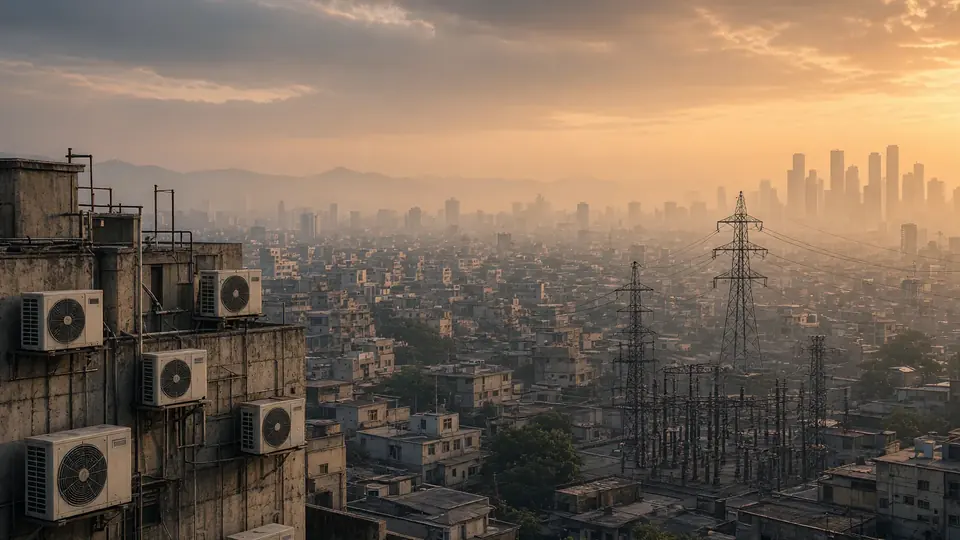
As heatwaves grow more frequent and severe across Asia, the region is confronting a perilous power paradox that threatens to leave millions without cooling precisely when they need it most. The surging demand for air conditioning during extreme heat events is pushing electricity grids dangerously close to failure, creating a life-threatening feedback loop where the infrastructure required for survival becomes overwhelmed by the very crisis it is meant to address.
This summer has brought the deadly consequences of this paradox into sharp focus across multiple Asian nations, revealing how the intersection of climate extremes and energy infrastructure vulnerability can produce catastrophic outcomes.
The crisis reached a critical point in South Korea during August, when President Lee Jae Myung declared a record-breaking heatwave a "national disaster" after the death toll climbed to 19 people. The president's declaration came as air-conditioning demand surged to unprecedented levels, placing extraordinary strain on the country's power systems and pushing them toward their operational limits. In response to the mounting crisis, Lee ordered officials to conduct immediate inspections of electricity infrastructure to assess its capacity to withstand the sustained pressure from cooling demand.
Japan experienced equally severe impacts during the same period, with Tokyo's 23 central wards recording 39 deaths from heatstroke in August alone. The circumstances surrounding these fatalities underscore the deadly nature of the cooling paradox facing the region. Of the 39 people who died, 37 perished indoors rather than outdoors, challenging assumptions about where heat poses the greatest danger. Even more revealing, 31 of those indoor deaths involved individuals who were not using air conditioning at the time, highlighting how the absence of cooling in extreme heat can prove fatal even within the supposed safety of one's home.
These incidents exemplify what experts characterize as a dangerous power paradox now gripping Asia. As heatwaves intensify in both frequency and severity, extreme temperatures simultaneously drive up demand for cooling while placing greater strain on electricity infrastructure. This creates conditions where power grids face their highest risk of failure at precisely the moments when air conditioning becomes essential for survival. The threat is not merely theoretical but has manifested in real casualties across the region this summer.
The paradox represents a particularly cruel trap for vulnerable populations. When power systems buckle under peak demand during heatwaves, cooling disappears exactly when people need it most to protect themselves from dangerous and potentially lethal temperatures. The deaths in Tokyo demonstrate this dynamic with grim clarity, as individuals without functioning air conditioning during extreme heat succumbed to conditions their bodies could not withstand.
As climate change continues to drive more frequent and intense heatwaves across Asia, this power paradox threatens to deepen, creating an escalating cycle where rising temperatures demand more cooling, which in turn strains grids further, increasing the likelihood of failures that leave populations exposed to deadly heat. The summer's toll in South Korea and Japan offers a sobering preview of the challenges ahead as the region grapples with the intersection of climate extremes and energy infrastructure limits.
Frequently asked questions
What is the power paradox affecting Asian power grids during heatwaves?
As heatwaves intensify, extreme temperatures drive up demand for air conditioning while simultaneously straining electricity infrastructure. This creates a dangerous situation where power grids face their highest risk of failure at precisely the moments when air conditioning becomes essential for survival.
How many deaths were recorded in South Korea and Japan during recent heatwaves?
South Korea recorded 19 deaths during an August heatwave that President Lee Jae Myung declared a national disaster. Japan's Tokyo recorded 39 deaths from heatstroke in August alone.
Why did many heat-related deaths in Tokyo occur indoors?
Of the 39 heatstroke deaths in Tokyo's central wards, 37 occurred indoors. Notably, 31 of those indoor deaths involved individuals who were not using air conditioning, demonstrating how the absence of cooling during extreme heat can prove fatal even within homes.
Who is most vulnerable to the power paradox during heatwaves?
Vulnerable populations face a particularly cruel trap. When power systems fail under peak demand during heatwaves, cooling disappears exactly when people need it most to protect themselves from dangerous and potentially lethal temperatures.
You may also like
 Technology
Asian investors now demand AI revenue proof, not just tech exposure, BofA finds
 National
Singapore's ministers get $3.6 million salary, reigniting pay debate across Asia
 National
Amethi farmers end six-day power protest after officials promise supply fixes
 Automobile
Kerala's power cuts force EV owners to worry about depleted batteries overnight
Most read
- 1
Tesla audits Chinese suppliers to scale up Optimus robot production
- 2
Former minister Lakhan Singh Rajput to inaugurate temple bhandara at Shri Chakreshwar Mahadev
- 3
Firozabad BSA finds four government schools locked during inspection
- 4
Tamil Nadu dengue cases fall for third consecutive year to 17,049
- 5
Social workers stage silent protest at Fufund railway station for train halts
Comments
No comments yet. Be the first to comment.