
Delhi Notifies Right to Service Act, Sets Salary Penalties for Delays
Delhi Notifies Right to Service Act, 2026, to Set Time Limits for Government Services Delhi has notified the ‘Delhi Right to Service Act, 2026’ (Right to Service Act), a new law aimed at ending

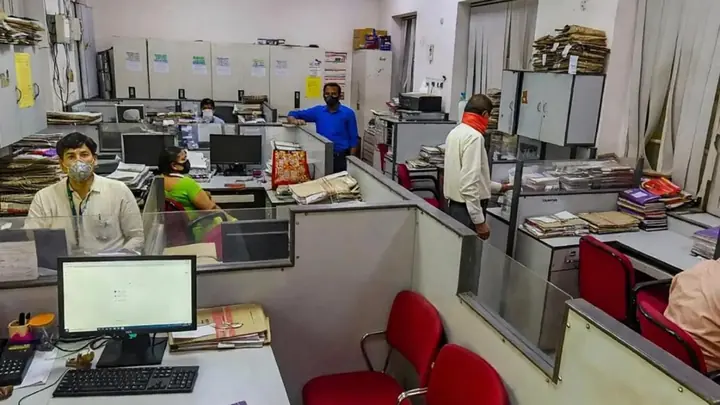
Delhi has notified the ‘Delhi Right to Service Act, 2026’ (Right to Service Act), a new law aimed at ending repeated visits to government offices and delays in official files. Under the law, if a government service is not delivered within the prescribed time, the responsible officer may have to pay a penalty from their own salary.
The law has been notified by the government of Chief Minister Rekha Gupta. It will replace the old rules introduced in 2011, which the government has described as ineffective. The government claims that the new law will bring a major change to Delhi’s administrative system by making the delivery of public services time-bound and accountable.
Every service to have a deadline
Under the new law, every government service covered by the system will have a fixed time limit. The work will have to be completed within that period.
If the service is not delivered within the prescribed time, the responsible officer will face a penalty of 250 rupees per day. The penalty can go up to a maximum of 5,000 rupees. The amount will be deducted directly from the officer’s salary.
No service will remain without a time limit under the new system. The government will first issue a notification specifying which services will come under the law.
These services may include ration cards, caste certificates, income certificates, birth and death certificates, water and electricity connections, and all services connected with municipal corporations. A maximum time limit will be set for each service. The name of a ‘Designated Officer’ will also be specified for every service.
The Designated Officer will be fully responsible for ensuring that the concerned work is completed within the prescribed period.
Applications can be tracked online
The law will introduce an online and transparent system for tracking applications. Every application will receive a unique number.
Using this number, applicants will be able to check the status of their application from home on a mobile phone or laptop. They will be able to see where the application has reached, which officer it is pending with and by when the work is expected to be completed.
All departments will have to maintain a digital record of every application. These records will also have to be updated from time to time.
If an application has to be rejected for any reason, the officer will have to provide the reason in writing. A verbal explanation will not be enough. The written explanation is intended to prevent arbitrary decisions in the processing of applications.
Delayed applications to move into auto appeal
The law also provides for an automatic appeal mechanism. At times, an officer may keep a file pending and the applicant may not know where to complain or how to challenge the delay.
Under the new system, if the work is not completed within the prescribed time, the application will automatically move into an appeal, or ‘Auto Appeal’. The applicant will not have to separately register a complaint or visit another office for this purpose.
The matter will go directly to the citizen grievance redressal authority. A First Appellate Officer will be appointed in every department to deal with such appeals.
The appeal will normally have to be decided within 30 days. If the authority also fails to give a decision within the prescribed time, the matter will automatically move to the Delhi Service Rights Commission.
Commission to monitor implementation
The Delhi Service Rights Commission will be the highest monitoring authority under the law. It will have the power to conduct surprise inspections of any government office.
The commission will also be able to recommend action against an officer found responsible and suggest improvements in the system. If required, it can take suo motu cognisance of a matter and begin an inquiry on its own.
The government’s stated position is that people will no longer have to keep following up with officers for routine government work. Instead, officers will have to complete the work within the time fixed for the public.
You may also like
Most read
- 1
Saba Haider wins Illinois House election for District 84 with 70.9% vote
- 2
Phulwari Public School Celebrates Diwali With Diyas, Rangoli and Student Art
- 3
Amit Shah To Be Chief Guest At Uttarakhand Foundation Day Event
- 4
Woman Gives Birth to Baby Girl Inside 108 Ambulance in Morena
- 5
Former Agriculture MoS Lakhan Singh Rajput Leaves Dibiyapur For Kanpur With Convoy
Comments
No comments yet. Be the first to comment.