
Congress Plans Tribal Outreach Across 90 Madhya Pradesh Seats Ahead Of Polls
Congress has prepared a major plan for tribal-dominated areas in Madhya Pradesh ahead of the upcoming Assembly elections.

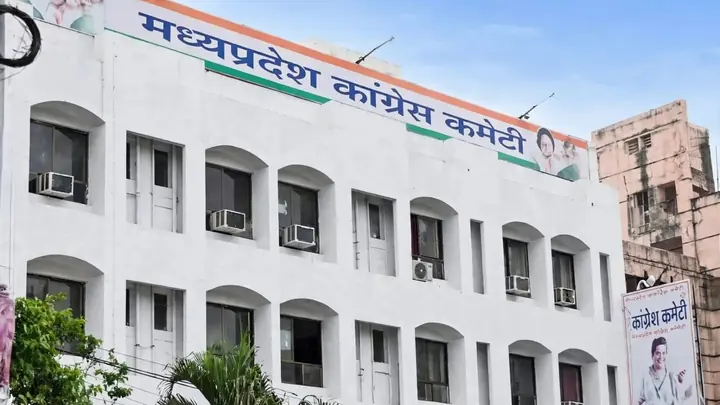
Congress has prepared a major plan for tribal-dominated areas in Madhya Pradesh ahead of the upcoming Assembly elections. The party will create clusters across 90 Assembly constituencies to strengthen its organisation and expand its reach at the grassroots level. The plan includes 47 seats reserved for the Scheduled Tribe (ST) category, along with 43 other constituencies where the tribal population has a significant influence.
The strategy has been prepared with the aim of taking the Congress organisation to tribal settlements, understanding local problems and presenting the party’s position on issues such as water, forests and land. The party plans to train its workers, hold village meetings and organise workshops as part of the campaign.
The plan has been prepared by a committee formed under the chairmanship of Umang Singhar, the Leader of the Opposition in the Assembly. The committee has examined the results of the 2023 Assembly elections and prepared an organisational strategy based on its analysis.
Under the plan, scattered tribal settlements across Assembly constituencies will be linked to form clusters. Members of the Mandalam, sector and booth committees connected with the concerned areas will be included in each cluster. The Congress intends to activate these organisational units and increase political and organisational activities at the local level.
Workers associated with the clusters will be trained through party office-bearers and representatives of non-governmental organisations. The training will focus on rights related to tribal communities, questions concerning water, forests and land, and problems specific to each region.
The objective is to enable party workers to explain the Congress position on these issues with facts and to communicate directly with people. The party’s plan places emphasis on ensuring that workers understand the concerns of tribal communities and can raise these matters during their interaction with residents.
Village meetings and workshops will be held at different levels under the programme. Through these meetings, the Congress will discuss the problems faced by tribal communities, local requirements and the implementation of government schemes.
A cluster head will be appointed for every cluster. The cluster head will send a report on activities and progress in the area directly to the Madhya Pradesh Congress. This arrangement is intended to give the party regular feedback on the condition of its organisation and the progress of the campaign in different Assembly constituencies.
The Congress also plans to prepare a booklet based on the replies given by the government in the Assembly on various issues. Through this material, the party wants to place questions related to tribal areas and the government’s claims before the public on the basis of facts.
The party will therefore connect its organisational network with the issues raised in the Assembly and the replies given by the government. The booklet will be used as part of the wider campaign in tribal-dominated areas.
The committee’s analysis found that, in the 2023 Assembly elections, the BJP won 59 of the 90 identified tribal-dominated seats. The Congress won 30 seats, while the Bharat Adivasi Party won one seat.
According to the figures cited in the analysis, apart from the 47 seats reserved for the Scheduled Tribe category, there were 38 unreserved tribal-dominated seats. The BJP won 30 of these 38 seats.
The Congress is now preparing to strengthen its organisation not only on the reserved seats but also on general seats where tribal voters play an important role. The party’s plan covers 90 constituencies, with a focus on bringing tribal settlements and local organisational units into a common cluster-based structure.
Booth-level activity, the participation of local leadership and continuous communication on issues related to tribal communities have been given priority in the strategy. Through the cluster system, the Congress will try to assign responsibility for different areas and monitor the progress of its campaign.
The party’s focus will be on issues such as water, forests and land, along with local problems and the implementation of government schemes. The plan also includes discussions with the community through village meetings and workshops.
The next challenge for the Congress will be to implement this plan on the ground. The effectiveness of the clusters across the 90 seats and the extent to which the party is able to connect with people on local issues will become clear in the coming period.
Frequently asked questions
What is Congress planning in tribal-dominated areas of Madhya Pradesh?
Congress plans to create clusters across 90 Assembly constituencies to strengthen its organisation and expand its grassroots reach ahead of the elections.
How many of the 90 constituencies are reserved for Scheduled Tribes?
Forty-seven constituencies are reserved for the Scheduled Tribe category, while 43 other constituencies have a significant tribal population.
What activities will Congress conduct under the tribal outreach plan?
The party will train workers, hold village meetings and organise workshops to discuss tribal rights, water, forests, land, local problems and government schemes.
Who prepared the organisational strategy?
A committee chaired by Umang Singhar, the Leader of the Opposition in the Assembly, prepared the strategy after examining the 2023 Assembly election results.
What will cluster heads do?
Each cluster head will send reports on activities and progress directly to the Madhya Pradesh Congress.
You may also like
 Politics
Narottam Mishra Missing From Newly Approved Madhya Pradesh BJP Core Group
 Politics
Madhya Pradesh CM Mohan Yadav Leads Yoga Session in Barwani
 Politics
Madhya Pradesh Congress to Launch Online Membership Drive in December, Target 44 Lakh
 Politics
Shivraj Singh Chouhan Meets BJP Leader Biplv Kumar Dev In Bhopal
Most read
- 1
Xi Orders Urgent Rescue Efforts After Tibet Earthquake Kills 16, Injures 54
- 2
Schools Shut in Five Tamil Nadu Districts, Including Chennai, Amid Heavy Rain
- 3
Hong Kong Insurance Authority Tightens Premium Financing Oversight as Risks Emerge
- 4
Madanpur Masters Beat Firozabad Fighters by Two Runs in T-10 Opener
- 5
eMudhra Certificate: 8 weak certificates raise Internet Security concerns as browsers act
Comments
No comments yet. Be the first to comment.