
Ravindra Singh Bhati Intensifies EWS Reform Campaign, Statewide Yatra From September 25
Shiv MLA Ravindra Singh Bhati has intensified his campaign seeking practical changes in the reservation system for the Economically Weaker Section, or EWS, and announced that he will begin a
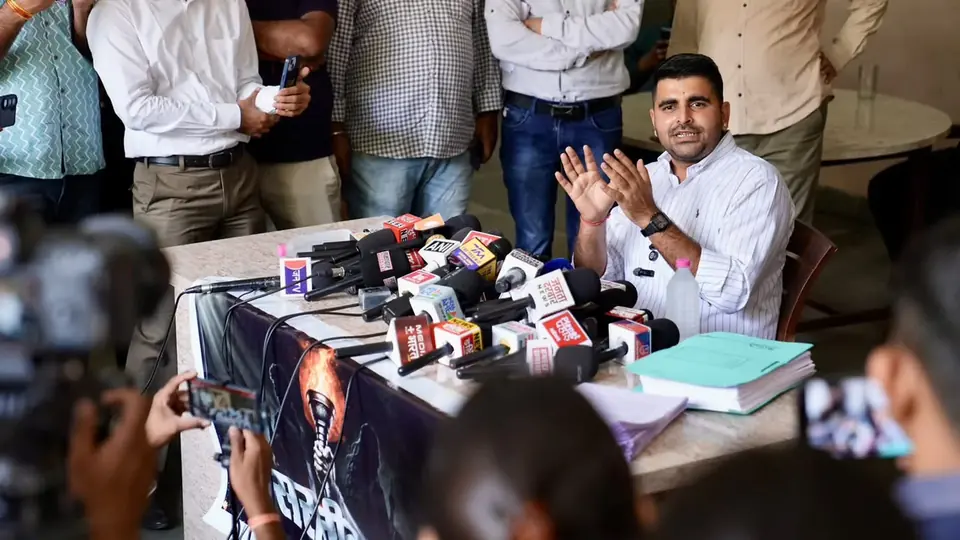
Shiv MLA Ravindra Singh Bhati has intensified his campaign seeking practical changes in the reservation system for the Economically Weaker Section, or EWS, and announced that he will begin a statewide journey from 25 September 2026 to take these demands to the public and to elected representatives across Rajasthan.
Addressing a press conference at the Pink City Press Club in Jaipur on Tuesday, 22 September, Bhati raised a series of demands linked to EWS eligibility, certificates, age limits, application fees, educational facilities and representation in local bodies. He said the current framework needs to be made more practical, just and effective so that the purpose of EWS reservation can be achieved for economically weaker families.
Bhati said India has wide diversity in geography, agriculture and economic conditions. In such a situation, he argued, uniform property-related criteria for EWS eligibility across the entire country do not fit the ground realities of many states. According to him, the same yardstick cannot accurately reflect the economic status of families living in different regions with very different land productivity, irrigation availability and land values.
He recalled that the EWS reservation system was implemented across the country after being passed by Parliament and receiving the President’s approval on 12 January 2019. In Rajasthan, 10 percent reservation for the EWS category in government jobs and educational institutions was implemented from February 2019.
However, Bhati said that although some procedural reforms have been made from time to time, many practical difficulties faced by EWS candidates at the central level still remain unresolved. He said these difficulties are linked not only to eligibility and certificates, but also to the larger process through which economically weaker candidates access opportunities in jobs and education.
Referring specifically to Rajasthan, Bhati said states like Rajasthan have major differences in agricultural productivity, access to irrigation and local land prices. He said that using only the size of land as the basis for assessing economic condition does not give an accurate picture of a family’s real economic capacity.
He demanded that while determining EWS eligibility, the size of land should not be considered in isolation. Other factors such as productivity of the land, irrigation facility, local land value and actual economic utility should also be taken into account. According to him, these factors are necessary for a more realistic assessment of whether a family is genuinely economically weak.
Bhati also called for EWS rules to be shaped according to state-wise conditions. He said some states, including Rajasthan and Gujarat, have already made changes at their own level in provisions related to EWS certificates after taking local conditions into account.
His key demand is that EWS certificates issued by states should also be recognised for central services and central educational institutions. Bhati said this would give relief to candidates who currently have to go through the process of obtaining separate certificates for state and central purposes.
He cited figures to underline the difference between certificates issued by the state and the Centre. According to him, in the year 2022-23, the Rajasthan government issued 2,77,555 EWS certificates, while the central government issued 95,243 EWS certificates. Bhati said this gap shows the need to make the EWS certificate process simpler and more aligned with local conditions.
The MLA also raised demands related to relaxation in the maximum age limit, application fees and certificate validity for EWS candidates. He said EWS candidates should receive appropriate relaxation in the maximum age limit in competitive examinations, in application fees and, wherever applicable, in minimum qualifications, on the lines of other reserved categories.
Bhati further proposed that the current validity of an EWS certificate, which is one year, should be increased to three years or five years. He also suggested that a system for renewal of the certificate should be created on the basis of an affidavit, under prescribed conditions.
Another major issue raised at the press conference was the process used to calculate family income for EWS eligibility. Bhati said that under the current arrangement, the inclusion of different relations within the definition of family makes income determination complicated in many cases.
He particularly referred to the difficulties faced by married women candidates. According to Bhati, they have to deal with documents and procedures linked to both their parental home and their marital home, which creates practical challenges for them in the EWS income determination process.
He demanded that the process of determining income for EWS should be simplified on the lines of income or creamy layer determination used in other reservation systems. He said clear and practical rules should be framed, with the income of parents being treated as the main basis.
Bhati also placed educational demands for students from the EWS category. He sought scholarships, hostels and other forms of educational support for EWS students. He said such facilities are needed to ensure equal participation of economically weaker students in higher education and competitive opportunities.
In addition to these demands, Bhati also sought consideration of a National Economically Backward Classes Commission. The demand was raised for a national-level institutional mechanism to address policy and administrative issues related to EWS in an integrated manner.
The Shiv MLA also demanded suitable representation for the EWS category in Panchayati Raj and municipal body elections. He said this would help ensure participation and representation of economically weaker sections at the local level.
According to Bhati, such representation would increase the participation of economically weaker families in institutions of local self-government. He said it would also help ensure that their issues get a place in the decision-making process.
Bhati said more than 75 MLAs from Rajasthan have already given their written consent and letters of support in favour of these demands. He also said MPs from the state have been personally contacted and informed about the issues linked to EWS and the proposed reforms.
According to the press brief, the concerned MPs have also expressed a positive approach towards the demand and have orally assured their consent and support. Bhati presented this support as part of the wider campaign to push for reforms in the EWS system.
During the press conference, Ravindra Singh Bhati announced that he will start a journey across the state from 25 September 2026. He said the purpose of this journey is to take these demands to the public and to people’s representatives at a broader level.
During the journey, discussions will be held in different regions on the practical problems linked to the EWS system, the proposed reforms and the demands related to equal opportunity. Bhati said the campaign would focus on making the EWS system more responsive to the realities faced by economically weaker families.
Bhati said the purpose of EWS reservation is to provide opportunities to economically weaker families. For that objective to be fulfilled, he said, the eligibility and certificate system must be designed in a way that takes into account the real social, agricultural and economic conditions of different states in the country.
He urged the central government to carry out a broad review of the current eligibility and property-related criteria for EWS. He said the government should develop a system that enables economically weaker families to receive the intended and effective benefit of EWS reservation.
The demands placed by Bhati at the Pink City Press Club focused on both immediate procedural relief and wider structural reform. These included recognition of state-issued EWS certificates for central services and institutions, revision of property-related eligibility norms, longer validity of certificates, simpler income assessment, relief in competitive examinations, educational support and institutional arrangements at the national level.
By announcing the statewide journey from 25 September 2026, Bhati indicated that the campaign would now move beyond the press conference and into public outreach across Rajasthan. He said the effort would be directed at building wider discussion around EWS-related difficulties and pushing for reforms that reflect the actual conditions of families who fall under the Economically Weaker Section category.
Frequently asked questions
What campaign has Ravindra Singh Bhati intensified?
Shiv MLA Ravindra Singh Bhati has intensified his campaign seeking practical reforms in the Economically Weaker Section, or EWS, reservation system.
When will Ravindra Singh Bhati begin his statewide yatra?
Bhati announced that he will begin a statewide journey across Rajasthan on 25 September 2026.
What changes is Bhati demanding in EWS eligibility rules?
He wants EWS eligibility to consider factors such as land productivity, irrigation facilities, local land value and actual economic utility, rather than relying only on land size.
Why does Bhati oppose uniform property-related EWS criteria across India?
He argues that India has wide differences in geography, agriculture and economic conditions, so one uniform yardstick cannot accurately reflect the economic status of families in different regions.
When was EWS reservation implemented in Rajasthan?
Rajasthan implemented 10 percent reservation for the EWS category in government jobs and educational institutions from February 2019.
You may also like
 National
Peng Liyuan Moved As Youth Choir Sings Jasmine Flower At Smithsonian
 National
Shravasti Power Cuts Enter Third Day, Residents Struggle For Water
 International
Chinese Submarine-Hunting Quantum Sensor Tracks Subway Train Beneath Street
 International
Ivanka Trump Seated Front Row At Xi Ceremony, Ahead Of Cabinet
Most read
- 1
Tesla audits Chinese suppliers to scale up Optimus robot production
- 2
Former minister Lakhan Singh Rajput to inaugurate temple bhandara at Shri Chakreshwar Mahadev
- 3
Firozabad BSA finds four government schools locked during inspection
- 4
Tamil Nadu dengue cases fall for third consecutive year to 17,049
- 5
Social workers stage silent protest at Fufund railway station for train halts
Comments
No comments yet. Be the first to comment.