
Karnataka To Draft Policy Against Hospitals Withholding Bodies Over Unpaid Bills
Karnataka will draft a policy to stop hospitals from withholding deceased patients' bodies over unpaid bills and review private healthcare charges.

Karnataka’s Health Department will draft a policy to prevent hospitals from denying families access to the bodies of deceased patients because of unpaid medical bills, Health Minister U.T. Khader said.
Mr. Khader made the announcement after a meeting with representatives of the Private Hospitals and Nursing Homes Association (PHANA) in Bengaluru.
He said no patient or family should face financial pressure during a medical emergency.
He also said hospitals should not withhold the bodies of deceased patients on account of pending dues.
The Health Department will formulate a clear policy to address the issue, he said.
Policy to address pending dues
Mr. Khader reiterated that patient welfare and affordable healthcare remained priorities of the State government.
The issue comes amid concerns over the rising cost of private healthcare and the financial burden on patients.
The proposed policy is intended to address the practice of hospitals withholding bodies over unpaid bills, while ensuring that families are not subjected to financial pressure during medical emergencies.
The meeting also covered complaints of excessive billing by private hospitals and the need for greater transparency in medical charges.
Further decisions on allegations of exorbitant billing would be taken after consultations with officials, Mr. Khader said.
Review of medicine prices and mark-ups
The government will hold discussions with pharmaceutical manufacturers and distributors to address the high prices of essential medicines.
The discussions will focus particularly on medicines used in cancer, cardiac and kidney care.
Mr. Khader cited instances in which there were substantial differences between the cost of medicines and the prices charged to patients.
He said the department had undertaken an exercise to ascertain the actual landing costs of medicines.
The exercise will also examine the margins charged at different points in the supply chain.
Mr. Khader referred to cases in which injections costing ₹5,000 to ₹6,000 were reportedly being sold for as much as ₹65,000.
While scheduled drugs are subject to regulated price controls, concerns persist over the prices charged for certain medicines.
The government will discuss excessive mark-ups with pharmaceutical manufacturers and distributors, particularly in relation to medicines used in cancer, cardiac and kidney care.
It will also seek to prevent unauthorised increases in maximum retail prices (MRP).
“We are also contemplating asking the pharma companies to print the actual landing costs and MRP on the medicine strips,” Mr. Khader said.
Hospital rates and insurance billing
Mr. Khader reiterated that hospitals should prominently display the rates of major procedures from November 1.
Hospitals offering a large number of services should maintain detailed rate cards at their reception counters for public scrutiny.
The government will also convene a separate meeting with insurance companies.
That meeting will address complaints of excessive billing for insured patients and seek to simplify the claims settlement process.
The measures discussed at the meeting connect hospital billing transparency with the wider concern over the cost of private healthcare.
Regulatory concerns and foreign investment
The meeting with private hospitals also addressed regulatory concerns involving the Fire Department, the Karnataka State Pollution Control Board and the Karnataka Private Medical Establishments (KPME) Act.
The government will examine the representations received and take appropriate steps, Mr. Khader said.
The Health Minister also raised concerns over the growing commercialisation of healthcare.
He discussed the implications of foreign investment in corporate hospital chains.
The State government will take up the issue with the Union government to explore whether foreign investments in the healthcare sector should be restricted or subjected to stricter price controls.
Any further steps on the issue would require consultations with the Union government and consideration of the applicable regulatory framework, Mr. Khader added.
Source: The Hindu
Frequently asked questions
What policy will Karnataka’s Health Department draft?
It will draft a policy to prevent hospitals from withholding deceased patients’ bodies because of unpaid medical bills.
Why is Karnataka proposing the policy?
The policy aims to ensure that families do not face financial pressure during medical emergencies or when settling pending hospital dues.
Which medicines will the government review for excessive mark-ups?
The review will focus particularly on medicines used in cancer, cardiac and kidney care.
What will hospitals be required to display from November 1?
Hospitals will have to prominently display the rates of major procedures, with detailed rate cards at reception counters for hospitals offering many services.
You may also like
 Politics
Karnataka Minister Says Sugar Factories Have Grievances Ahead Of CM Meetings
 Karnataka
Shorapur student enters India, Karnataka record books with 150-foot mehndi
 Politics
Karnataka Cabinet to Discuss Proposal for Buddhist University, Shivakumar Says
 Politics
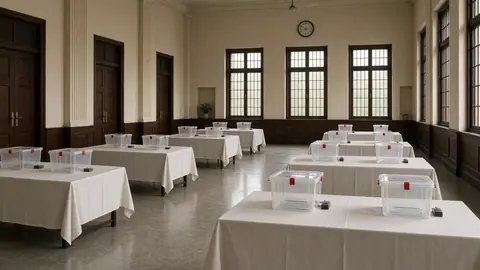
Ballot Boxes Guarded Round The Clock Ahead Of Karnataka Council Poll Counting
Most read
- 1
Xi Orders Urgent Rescue Efforts After Tibet Earthquake Kills 16, Injures 54
- 2
Schools Shut in Five Tamil Nadu Districts, Including Chennai, Amid Heavy Rain
- 3
Hong Kong Insurance Authority Tightens Premium Financing Oversight as Risks Emerge
- 4
Madanpur Masters Beat Firozabad Fighters by Two Runs in T-10 Opener
- 5
eMudhra Certificate: 8 weak certificates raise Internet Security concerns as browsers act
Comments
No comments yet. Be the first to comment.