
Jammu Court Grants Bail To 17-Year-Old Accused In Alleged Rape Of 7-Year-Old
Jammu Sessions Court Grants Bail to 17-Year-Old Juvenile Accused in POCSO Case The Principal Sessions Court, Jammu, has granted bail to a 17-year-old juvenile accused of the alleged rape of a

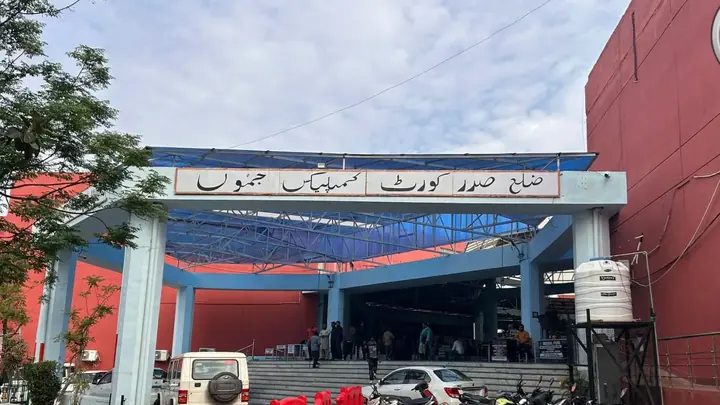
The Principal Sessions Court, Jammu, has granted bail to a 17-year-old juvenile accused of the alleged rape of a seven-year-old child. The court held that the seriousness of an alleged sexual offence, by itself, cannot be a ground to deny bail to a child in conflict with law.
Principal Sessions Judge Tahir Khurshid Raina passed the judgment while hearing an appeal under Section 101(1) of the Juvenile Justice (Care and Protection of Children) Act, 2015. The appeal was filed against an order of the Juvenile Justice Board, Jammu, which had rejected the juvenile’s bail plea.
The case relates to FIR No. 212/2026 registered at Police Station Nagrota, Jammu. The FIR was filed under Section 65(2) of the Bharatiya Nyaya Sanhita (BNS) and Sections 3/4 of the Protection of Children from Sexual Offences (POCSO) Act.
The juvenile’s date of birth is recorded as September 2, 2009. He was apprehended on August 22, 2026. There was no dispute regarding his juvenility.
Court says bail is the rule for children in conflict with law
The Juvenile Justice Board had refused bail mainly because of the heinous nature of the alleged offence against the seven-year-old victim. It had also considered the parental neglect mentioned in the Social Investigation Report, the proximity of the victim’s residence to the residence of the juvenile’s maternal aunt at Sidhra, Jammu, and the fact that the investigation was still pending, including the FSL report.
The Sessions Court, however, held that Section 12 of the Juvenile Justice Act makes release on bail the rule for a child in conflict with law. Denial of bail, it said, is an exception.
The court observed that the statutory exceptions must be based on reasonable grounds and objective material. They cannot be based only on assumptions, conjectures or general apprehensions.
The court also examined the findings in the Social Investigation Report. It noted that the report did not show any criminal background in the family and did not indicate any likelihood of the juvenile associating with known criminals.
The report recorded that the juvenile did not smoke, consume alcohol or drugs, or indulge in gambling. It also recorded that he had been pursuing his education.
The Sessions Court further pointed out that the Juvenile Justice Board itself had recorded that there was nothing on record to show that the juvenile’s release would bring him into association with known criminals or expose him to moral, physical or psychological danger.
On that basis, the court held that the seriousness of the allegation and the gravity of the alleged offence cannot independently justify denial of bail to a juvenile. Bail can be denied on that basis only when the case demonstrably falls within one of the exceptions under Section 12.
Conditions imposed to address concern over the victim’s proximity
The court also held that the mere pendency of the investigation, or the fact that an FSL report was awaited, does not by itself constitute a statutory ground for continuing the detention of a juvenile.
According to the court, the “ends of justice” exception must be considered from the perspective of the care, protection and reformation of the child. The court said these are central objectives of the Juvenile Justice Act.
It observed that prolonged incarceration of a child in a correctional home could adversely affect the child’s emotional, educational and psychological development. Continued confinement, it said, should remain a measure of last resort.
At the same time, the court took note of the concern that the victim and the juvenile’s maternal aunt reside in the same vicinity. To address this concern, it directed the parents not to send the juvenile to his aunt at Sidhra, Jammu, except for an exceptional and unavoidable visit.
The appeal was accordingly allowed. The Juvenile Justice Board’s order dated September 28, 2026 was set aside.
The juvenile was directed to be released on bail after his father furnished a personal bond of ₹50,000 with one surety of the like amount.
The bail was made subject to strict conditions. These include parental supervision, counselling, continued education, cooperation with the investigation, and a prohibition on influencing or threatening witnesses.
You may also like

Most read
- 1
Bucharest Hosts Romania’s First Grand Diwali Festival, Draws 1,500 Guests
- 2
Bhopal Trophy-2026 Opens With 59 Bouts, India’s Istanbul Selection Begins
- 3
IABF Chief Rakesh Mishra to Attend Bhopal Boxing Trophy-2026
- 4
Nirmal Named Best Boxer, 12 Selected to Represent India at IBA President Cup
- 5
Gonda’s Grand Shri Ram Katha Begins November 17, Yogi to Attend
Comments
No comments yet. Be the first to comment.