
426.80 Kg Ganja Seized In Bhopal Division, Action Against 249 People
426.80 kilograms of ganja seized in Bhopal division, action taken against 249 people The administration has launched a major campaign against the illegal drug trade in Bhopal division, leading to the

The administration has launched a major campaign against the illegal drug trade in Bhopal division, leading to the seizure of 426.80 kilograms of ganja across five districts. A total of 134 cases have been registered, and action has been taken against 249 people linked to the drug trade.
The seizure figures indicate the scale of the illegal ganja trade across the division. Rajgarh recorded the highest seizure, with 241.1 kilograms of ganja recovered on its own. The district has emerged as a major centre in the figures compiled during the ongoing action, with 134 cases registered across the division.
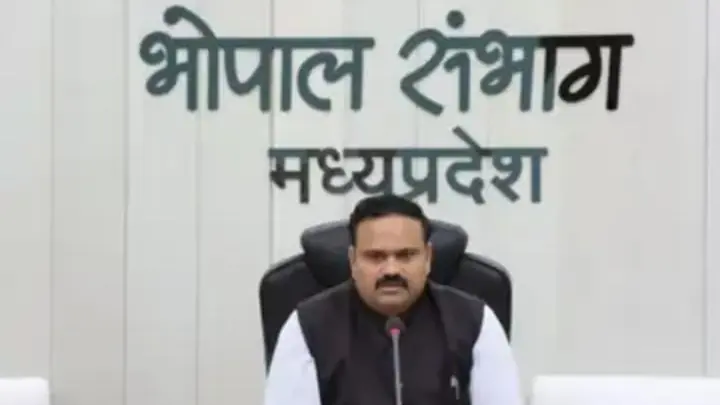
The campaign is being carried out under the directions of Divisional Commissioner Karmaveer Sharma. Police, the administration and the concerned departments have jointly taken action against the illegal trade.
The aim of the campaign is not limited to intercepting consignments of ganja. The administration has also directed the departments to identify and act against the networks and supply chains linked to the illegal business.
Rajgarh records highest seizure
Rajgarh recorded the highest seizure among the five districts covered by the campaign. A total of 241.1 kilograms of ganja was seized there.
Vidisha stood second, with 117.7 kilograms of ganja recovered. In Sehore, 42.4 kilograms was seized, while Raisen recorded a seizure of 15.295 kilograms. In the Bhopal rural area, 10.27 kilograms of ganja was seized.
Action was also taken against the illegal cultivation of ganja. During the campaign, 22 ganja plants were uprooted.
The administration has said that the campaign is being used to tighten action against people involved in the illegal drug trade. The seizure of 426.80 kilograms of ganja across the division and the action against 249 people are part of the wider operation.
Schools, colleges and hostels to be monitored
The administration is now preparing to extend the anti-drug campaign to educational institutions. Divisional Commissioner Karmaveer Sharma has directed that anti-drug committees be formed in schools, colleges and hostels.
These committees will work to create awareness among students about the harmful effects of drug use. Drug-related activities on educational campuses will also be monitored through the committees.
The plan is intended to help prevent young people from coming under the influence of drugs. The administration has placed educational institutions within the monitoring framework as the campaign expands beyond seizures and police action.
Directions for action under NDPS Act and Rasuka
The Divisional Commissioner has directed officials to take strict action against people involved in the drug trade and illegal liquor business.
Accused people involved in the illegal trade of narcotic substances will face action under the NDPS Act. The officials have also been directed to ensure action under the National Security Act, or Rasuka, in eligible cases in accordance with the legal provisions.
The instructions cover both the seizure of illegal substances and action against those involved in the wider trade. The administration’s focus is on identifying the people involved in supplying and distributing drugs, along with others connected to the illegal business.
Focus on breaking the supply chain
The administration’s strategy will no longer remain limited to seizing drug consignments. Directions have been issued to identify suppliers, distribution networks and people connected with the illegal trade, and to take action against them.
Police, the administration and the concerned departments have been asked to run the campaign through coordination. The stated objective is to reach the network behind the supply of drugs and break the chain through which the illegal trade operates.
After the seizure of more than 426 kilograms of ganja and action against 249 people, the biggest challenge for the administration is to reach the roots of this drug network. The effectiveness of the awareness drive and the monitoring system introduced to protect young people from drugs will become clear in the period ahead.
You may also like
 National
Ken-Betwa Protest Leader Divya Ahirwar Released After 40 Days in Jail
 National
Police Recover Illegal Explosives from Magazine Operator’s House in Sagar
 Crime
Four arrested in Muzaffarnagar with 25.7 kg cannabis worth ₹3.85 lakh
 National
Minor Allegedly Fires Licensed Rifle During Morena Birthday Party
Most read
- 1
Saba Haider wins Illinois House election for District 84 with 70.9% vote
- 2
Phulwari Public School Celebrates Diwali With Diyas, Rangoli and Student Art
- 3
Amit Shah To Be Chief Guest At Uttarakhand Foundation Day Event
- 4
Woman Gives Birth to Baby Girl Inside 108 Ambulance in Morena
- 5
Former Agriculture MoS Lakhan Singh Rajput Leaves Dibiyapur For Kanpur With Convoy
Comments
No comments yet. Be the first to comment.