
Scientists Discover Bacteria That Can Degrade Hard-to-Recycle PVC Plastics
Newly identified bacteria can break down PVC plastics, offering hope for recycling one of the toughest materials to manage. Learn more about this discovery

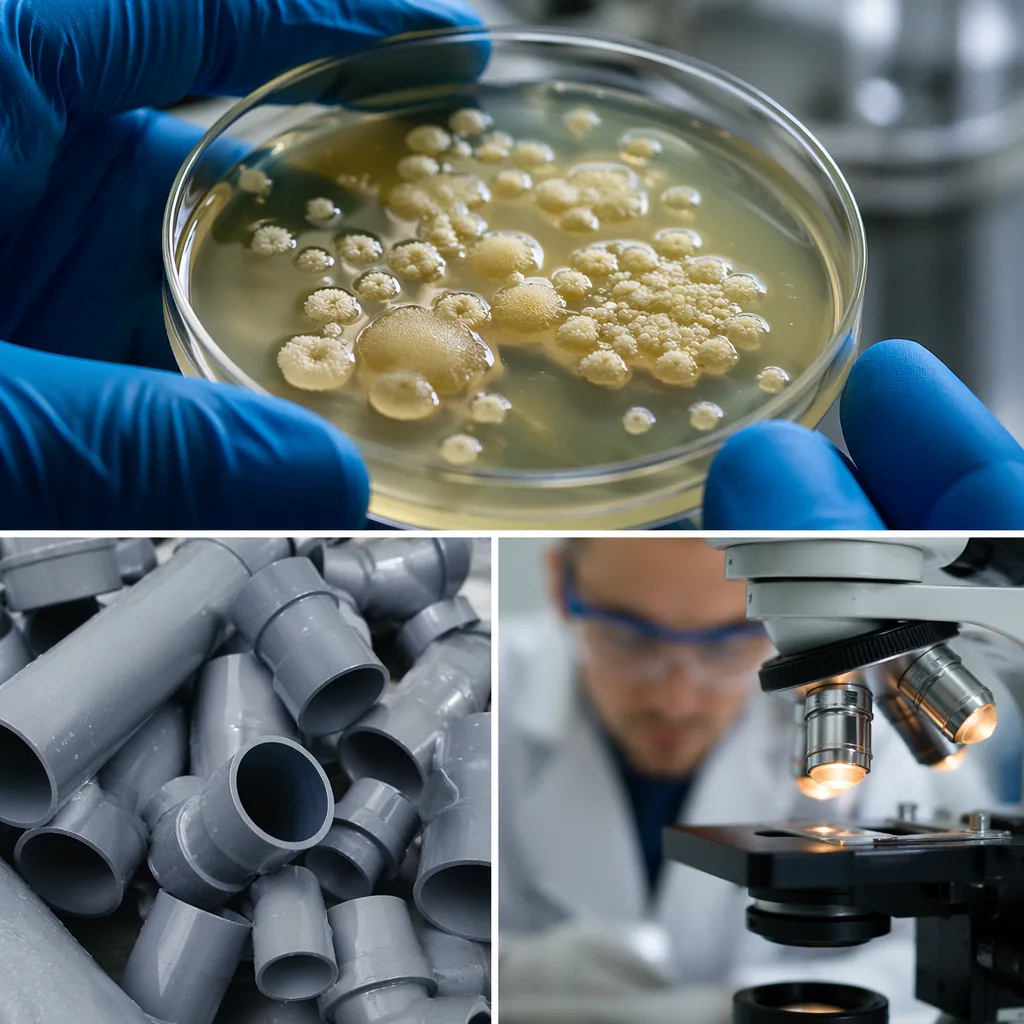
Scientists Identify Bacteria Capable of Breaking Down Hard-to-Recycle PVC Plastics
Polyvinyl chloride (PVC), a durable plastic used in products like pipes, cables, and medical equipment, is one of the most challenging materials to recycle due to its strength and resistance to degradation. These same qualities that make PVC valuable in manufacturing also contribute to its persistence in the environment, posing a significant challenge for waste management systems.
In a bid to address this issue, scientists have turned to naturally occurring microorganisms, exploring whether they can help break down stubborn plastics like PVC. A recent study published in the journal *Microbial Cell Factories* has provided promising evidence that certain bacterial strains can degrade PVC microplastics under controlled laboratory conditions.
The research began with soil samples collected from areas exposed to long-term plastic contamination, environments where microbes may have already adapted to synthetic waste. These sites served as natural testing grounds for identifying bacteria capable of interacting with PVC particles.
The study, also published in the *National Library of Medicine*, isolated bacterial strains from these soil samples and subjected them to a series of laboratory tests to assess their ability to break down PVC. Among the strains tested, *Stutzerimonas sp. NH2* emerged as the most effective, achieving a 23% reduction in the weight of PVC microplastics during the experiments.
Another strain, *Glutamicibacter nicotinae NH27*, also showed some degradation activity, though at a lower level. When the two strains were combined, their effectiveness increased, with the consortium achieving a nearly 27% reduction in PVC weight under the tested conditions.
The researchers used multiple methods to confirm that the bacteria were actively breaking down the PVC. Microscopic analysis revealed visible surface damage, such as cracks and grooves, on treated plastic samples that were absent in untreated ones. Chemical analysis showed shifts in the plastic's composition, while thermal testing indicated structural changes. Additionally, the team detected compounds associated with PVC degradation, further supporting the conclusion that the bacteria were degrading the material rather than merely attaching to it.
This study marks the first reported evidence linking *Stutzerimonas sp. NH2* and *Glutamicibacter nicotinae NH27* to the degradation of PVC microplastics. However, the findings remain an early step rather than a definitive solution. Laboratory conditions are tightly controlled and do not replicate the complexity of natural environments. Questions remain about how these bacteria would perform in real-world settings, the speed of degradation on a larger scale, and the feasibility of integrating such biological approaches into existing waste management systems.
Despite these uncertainties, the research highlights the potential role of microorganisms in addressing plastic pollution. While traditional recycling methods and material redesign continue to dominate discussions, studies like this suggest that biological solutions could eventually complement efforts to manage plastics that are notoriously difficult to recycle.
You may also like



Most read
- 1
AP EAMCET Results 2026 Live Updates: Scorecard out at cets.apsche.ap.gov.in
- 2
Fatima Sana scripts history, becomes first captain to achieve unique Women's T20 World Cup …
- 3
Tata Trusts commits grant to IIM-B to fund campus for undergraduates
- 4
PM Modi shares Sanskrit verse on thoughtful decision-making
- 5
7 Simple Habits That Protect You From Phone and Online Scams
Comments
No comments yet. Be the first to comment.