
Foundational reading and numeracy recovery is uneven, with sharper gaps in rural and low-income clusters.
India School Learning Gap 2026: Foundational Skills Recovery is Uneven
Foundational reading and numeracy recovery is uneven, with sharper gaps in rural and low-income clusters.
Quick answer
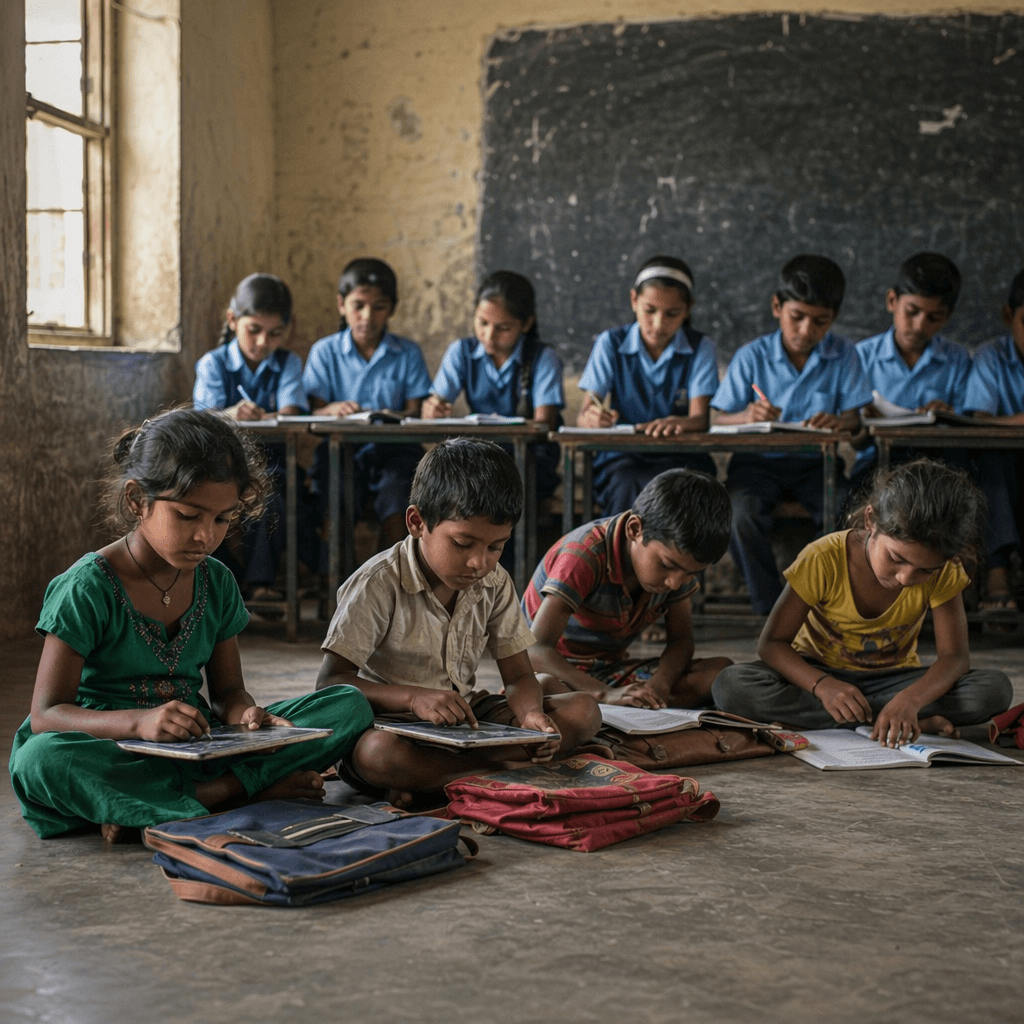
AI-generated illustration · NewsDarpan (GPT-Image-2)
India’s school recovery cycle in 2026 shows progress, but foundational learning remains uneven across states, districts, and income groups. Classroom-level observations and assessment trends indicate that reading fluency and basic numeracy are improving in many systems, yet the pace of recovery is not uniform.
Students in resource-constrained clusters continue to face compounded barriers: inconsistent remedial support, limited parental learning support at home, and periodic attendance disruption. Teachers report that mixed-ability classrooms require more targeted instructional time than current schedules often allow.
The strongest gains appear where schools have adopted structured catch-up programs, frequent low-stakes assessments, and teacher mentoring loops focused on early-grade pedagogy. These approaches help identify learning deficits early and reduce silent fall-behind patterns that become difficult to reverse later.
Education planners and district administrations can accelerate progress by prioritizing foundational goals in timetables, improving tutor-to-student support models, and publishing simple learning dashboards for accountability. Program quality matters more than announcement volume: consistent implementation at school level is the key differentiator.
NewsDarpan’s Data and Research team will track foundational recovery across regions through 2026, with attention to rural-urban divergence, gendered learning outcomes, and district execution quality so that policy conversations stay anchored in measurable classroom realities.