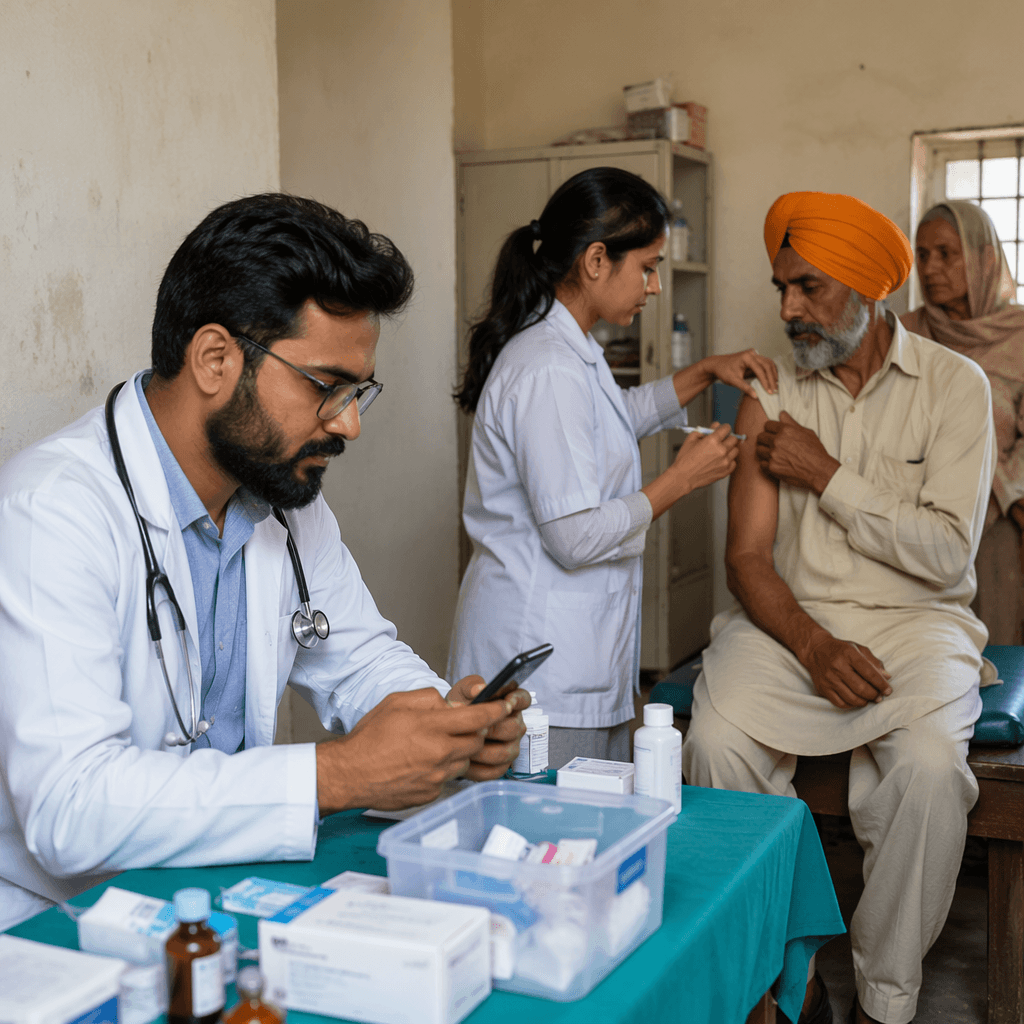
In a groundbreaking initiative to address the challenges of heart attack care in rural Punjab, doctors are combining technology, training, and advanced medical interventions to save lives. By utilizing WhatsApp-based coordination, training frontline healthcare workers, and administering the clot-busting drug tenecteplase, healthcare providers are improving access to timely and effective treatment in areas with limited medical infrastructure.
The use of WhatsApp has proven to be a game-changer in facilitating communication between healthcare teams. This platform enables rapid sharing of patient information, coordination of emergency responses, and guidance from specialists, ensuring that critical decisions are made swiftly. Additionally, training programs for frontline healthcare workers have equipped them with the skills to identify heart attack symptoms, administer first-line care, and prepare patients for advanced treatment.
Tenecteplase, a clot-dissolving injection, has emerged as a key component in this strategy. Its ability to quickly restore blood flow in heart attack patients makes it a vital tool in rural settings where access to catheterization labs is often limited. By combining these elements, doctors are addressing the barriers to emergency cardiac care and significantly improving patient outcomes.
This innovative approach highlights the potential of technology and targeted interventions in transforming healthcare delivery in underserved regions. As rural Punjab continues to benefit from these advancements, the model offers hope for replication in other parts of India facing similar challenges.