
The Indian Ministry of External Affairs (MEA) has responded to Nepal PM Balen Shah's recent remarks on the India-Nepal border dispute, emphasizing bilateral mechanisms for resolution and rejecting third-party involvement.
India-Nepal Border Dispute: MEA Responds to Nepal PM's Statement
The Indian Ministry of External Affairs (MEA) has responded to Nepal PM Balen Shah's recent remarks on the India-Nepal border dispute, emphasizing bilateral mechanisms for resolution and rejecting third-party involvement.
Quick answer
AI-generated illustration · NewsDarpan (GPT-Image-2)
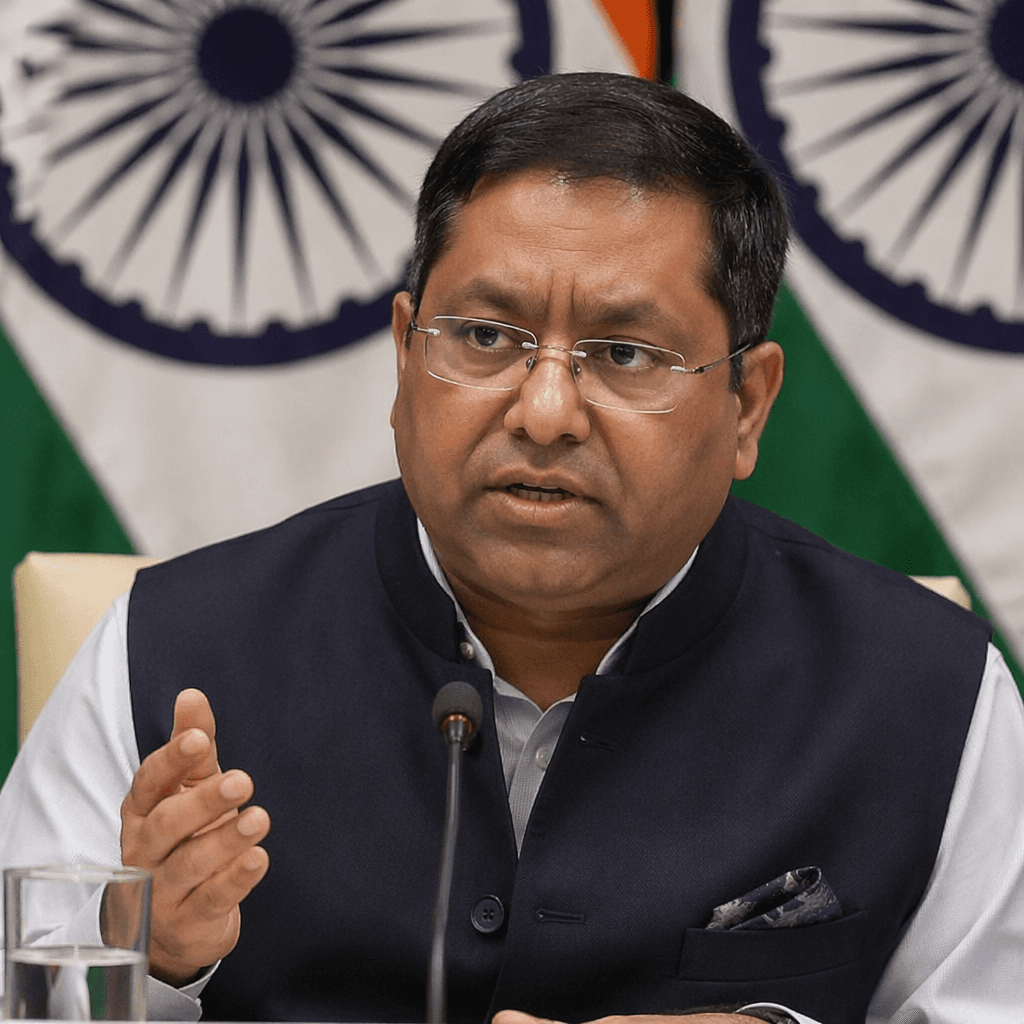
The Indian Ministry of External Affairs (MEA) has issued a response to Nepal Prime Minister Balen Shah's recent statement regarding the India-Nepal border dispute. MEA spokesperson Randhir Jaiswal highlighted that approximately 98% of the border between the two nations has already been demarcated, though certain sections remain unresolved due to issues such as changes in the Gandak River's course and encroachments across the border.
Jaiswal emphasized that India and Nepal have established bilateral mechanisms to address all border-related matters and reiterated that the issue is strictly bilateral, with no role for third parties. This statement comes after PM Shah's remarks in Nepal's parliament, where he suggested that the border dispute should be resolved through dialogue and raised the possibility of Britain's involvement due to the historical 1816 Sugauli Treaty between British India and Nepal.
PM Shah also acknowledged that both India and Nepal have encroached on each other's territories in certain areas. He stated that Nepal has already sent an official diplomatic note to India regarding the matter and received a response. Shah further mentioned discussions involving not only India and China but also Britain concerning the border dispute.
The MEA's response underscores India's position that bilateral discussions are the appropriate channel for resolving border issues, dismissing any external involvement in the matter.