
The Supreme Court's draft rules emphasize that AI systems in court processes must only assist and remain subordinate to human judgment and judicial authority.
Draft Supreme Court Rules Restrict AI in Judicial Processes
The Supreme Court's draft rules emphasize that AI systems in court processes must only assist and remain subordinate to human judgment and judicial authority.
Quick answer
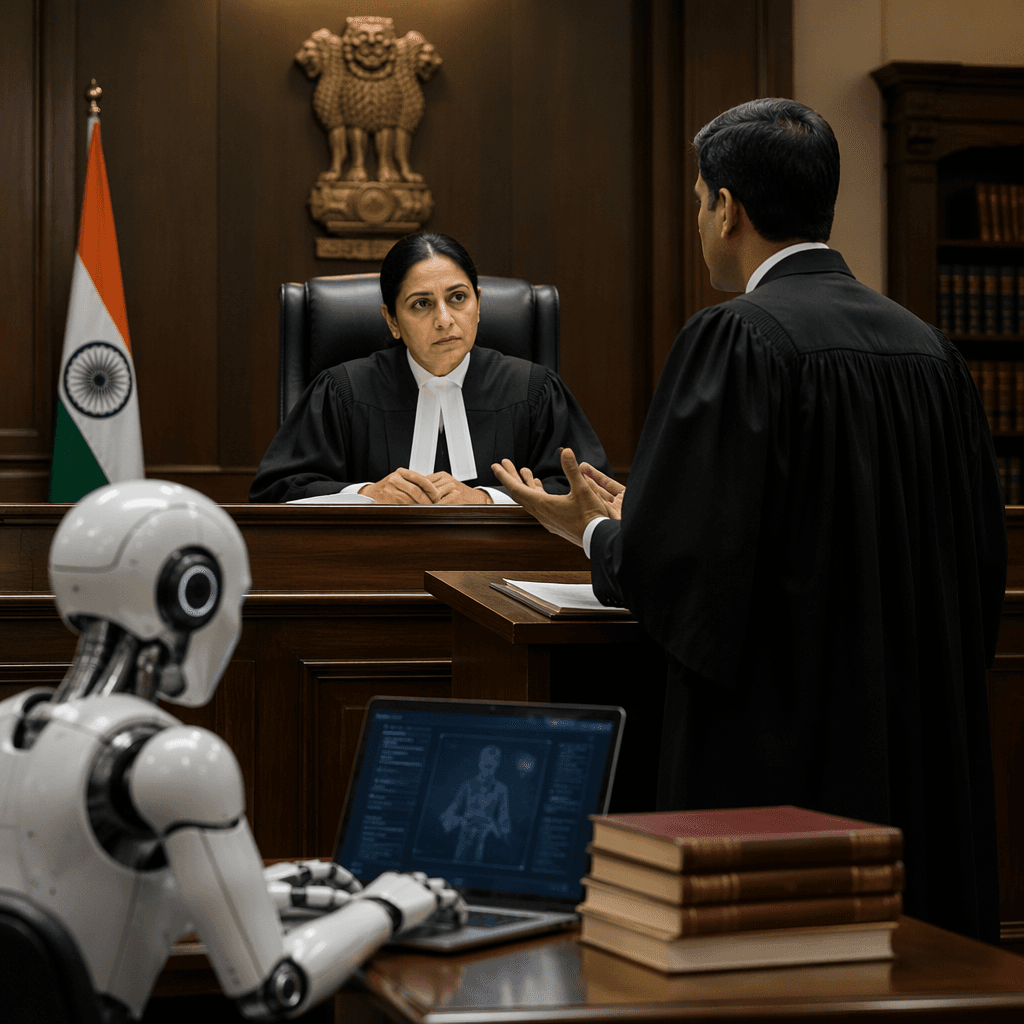
AI-generated illustration · NewsDarpan (GPT-Image-2)
The Supreme Court of India has proposed draft rules that explicitly prohibit the use of artificial intelligence (AI) for determining judicial outcomes or profiling witnesses. According to the draft, AI systems employed in court processes must function solely in an assistive capacity and remain strictly subservient to human judgment and judicial authority.
These guidelines aim to ensure that AI technologies, while being utilized for efficiency and support, do not replace or undermine the critical role of human decision-making in judicial matters. The rules underline the importance of maintaining the integrity and accountability of judicial processes by restricting AI's role to assistance rather than decision-making.
The draft rules reflect growing concerns about the ethical and legal implications of AI in sensitive areas such as justice delivery. By mandating that AI systems remain subordinate, the Supreme Court seeks to safeguard the principles of fairness and impartiality in the judiciary.
Further details regarding the implementation of these rules and the specific technologies covered under this framework are yet to be clarified. The draft rules represent a cautious approach to integrating AI into India's judicial system while prioritizing human oversight.
Editors may need to verify additional context or related developments regarding AI usage in Indian courts.